One church, many eras
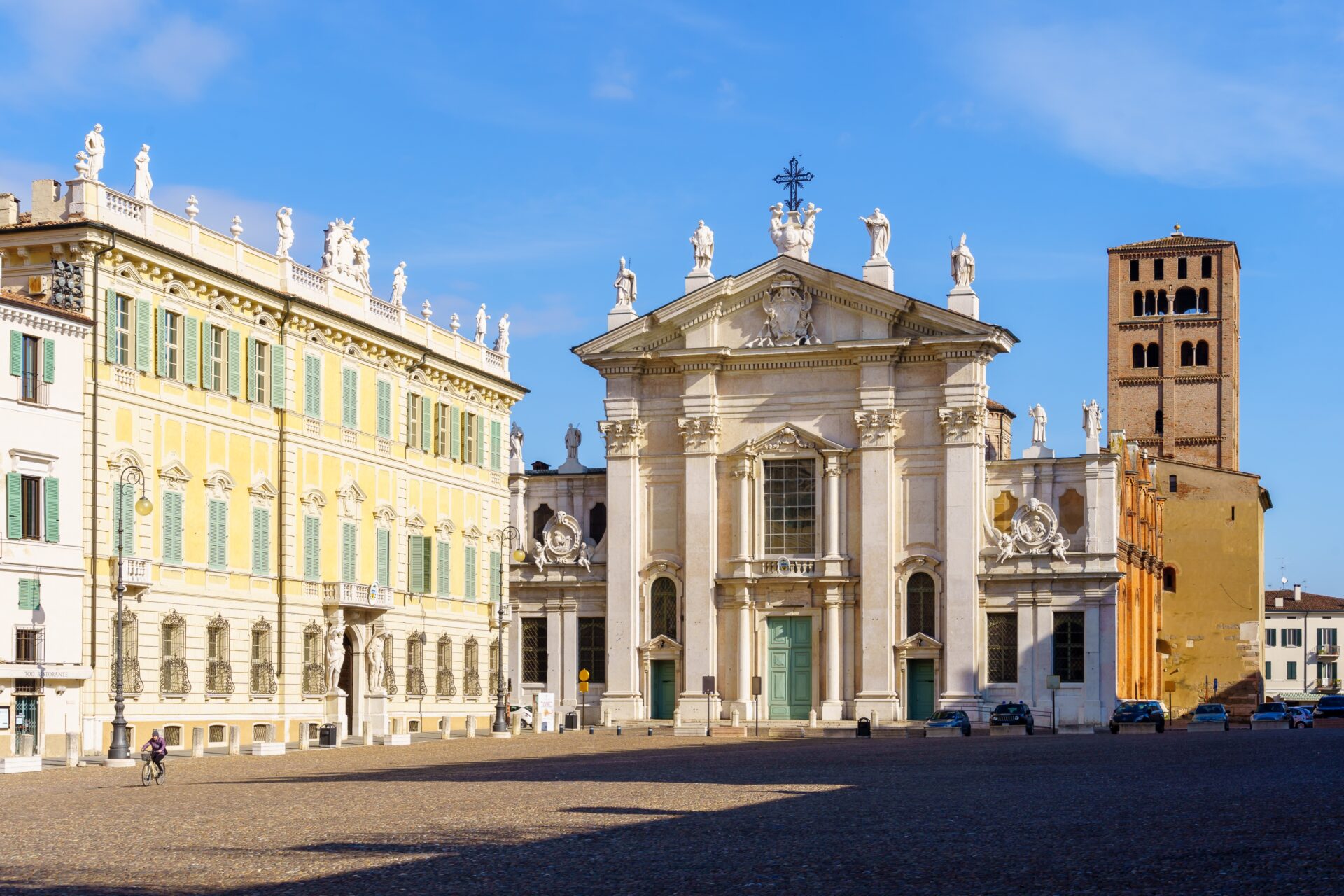
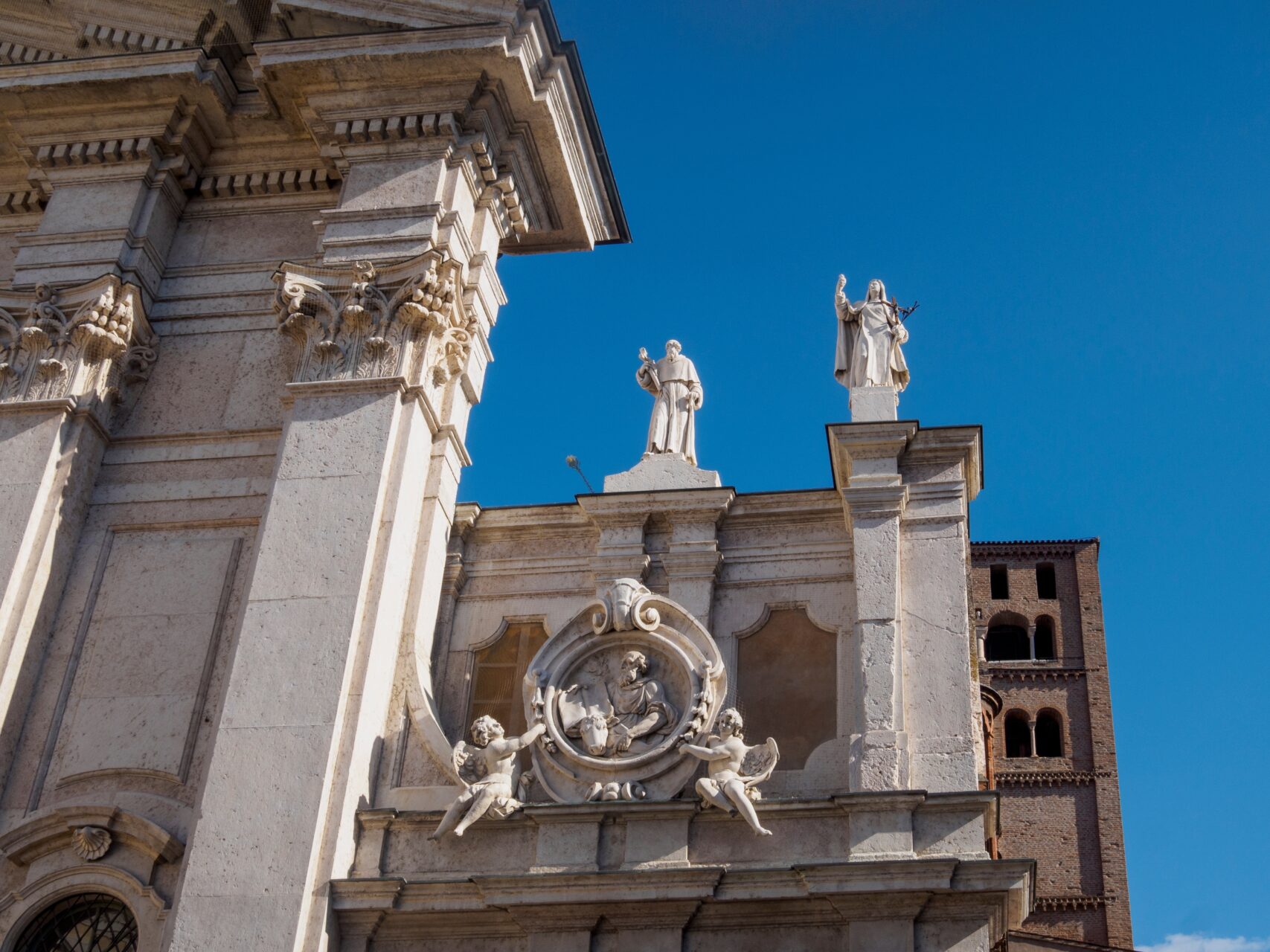
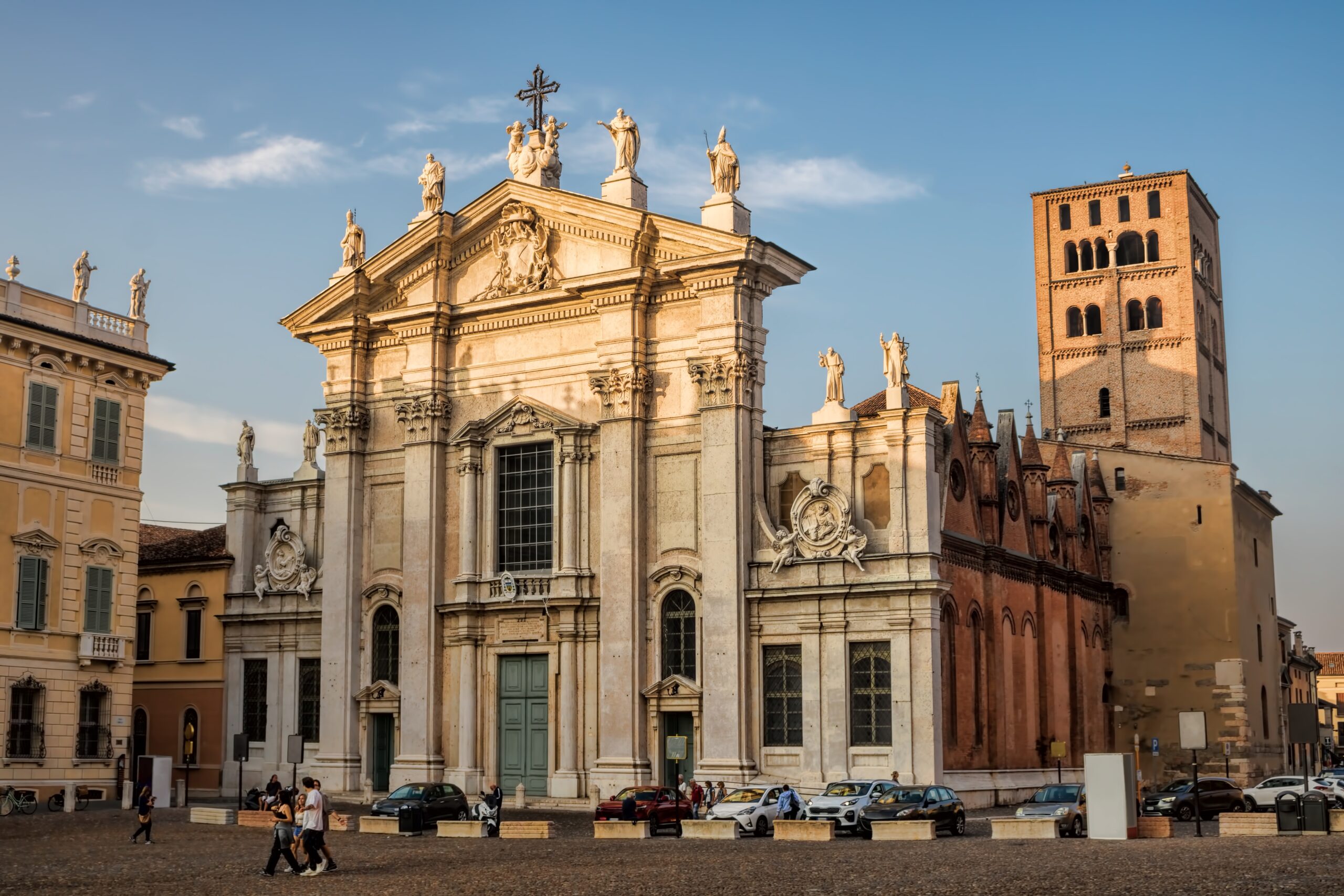
The Cathedral of Mantua is dedicated to St. Peter and is the emblem of the architectural stratification of Piazza Sordello and of the entire city. The first structure dates back to the 11th century: a Romanesque church of which today only the bell tower remains which in turn rests on the foundations of a previous Tower House. The right side of the Cathedral, in red brick, shows the intervention in Lombard Gothic style carried out at the end of the fourteenth century by the Venetians Dalle Masegne, Pier Paolo and Jacobello. In the famous painting by Domenico Morone (1494) which shows The expulsion of the Bonacolsi by the Gonzagas We can still see an image of the late Gothic façade in polychrome marble. The current façade, however, was created in the eighteenth century by Nicolò Baschiera, who was inspired by Roman Baroque churches.
The intervention of Julius Romano
In 1545, following a fire that destroyed a chapel, the interior was completely transformed, and what we see today, with five naves divided by Corinthian columns, is the layout designed by Julius Romano. Worth noting, in the right transept, is the fresco depicting the Diet convened in Mantua in 1459-60 by Pius II.