Wonder of Baroque art
Built between 1767 and 1769, it was commissioned from Bibiena of Parma by Count Carlo Ottavio di Colloredo, rector of the Accademia dei Timidi, with the primary function of hosting high-profile academic meetings, but also to host shows and concerts.
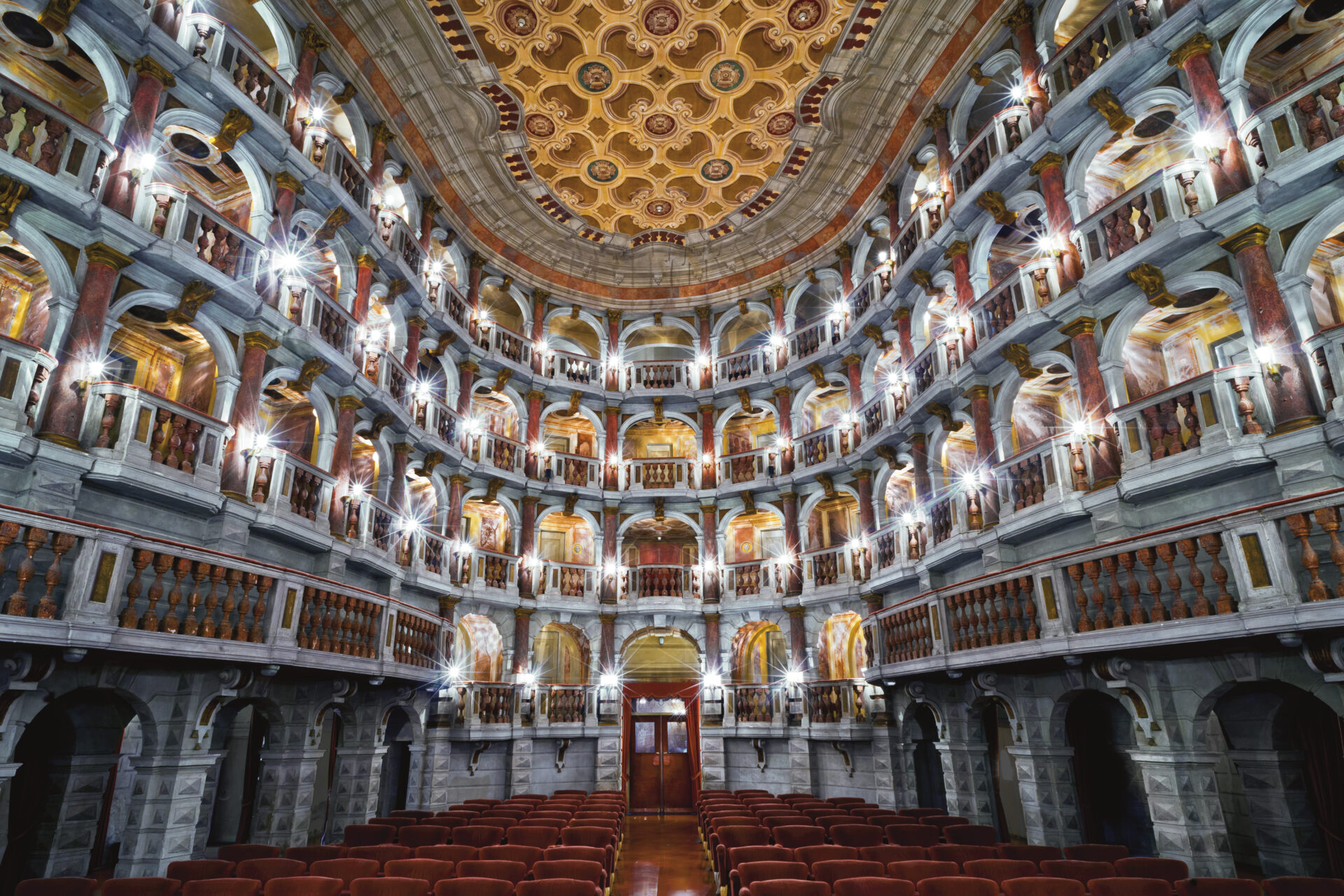
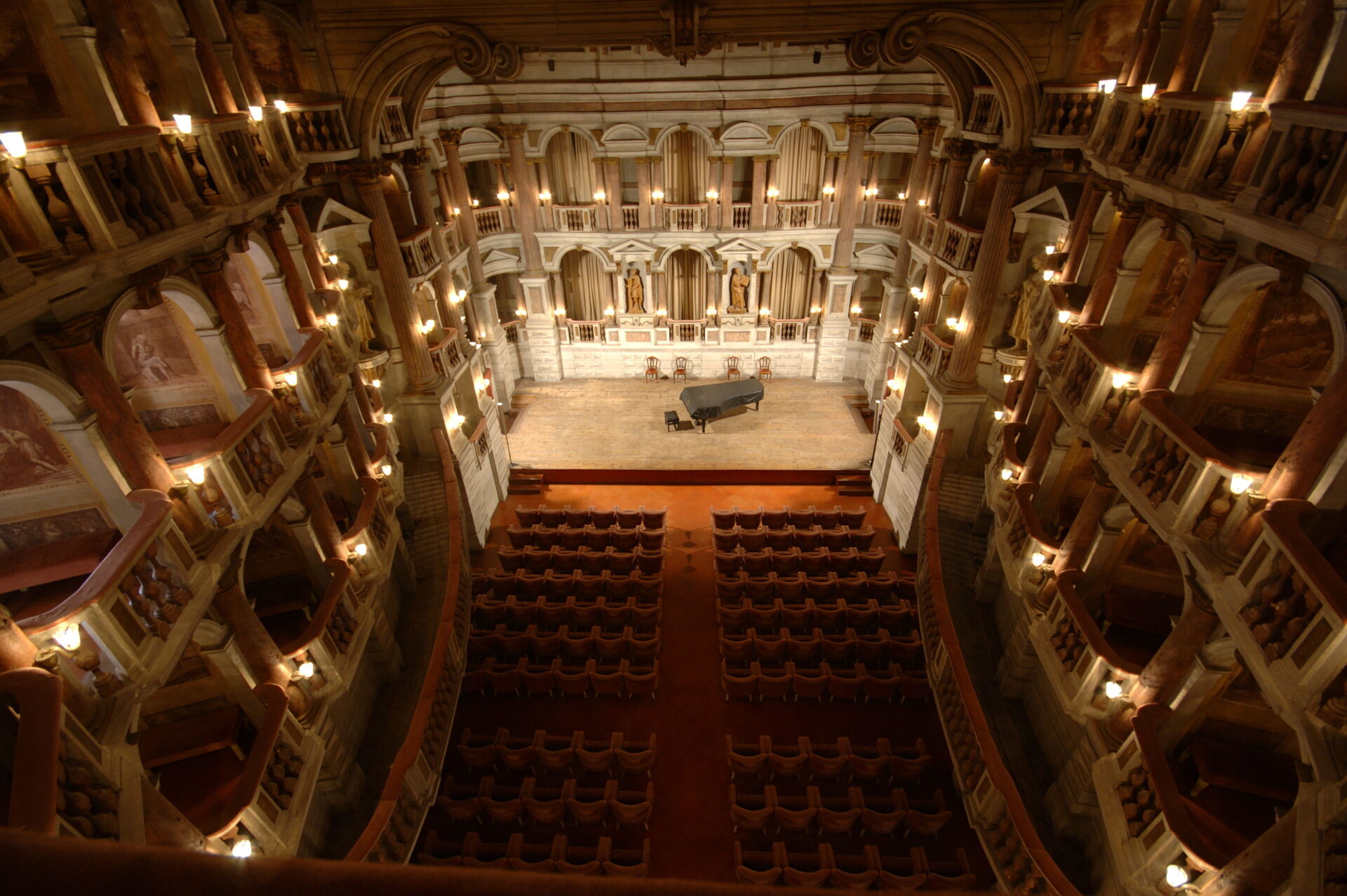
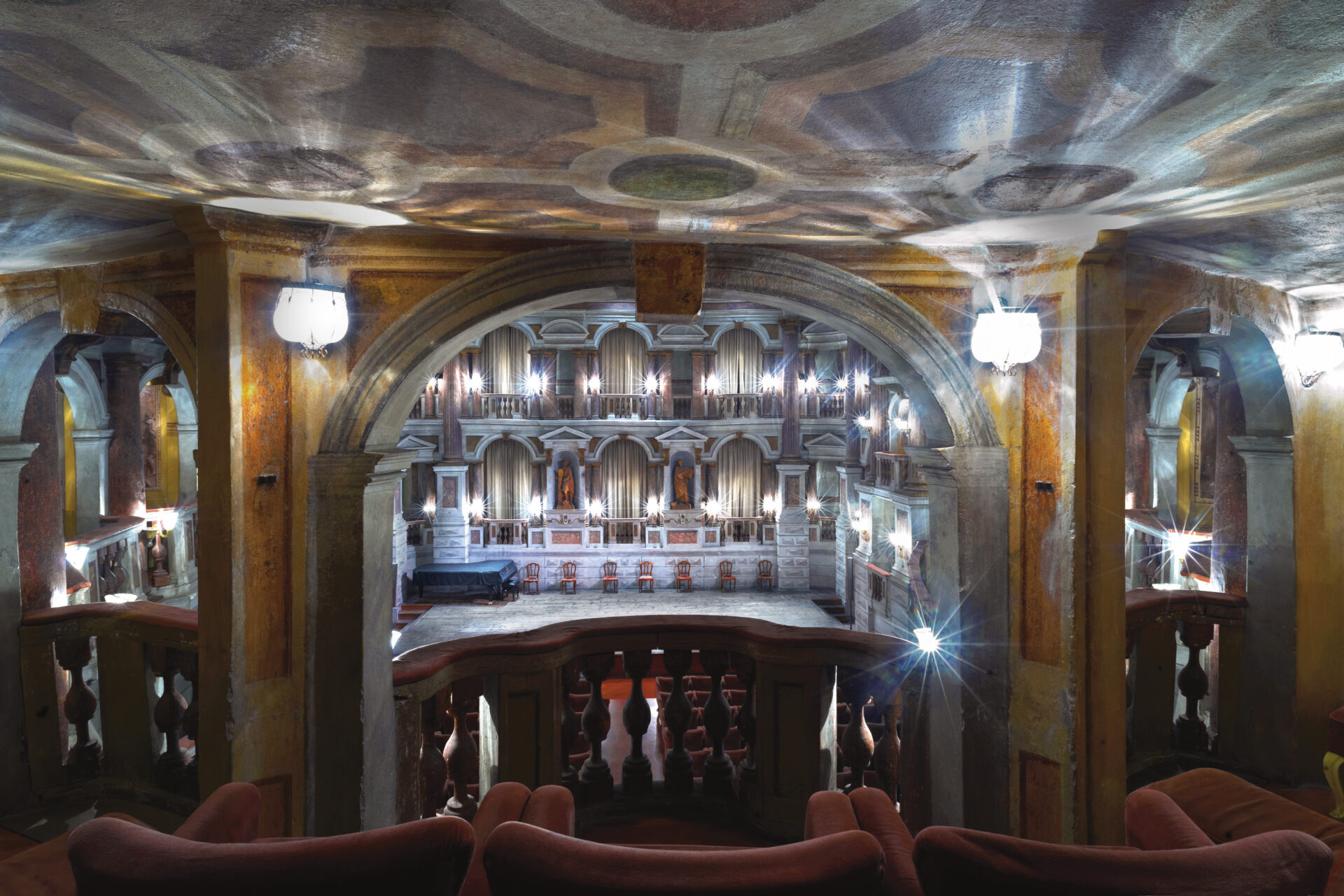
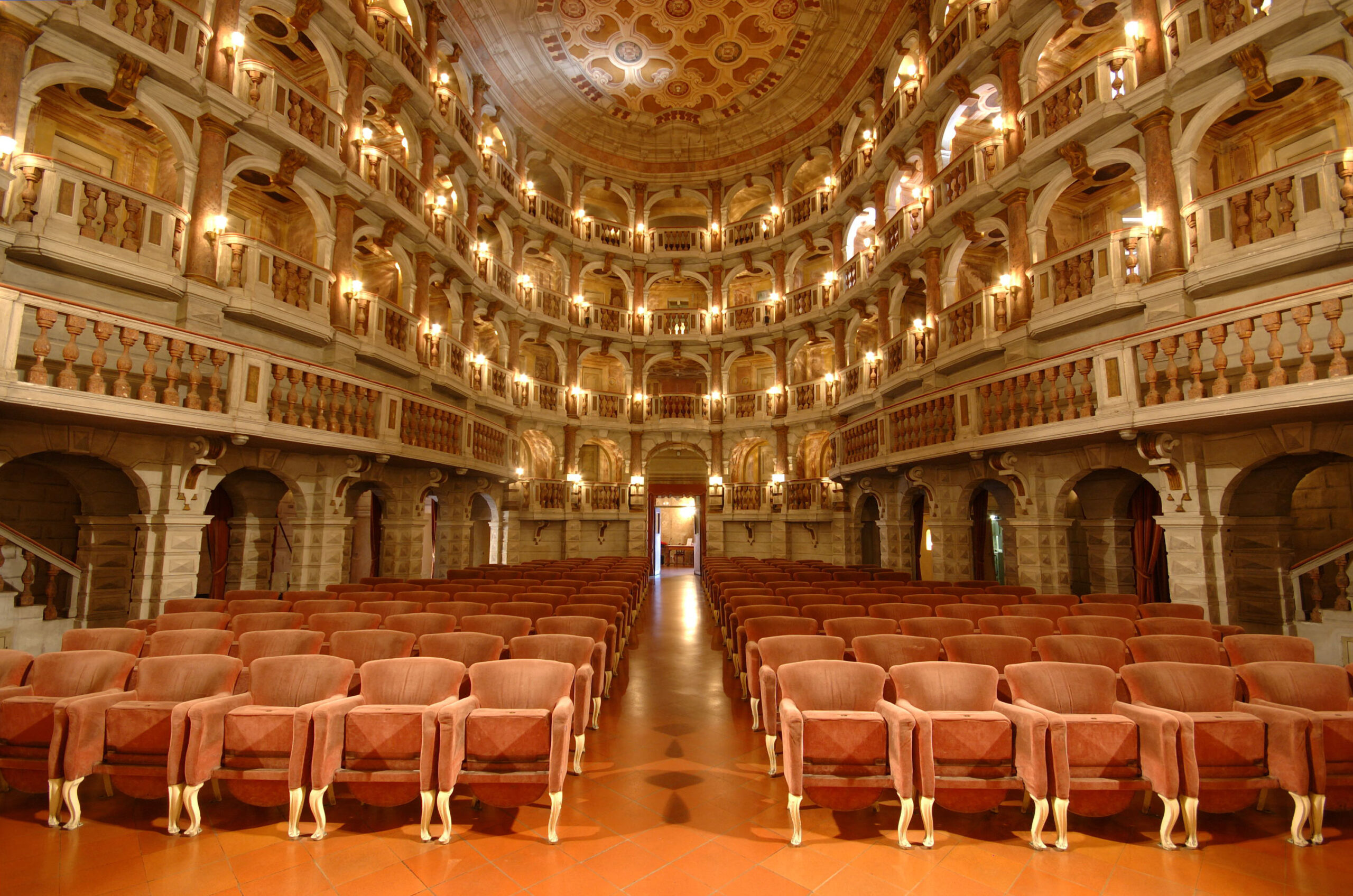
The Bibiena Scientific Theater, Built in wood and stucco, it is very different from traditional Renaissance tiered theaters and stands out for its bell-shaped floor plan and three tiers of small balcony boxes with Doric, Ionic, and Corinthian columns. The stage is enclosed by a fixed stage in the form of a two-story loggia where audiences can look out and watch the performances.
The fabulous painted boxes of the theatre
Bibiena's ability is demonstrated in the fulfillment of the commitment made with the Timidi: to conceive the theatre, to supervise its works and to personally paint the interiors of the numerous boxes, decorated in tempera with Arcadian landscapes, which in turn have become tangible evidence of the master's art. Although the Bibiena Scientific Theater Although it aroused the enthusiasm of his contemporaries, the consensus towards the designer quickly changed radically, so much so that the architect was forced to revise and repeatedly modify the drawings he had made for the façade. Ultimately, Giuseppe Piermarini's design was favorably received, oriented toward a language that now favored the austere neoclassical sobriety that was destined to establish itself.