Civic Museum – MACA (Mantua Ancient Collections)
The palace was built between 1506 and 1508 at the behest of Marquis Francesco II Gonzaga, husband of Isabella D'Este, probably to find a suitable home for the monumental canvases depicting the Triumphs of Caesar by Andrea Mantegna, now at Hampton Court and present in the Palace only in copies.
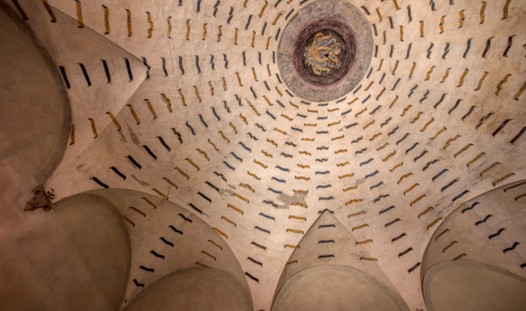
The name derives from the nearby church of the same name, designed by Leon Battista Alberti about 50 years earlier. It was richly decorated by various artists, including Lorenzo Leonbruno, Dosso Dossi, and Lorenzo Costa. Despite the alterations it has undergone over the last two centuries, during which the building has been used for a variety of purposes, including barracks, a lazaretto, and a recreational club, the original decorations survive in the rooms, while the precious gilded wooden ceilings were dismantled at the end of the sixteenth century to be used as a Ducal Palace where they are still found today.
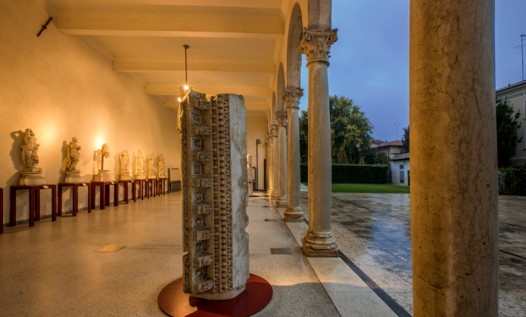
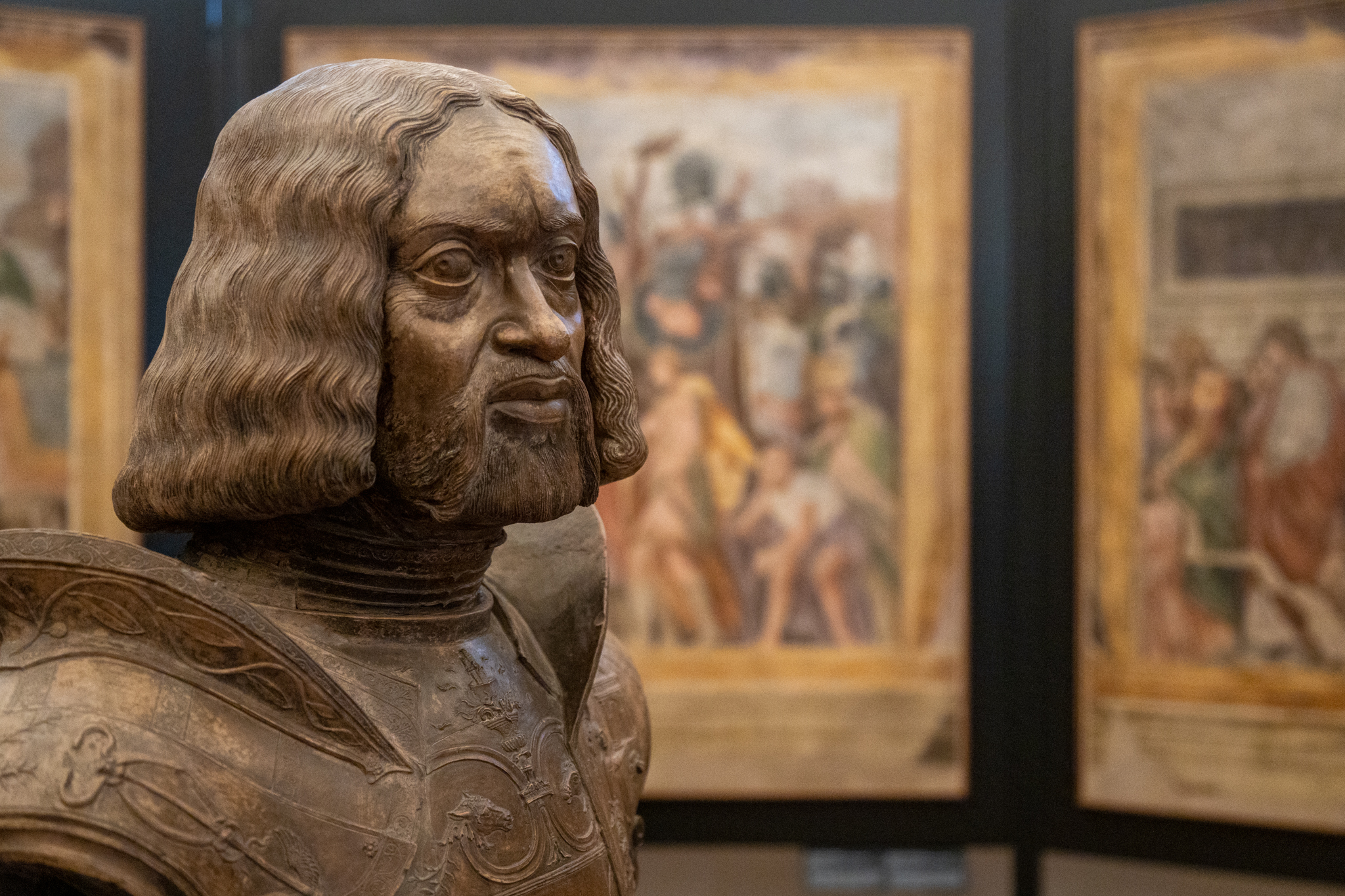
San Sebastiano Palace Since 2022, it has housed a new civic museum. The museum's layout consists of exhibitions centered on the personalities who formed the core of Mantua's ancient collections. The section dedicated to Francesco II Gonzaga focuses on the palace itself and the works associated with it, while the section dedicated to Vespasiano Gonzaga features Greco-Roman statuary and the restoration of antiquity. The Hall of Triumphs houses sections on Egyptian and Arab art, linked to Giuseppe Acerbi's collection, while the Mesopotamian section explores the world of Ugo Sissa, who spent years collecting these important fragments.