
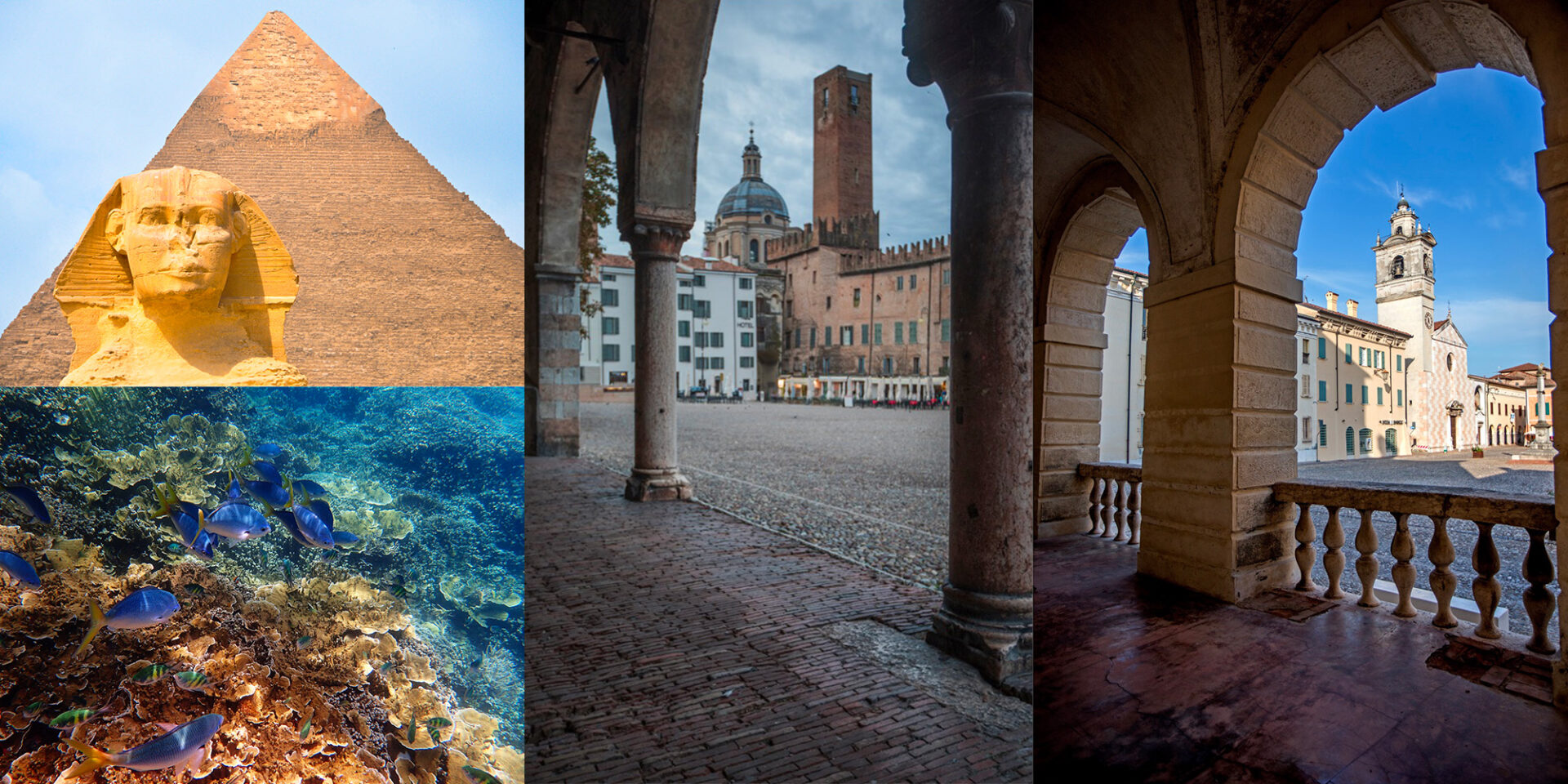
There Convention concerning the Protection of the World Cultural and Natural Heritage, adopted by UNESCO in 1972, provides that the candidate assets can be registered in the World Heritage List as:
- Cultural Heritage
- Monuments: monumental architectural, plastic or pictorial works, elements or structures of an archaeological nature, inscriptions, caves and groups of elements of exceptional universal value from the historical, artistic or scientific point of view,
- Agglomerations: groups of isolated or grouped buildings which, due to their architecture, unity or integration into the landscape, have exceptional universal value from a historical, artistic or scientific point of view,
- Sites: works of man or combined works of man and nature, as well as areas, including archaeological sites, of outstanding universal value from a historical, aesthetic, ethnological or anthropological perspective.
- Natural Heritage
- Natural monuments consisting of physical and biological formations or groups of such formations of outstanding universal value from the aesthetic or scientific point of view,
- The geological and physiographic formations and strictly defined areas constituting the habitat of threatened animal and plant species, of outstanding universal value from the scientific or conservation point of view,
- Natural sites or strictly defined natural areas of outstanding universal value from a scientific, conservation or natural aesthetic point of view.
Operational Guidelines for the Implementation of the Convention They define as mixed heritage (cultural and natural) those assets that correspond in part or in whole to both the definitions of cultural and natural heritage.
- Cultural Landscape (since 1992)
Landscapes represent "joint creations of man and nature," as defined in Article 1 of the Convention, and illustrate the evolution of a society and its settlement over time under the influence of constraints and/or opportunities presented, internally and externally, by the natural environment and by cultural, economic, and social pressures. Their protection can contribute to modern techniques of sustainable land use and the maintenance of biological diversity.