A high-altitude prison
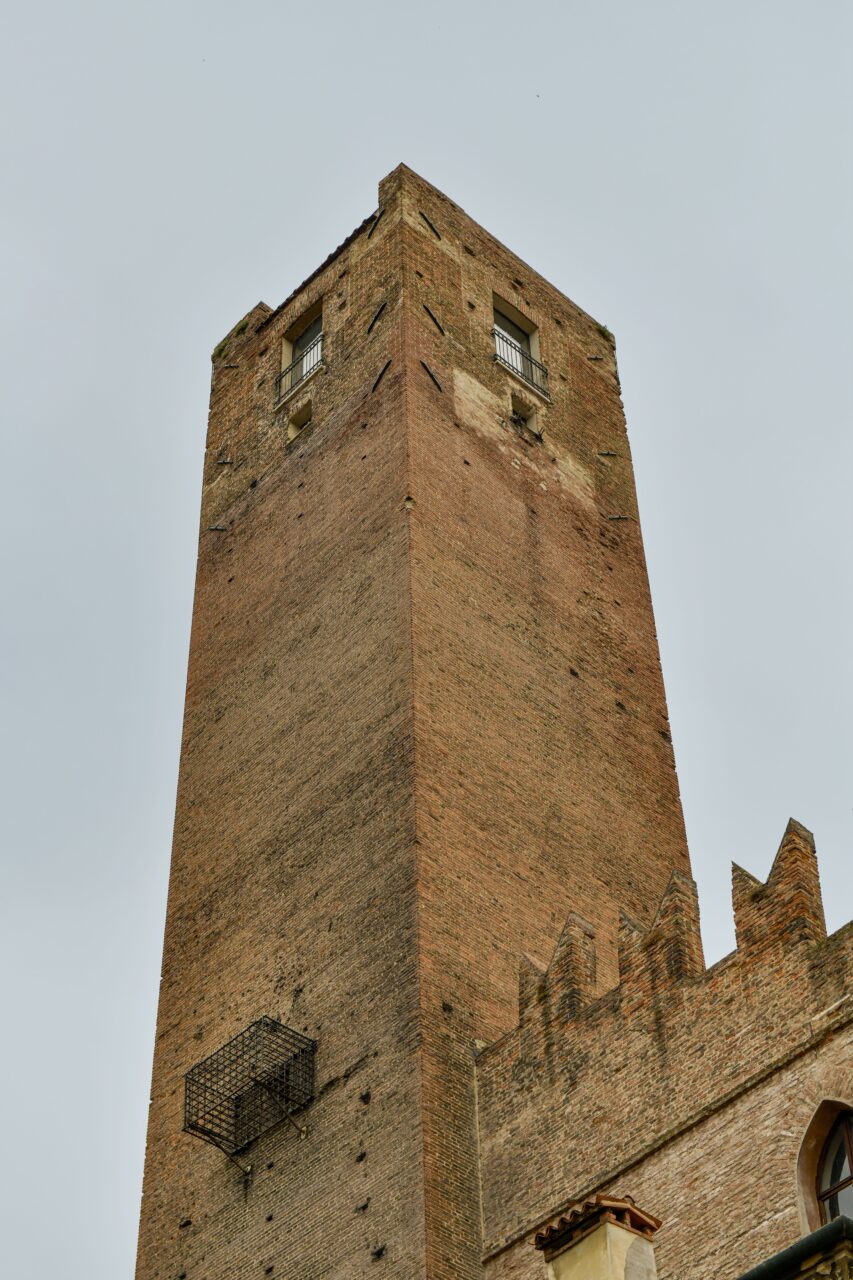
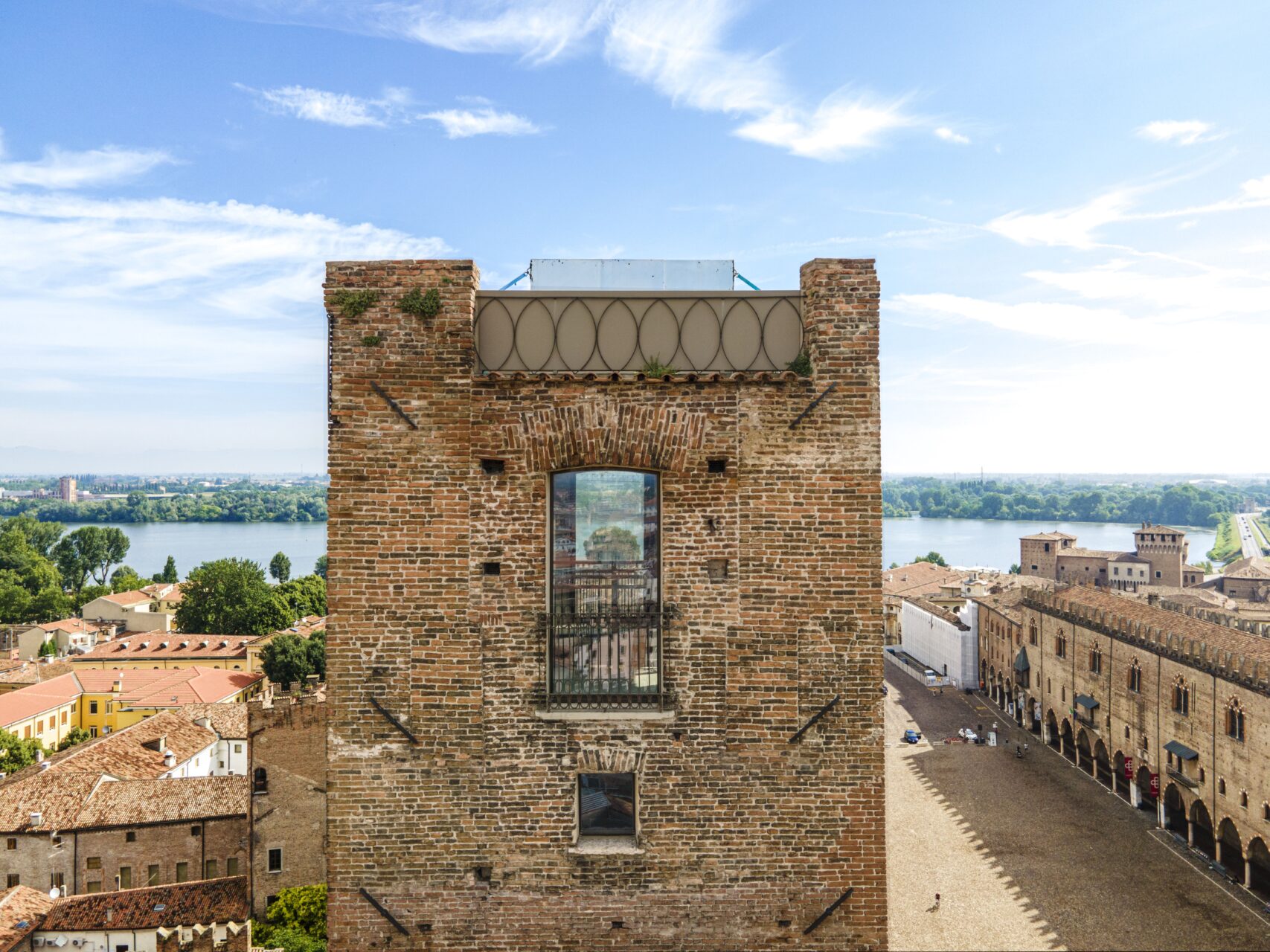
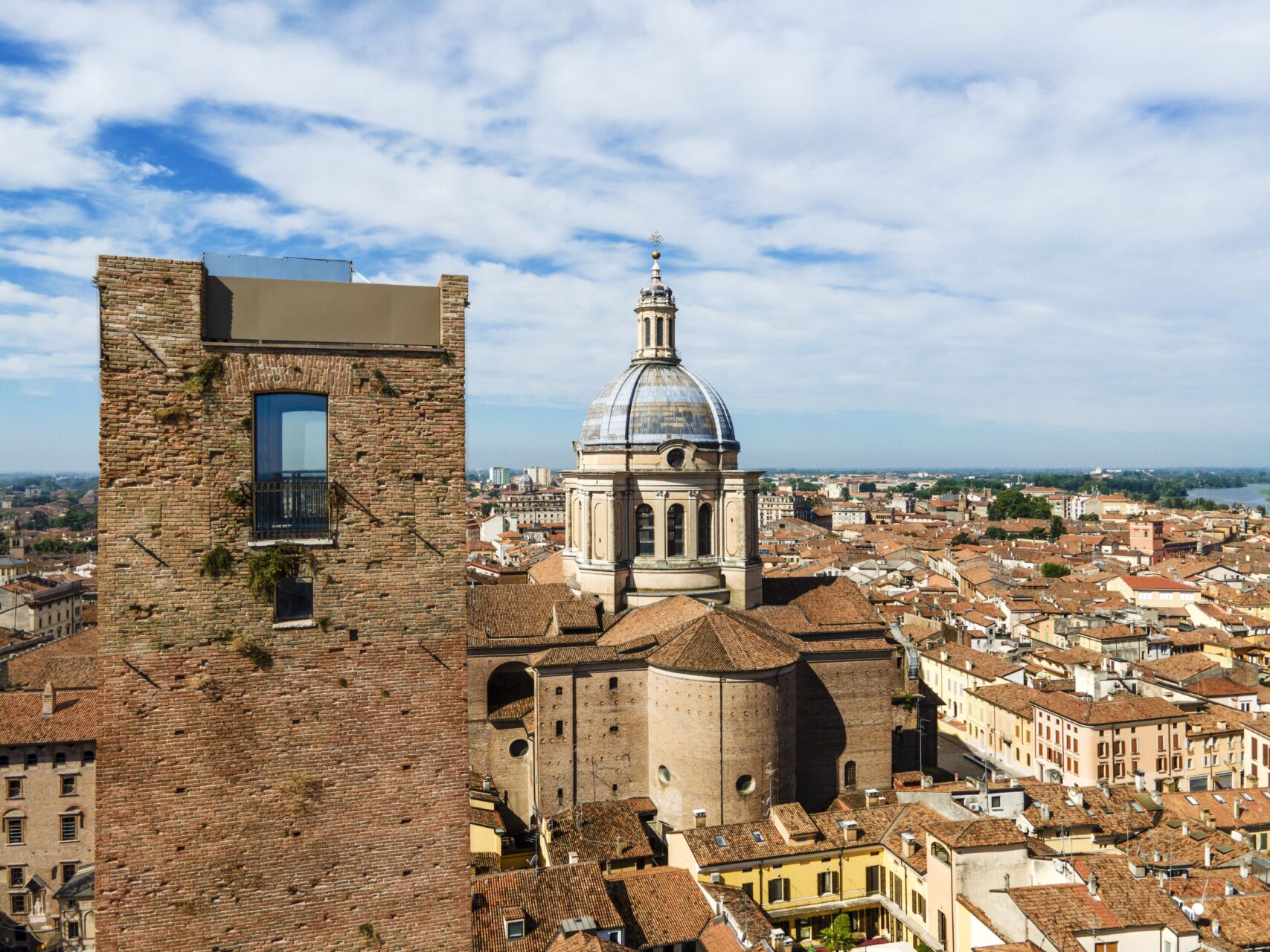
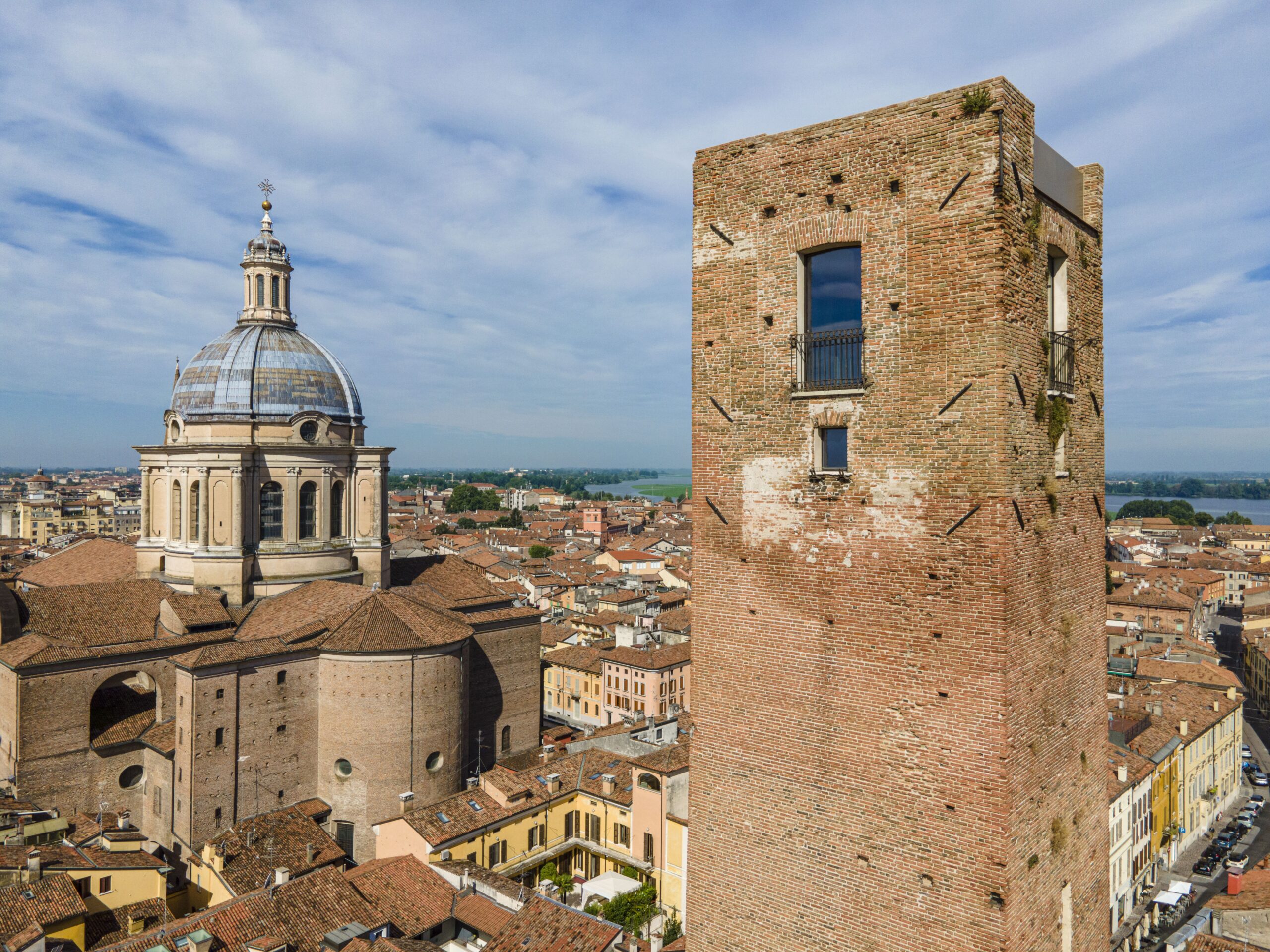
It is still the tallest tower in the city today, and it is probably because of this feature, combined with its central location, that the detention cage from which it owes its name was built there.
From documents we know that the tower already existed in 1281 when it was purchased by the Bonacolsi family, but its original function is uncertain. The presence of a street adjacent to the Cage Tower, no longer existing today, called Via Communis, Via del Comune, would suggest that the city's first Town Hall existed in this area. The tower would therefore have been the municipal tower, a hypothesis supported by its height. A few years later, with the arrival of the Bonacolsi family and then the Gonzaga family, the tower was annexed to the adjacent palace and lost its municipal function.
A warning to the people, wanted by the Gonzaga
According to ongoing studies, it appears to have housed the city's first public clock, active since 1380; a service the new lords offered to the citizens to gain their favor. It lost this function in 1473, when the Clock Tower was built, also commissioned by the Gonzaga, in the central Piazza Erbe. In 1526 it was donated to the Guerrieri family and equipped with a cage in 1576. Mantua statutes prohibited the construction of prisons in private buildings, but in this case it is easy to imagine that the faithful Marquis Guerrieri offered his tower to Duke Guglielmo Gonzaga to build this open-air prison, exposed to the elements and in full view of the people.