A villa of delights
It's 1579. Vespasiano Gonzaga has just returned from Spain, where Rudolf II had recently named him duke. Sabbioneta finally receives the recognition it deserves, and Vespasiano can't wait to celebrate in his new palace: a place where he can dedicate himself to relaxation and beauty, host illustrious figures, and flaunt his full prestige. Thus, in 1588, construction of his villa of delights begins: Garden Palace.
The frescoes, a celebration of the’humanistic ideal.
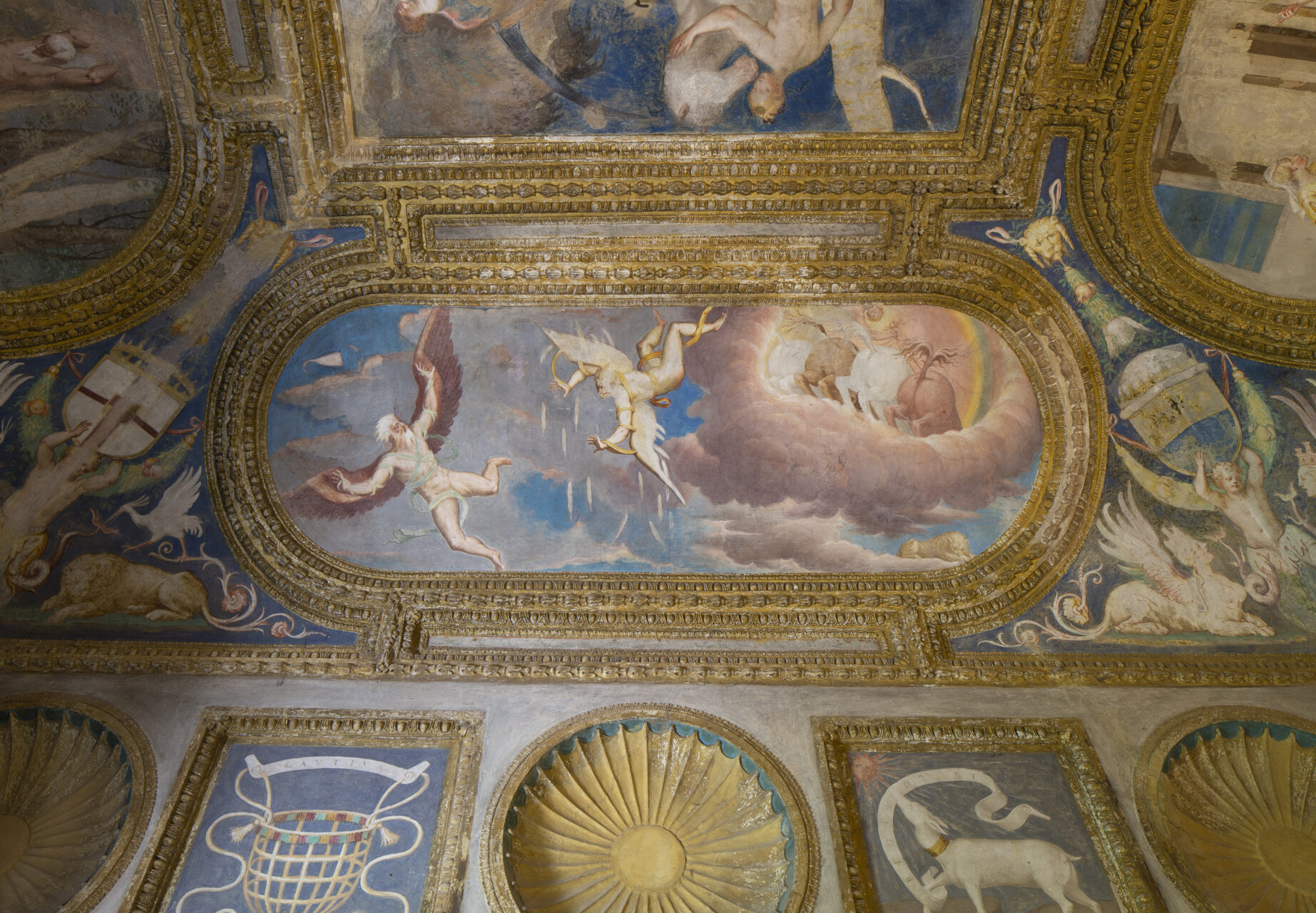
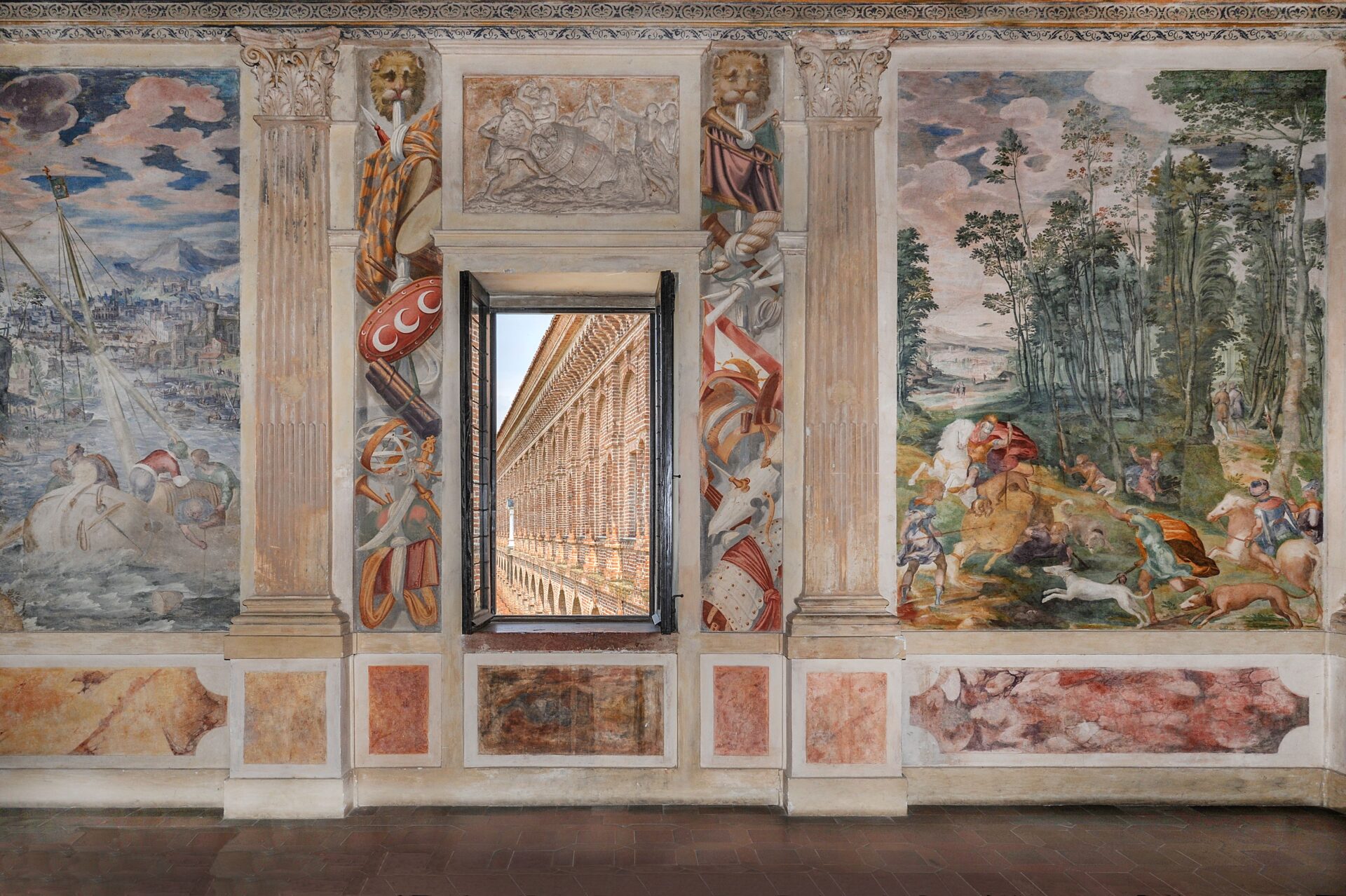
The magnificence of Garden Palace It is especially evident in the interiors, frescoed between 1582 and 1587 by the school of Bernardino Campi, a pupil of Giulio Romano. The walls reveal the Duke's versatile personality, his cult for classical antiquity and the’humanistic ideal. Despite the sober structure and the white plaster façade with sgraffito decorations, inside one can discover a decorative path that reflects Vespasiano's vast literary culture. It is likely that the Duke himself provided guidance for the iconographic program: a celebration of the Prince's virtues as a good ruler and of conjugal love, as a dedication to his third wife, Margherita Gonzaga of Guastalla.
The Fountain Garden
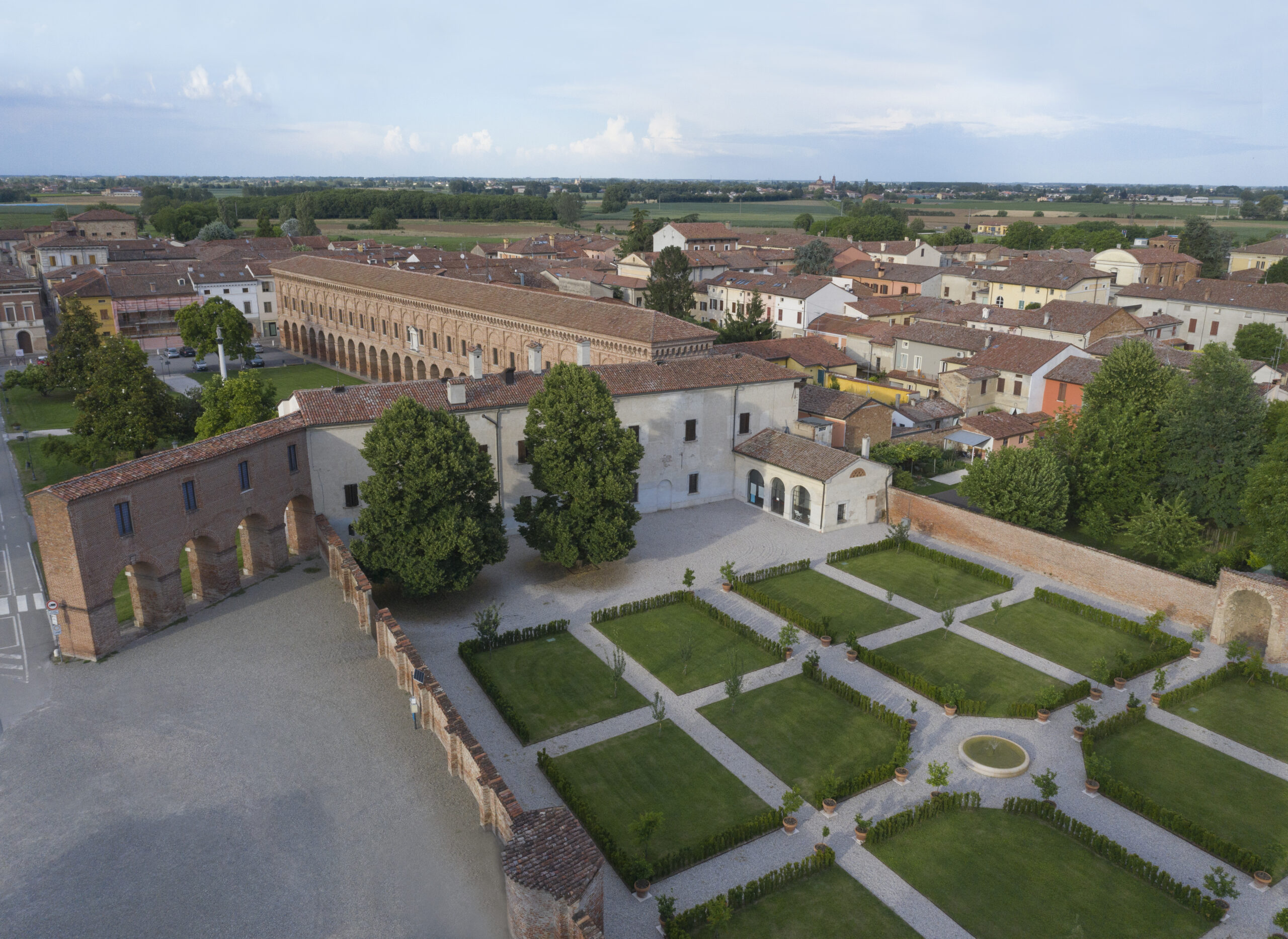
A garden, designed by Campi, was established adjacent to the palace in 1584 as an essential complement to the suburban villa. The garden is trapezoidal in shape and surrounded on three sides by a wall. At the center of each side are grottoes paved with river pebbles and entirely encrusted with natural stalactites. The niches contain large shell-shaped marble basins, one of which still stands, topped with lion-head gargoyles.
In 1584, a fountain with a wooden dome was erected at the intersection of the avenues, giving the garden its name. Six years later, a pergola was built, over which climbing vines formed a sort of temple around the fountain.
The Fountain Garden It retained this shape until the early 17th century, after which it was abandoned and left to decay. Recent archaeological excavations have brought to light the lead plumbing system that powered the jets and water features at the end of the 16th century.
Now known as the Palace Garden, the green space has been brought back to light after a careful restoration aimed at restoring its original appearance as an Italian Renaissance garden: a structured layout, symbolic vegetation, and a spectacular fountain. The project restores not only the aesthetics but also the soul of the place as a private and refined space for Vespasian's court.