
Vespasian's highest ideals "embodied" in a statue
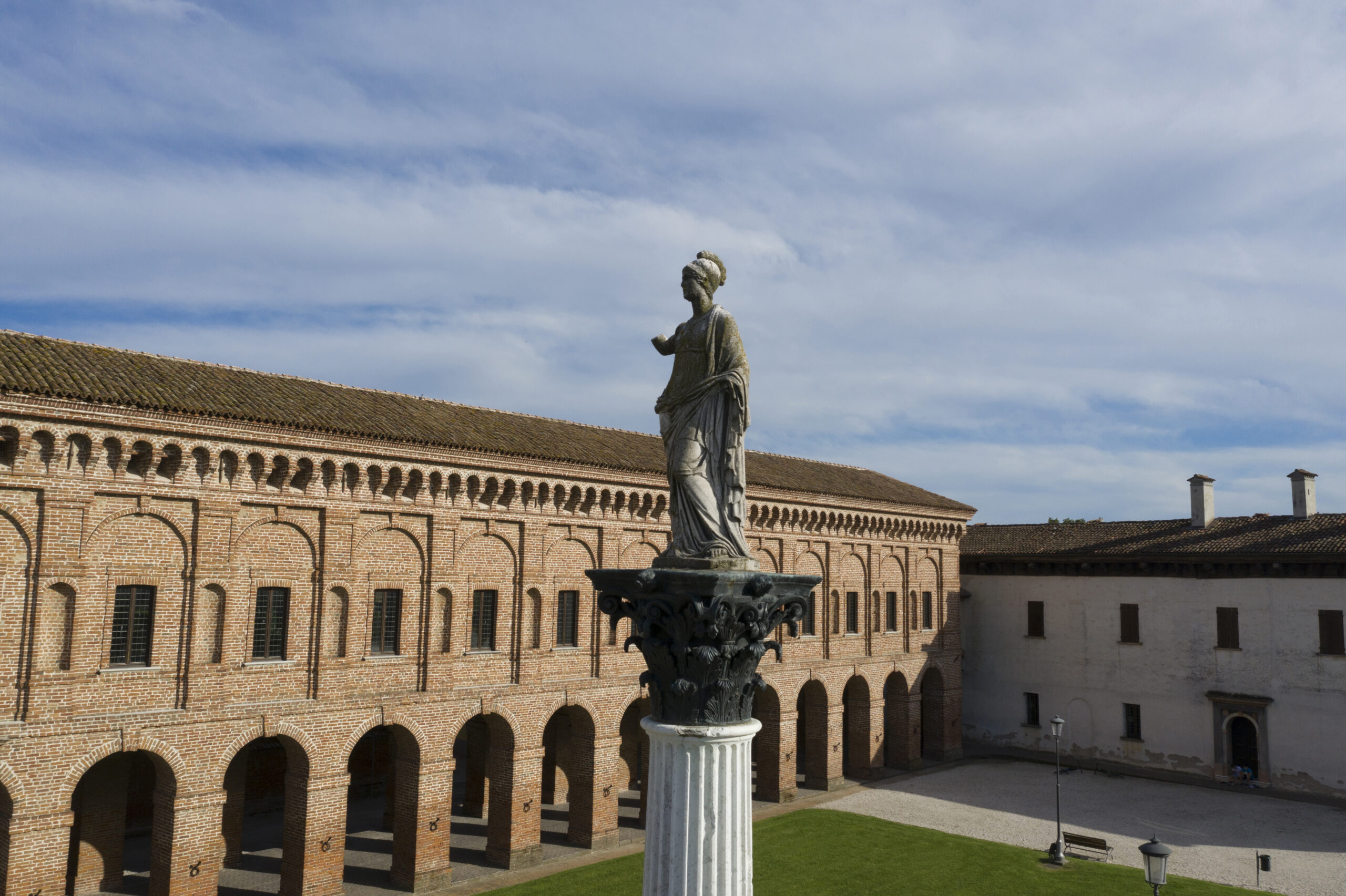
Goddess of wisdom and "just war," Minerva could only represent the spirit of an ideal city. For this reason, she becomes the patron saint of Sabbioneta and watches over the city and its citizens from above.
It is a monument made up of elements from different eras: an Ionic-style marble column with a bronze base and capital dating back to the late 16th century, surmounted by a white marble statue from the Roman era.
Its original location was along the ancient Giulia road, where it was erected in 1584. In this place the two roads intersect. Decumanus And Thistle, the main streets of the city, a central location, where the goddess Minerva becomes the cornerstone of Sabbioneta itself.
In 1931, it was moved and relocated to the center of Piazza d'Armi, facing Palazzo Giardino. Today, Minerva once again faces the city center, reviving her original role as protector of Sabbioneta.
Kidnapped or legally purchased? Legend has it that the statue was part of the loot stolen by Louis Rodomonte, Vespasian's father, during the Sack of Rome in 1527. In reality, the valuable statue, dating back to the late Hadrianic period (2nd century AD), was purchased by Vespasian on the antiques market for his collection of ancient marbles. Given the difficulty of dismantling and transporting it, the statue was spared the transfer to Mantua that many other ancient objects had to undergo in 1773/74.