A space free from Habsburg control for culture and entertainment, uncensored. Thus the Teatro Sociale marks the beginning of a new era.
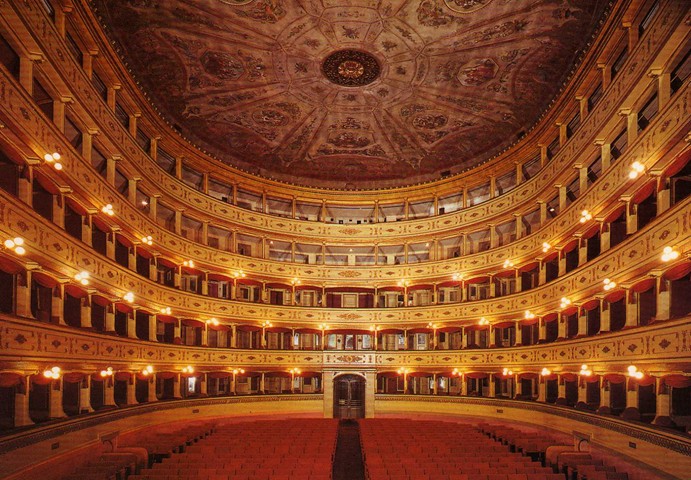
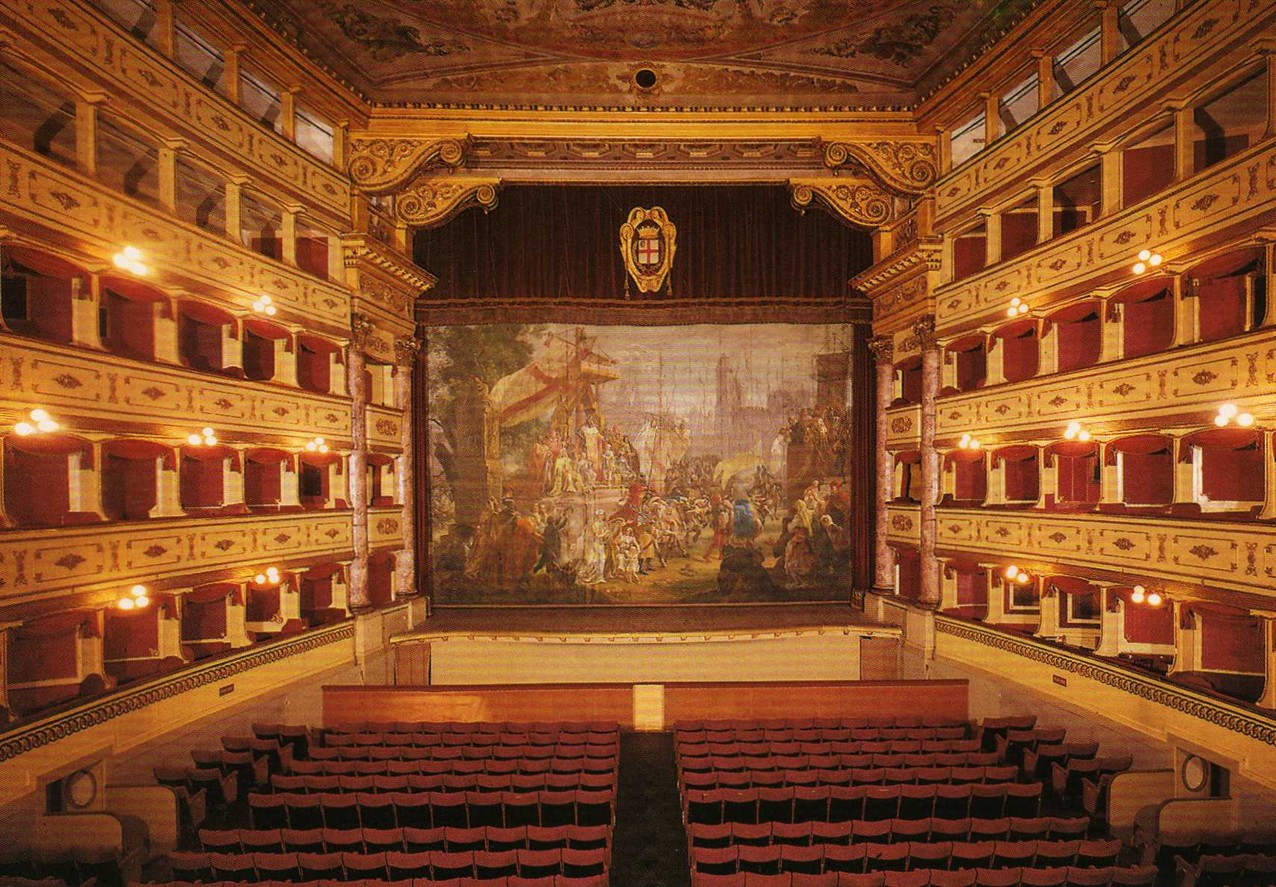
In the first two decades of the nineteenth century, the growing Mantuan bourgeoisie's need for autonomy materialized in the construction of a free, private cultural center suited to the new theatrical canons: the Teatro Sociale. The project was designed by architect Luigi Canonica, a student of Piermarini with whom he worked on the La Scala Theatre in Milan, was completed in 1822, after six years of construction. It was built in the Neoclassical style, following the most characteristic patterns of Italian opera.
Its construction was severely hindered by the Habsburg government, but the 90 box-holders did not give up on their project and shouldered the huge costs of the factory.
Among the first audience members were fathers and grandfathers of revolutionaries and martyrs for their country, such as Don Enrico Tazzoli and Ippolito Nievo, but also many women, who distanced themselves from the concept of the angel of the hearth and entered society firsthand. Their homes exuded ideals of freedom and intellectual vitality, which is why the Teatro Sociale immediately became a symbol of the nascent bourgeois patriotism in opposition to the Restoration, which would lead to the independence movements of the Risorgimento.
Among the artists who contributed to the fresco decorations, the painter Tranquillo Orsi stands out, who also decorated the La Fenice Theatre in Venice.
Looking at the theater's façade, one notices the six-column portico surmounted by a triangular pediment that lends the structure grace, majesty, and elegance. The statues in the niches represent Melpomene and Thalia, muses of tragedy and comedy and symbols of the theater. They were created by Antonio Spazzi, who also created several statues in the Loggia di Davide at Palazzo Te.