
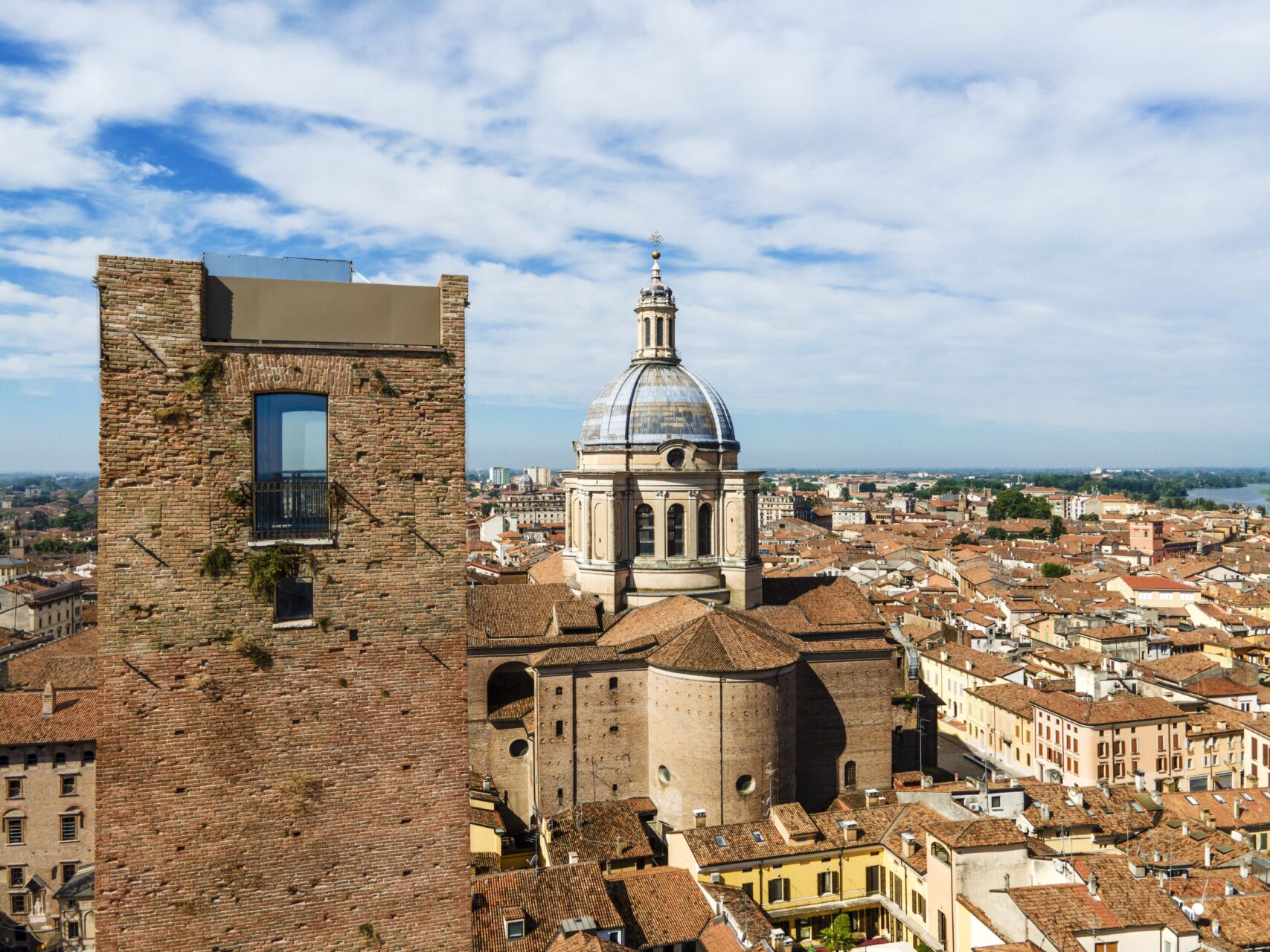
The history of Mantua has its roots far back, when first the Etruscans and then the Romans settled in a wide bend of the Mincio.
Over time, the original urban center progressively expanded, thanks to significant land reclamation projects.
In the Middle Ages, the hydraulic engineering works of Pitentino gave rise to 4 lakes: Superiore, di Mezzo, Inferiore and Paiolo (now filled in).
In 1190 the fortified city was transformed into an island in the middle of the Po Valley.
But what we admire today is the Renaissance Mantua, the fruit of the architectural and urban renewal strongly desired by the Gonzagas.
The project is inspired by both an ideological vision, centered on the function of the city in relation to its inhabitants, and a political vision, as a sign of their power and cultural stature.
The Lords of Mantua called to court some of the most renowned artists of the time, including Leon Battista Alberti, Andrea Mantegna and Giulio Romano.
They are entrusted with the task of staging the great pomp that the city still displays today.