
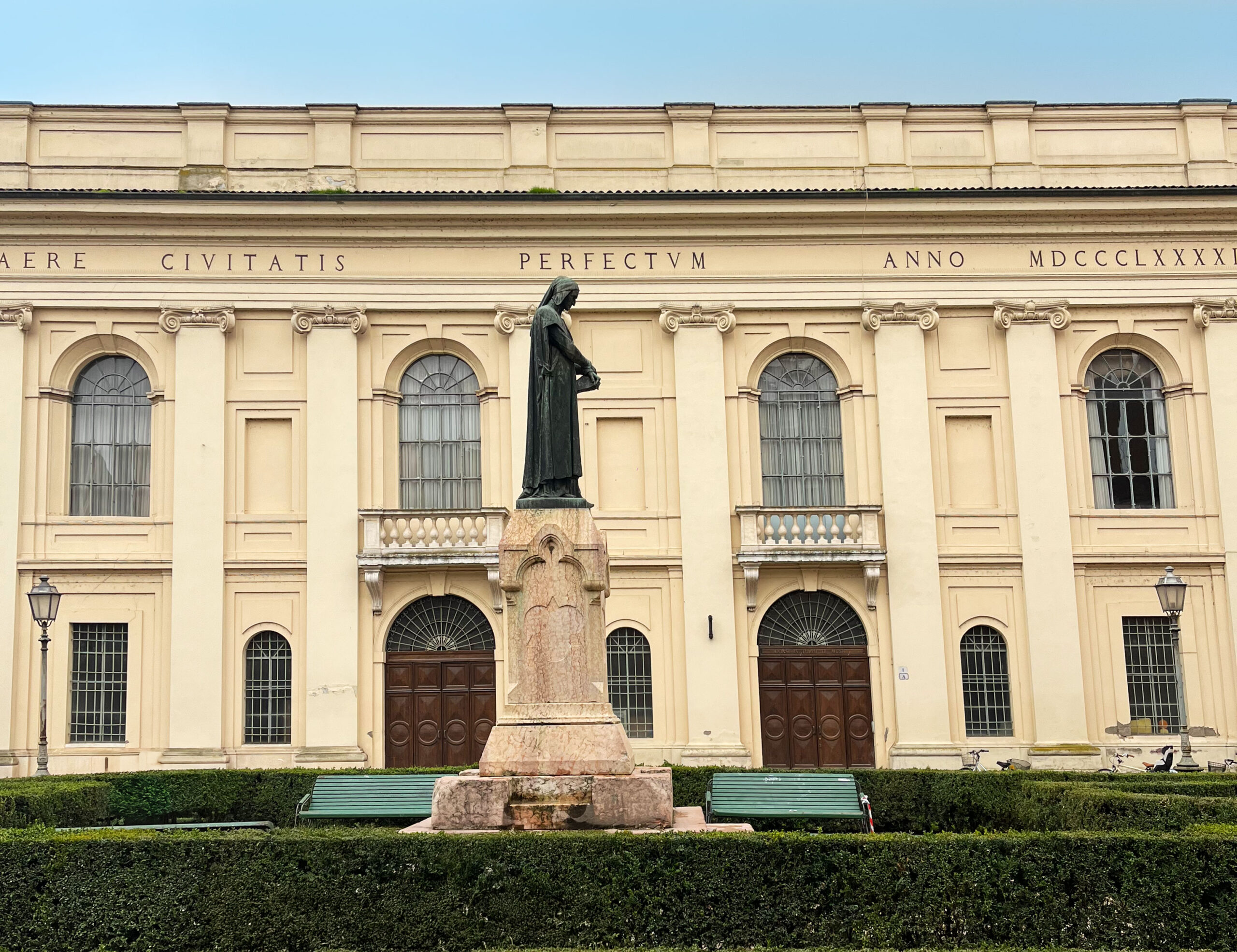
With the fall of the Gonzaga dynasty, Mantua lost its cultural significance until the arrival of the Austrians. In particular, in the second half of the 18th century, Maria Theresa promoted the reorganization of academic activities.
In 1752 Maria Theresa authorized the establishment of an Arcadian Colony, called Virgiliana, based in the Ducal Palace and granted the opening of the Academy of Fine Arts (also called Teresiana), founded by the painter Giovanni Cadioli.
The Austrian authorities then began a process of unification of the Mantuan Academies with a new structure organized into four faculties: philosophy, mathematics, experimental physics and literature.
The “new” Academy, which will take on the definitive title of Royal Academy of Sciences, Letters and Arts, will include: the Academy of the Timidi, the Academy of the Invaghiti, the Academy of the Colonia Arcadica Virgiliana and, from 1768, the school of painting and sculpture established by Cadioli.
Later, other disciplines were added: agriculture, obstetrics, and hydraulics, with the aim of promoting the dissemination of technical and scientific knowledge, perfectly in line with the Enlightenment culture. Supported by prominent figures in the Italian cultural scene, the Academy became a point of reference well beyond the borders of Mantua and fostered important cultural institutions: the Natural History Museum, the public library, the botanical garden, and the museum of antiquities.