Ideal city, fortified citadel of the Renaissance
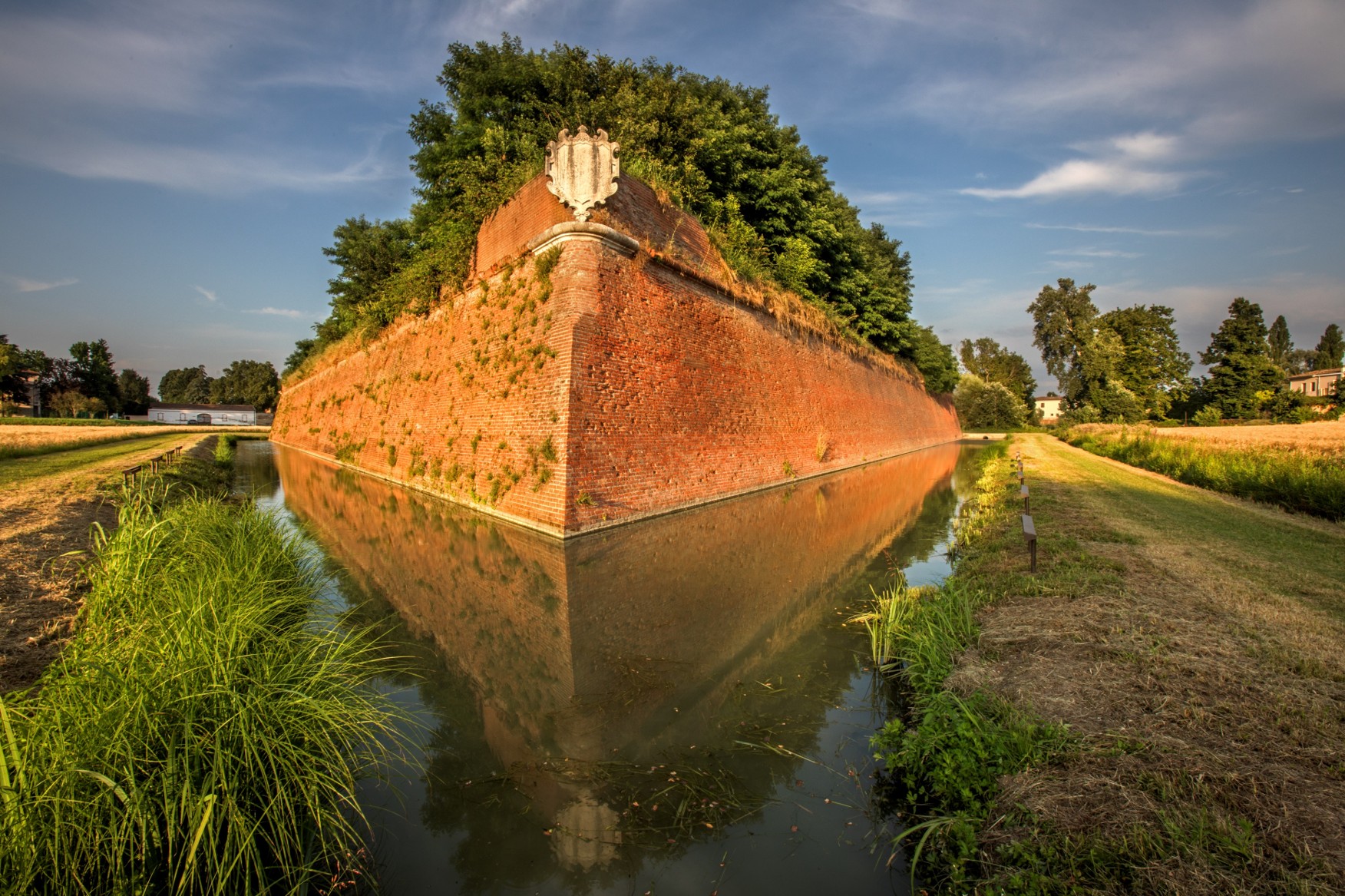
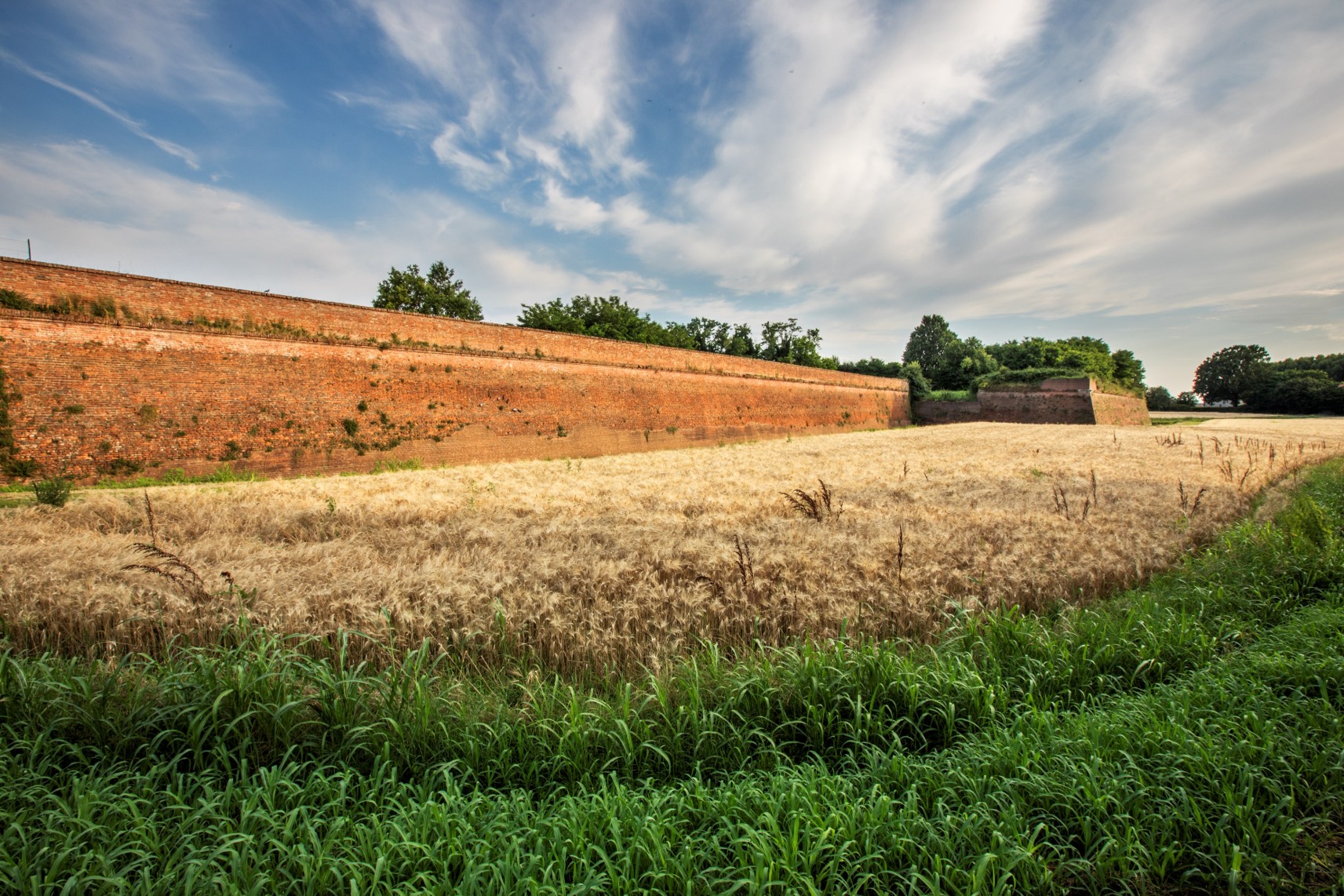
Vespasian wanted to equip Sabbioneta with a modern defensive system, consisting of bastions and earthworks capable of withstanding artillery attacks.
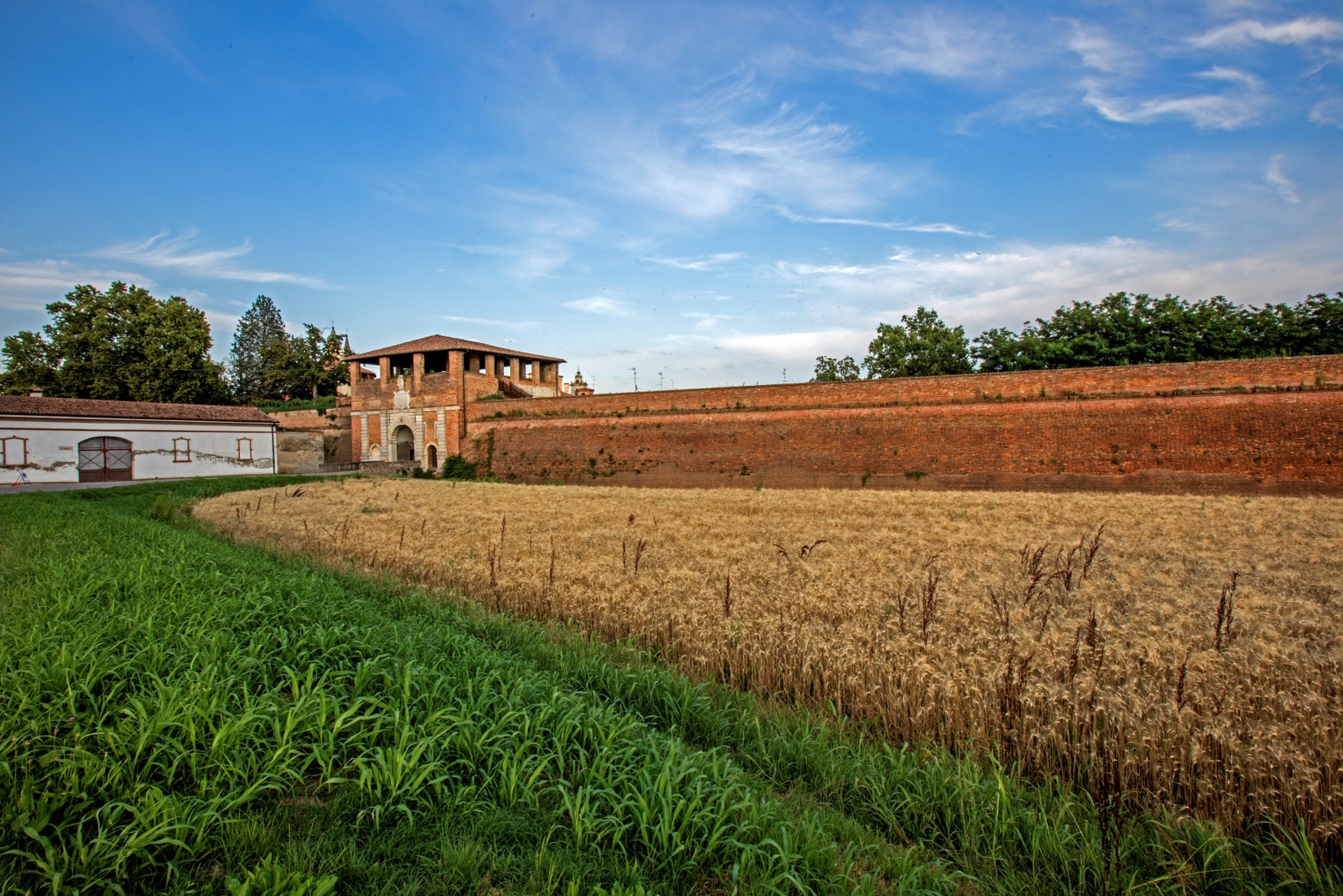
Therefore, between 1556 and 1589 he built a wall, an essential element of the urban plan, the very essence of the military citadel, within which the city of Sabbioneta would develop.
Vespasian's project envisaged a fortified structure of irregular hexagonal shape, approximately six or seven metres high above ground level and surrounded on the outside by a wide moat; at the corners were built six arrowhead bastions dedicated to Saint Nicholas, Saint Mary, Saint Francis, Saint Elmo, Saint George, and Saint John. The fortification system was finally completed with the opening of two gates in the shape of triumphal arches, to the south-east (Imperial Gate) and to the northwest (Victory Gate).
The walls also include the pre-existing medieval fortress and its moat, in the section between the San Francesco and Santa Maria bastions.
The remains of the fortified fortress
The fortress was built at the behest of Ludovico Gonzaga, Vespasiano's grandfather. He considered it essential to preserve this building because it became a symbol of Gonzaga's authority and, consequently, legitimized Vespasiano's presence and actions in the city.
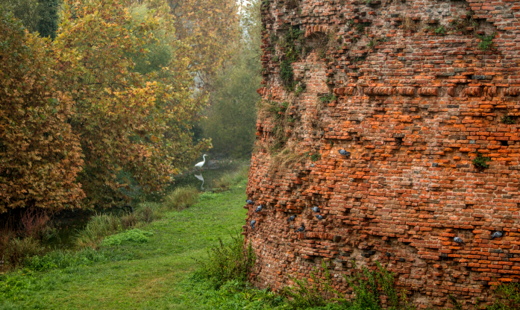
The building had a defensive function for the village of Sabbioneta: it was a real fortress surrounded by a wide and deep moat, connected to the square by a drawbridge, and connected to the complex of Garden Palace via a narrow passage covered by arches. It was demolished by the Austrians between 1786 and 1793. Today, only two truncated cylindrical towers remain to recall the castle's original mass.