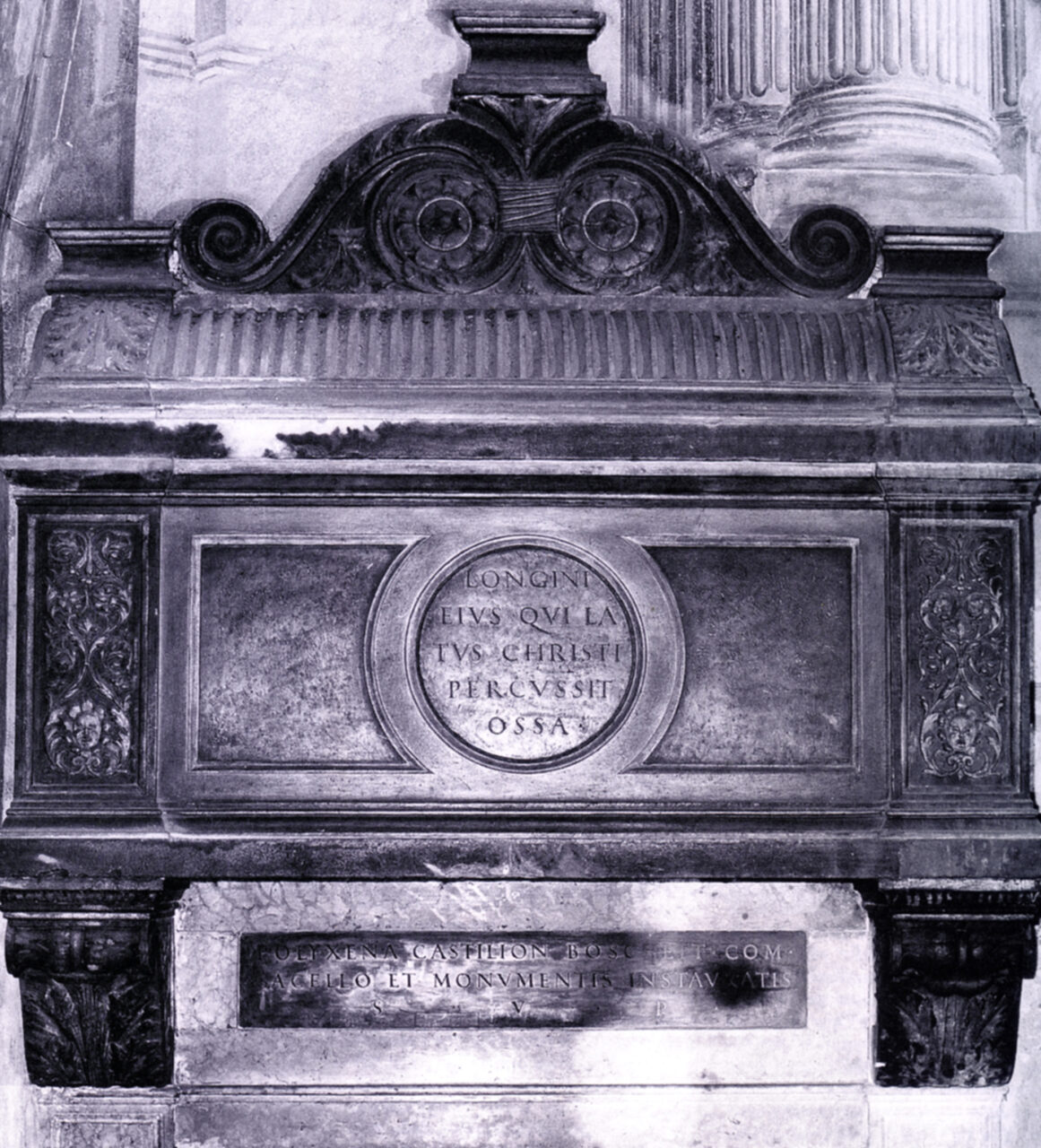
Legend has it that Longinus, the Roman soldier who pierced Christ's side, collected the earth soaked in his blood and transported it to Mantua. Upon his death, which occurred as a martyrdom for the faith in 34 AD, the Relic it was buried and forgotten for centuries.
Only in 804 the Relic was found thanks to a premonitory dream of a believer in which Saint Andrew indicated the place where to look for it. Charlemagne, then Emperor, had it legitimized by Pope Leo III and donated part of it to the royal chapel in Paris (Sainte-Chapelle). A small church in honor of the apostle Andrew was built on the site of its discovery.
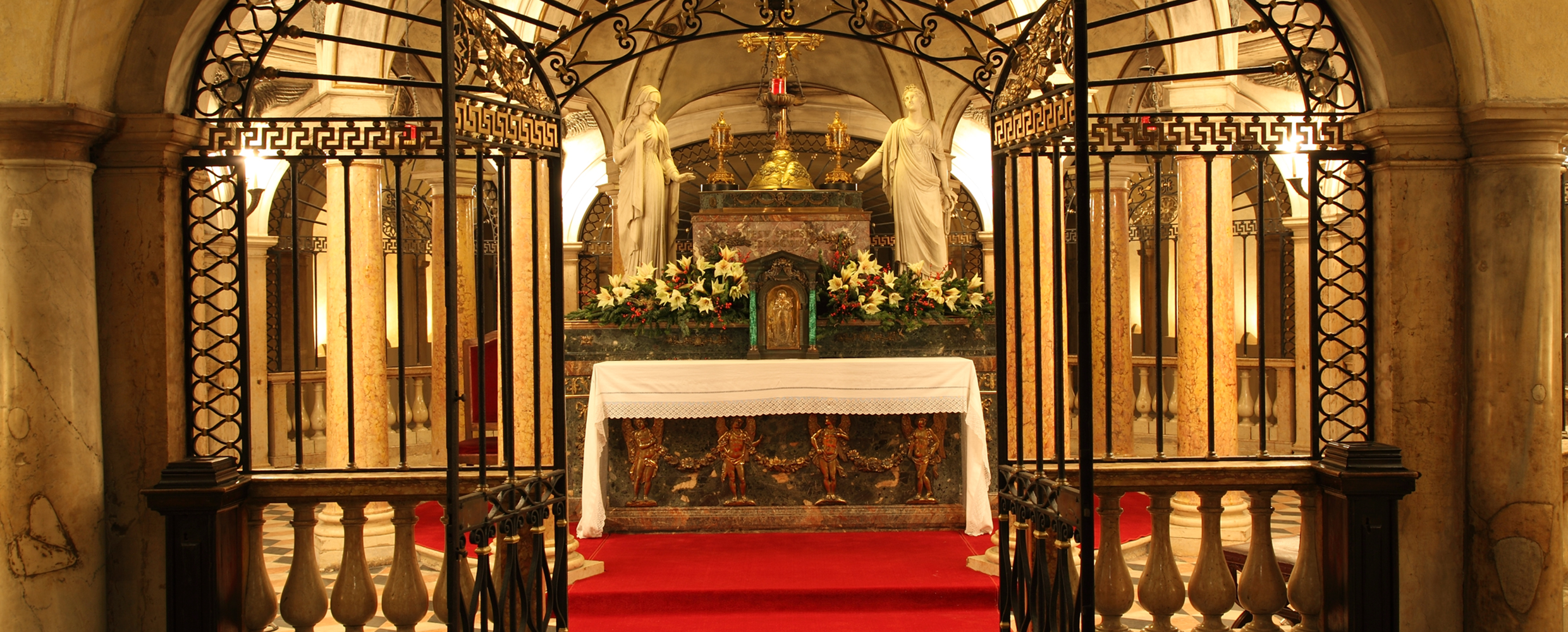
Since the early 15th century, the relic has been kept in two precious gold reliquaries in the shape of Ambrosian pyxes, commissioned by Isabella d'Este and made by the goldsmith Nicolò da Milano. In 1848, during the riots and military actions of the First War of Independence, Austrian soldiers stole them and dispersed their contents. Sacred Vessels The relics currently in use were created by the Milanese goldsmith Giovanni Bellezza and funded—as compensation for the damage caused—by Emperor Franz Joseph of Habsburg. They replicate the shape of the 16th-century version, with the addition of statuettes of Saint Longinus, Saint Andrew, and the Risen Christ, and are cast in solid gold. The relic is kept in an altar-safe at the center of the crypt of Saint Andrew and is displayed twice a year, every Good Friday and on March 12, the anniversary of its discovery.
The people of Mantua are strongly linked to the cult of the Sacred Vessels, as demonstrated by the presence of panels depicting them on the facades of many city houses.