The development of the city, starting from the first Roman settlement
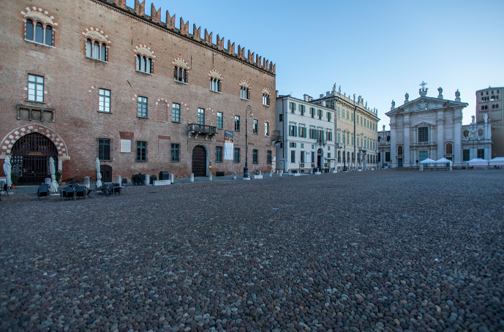
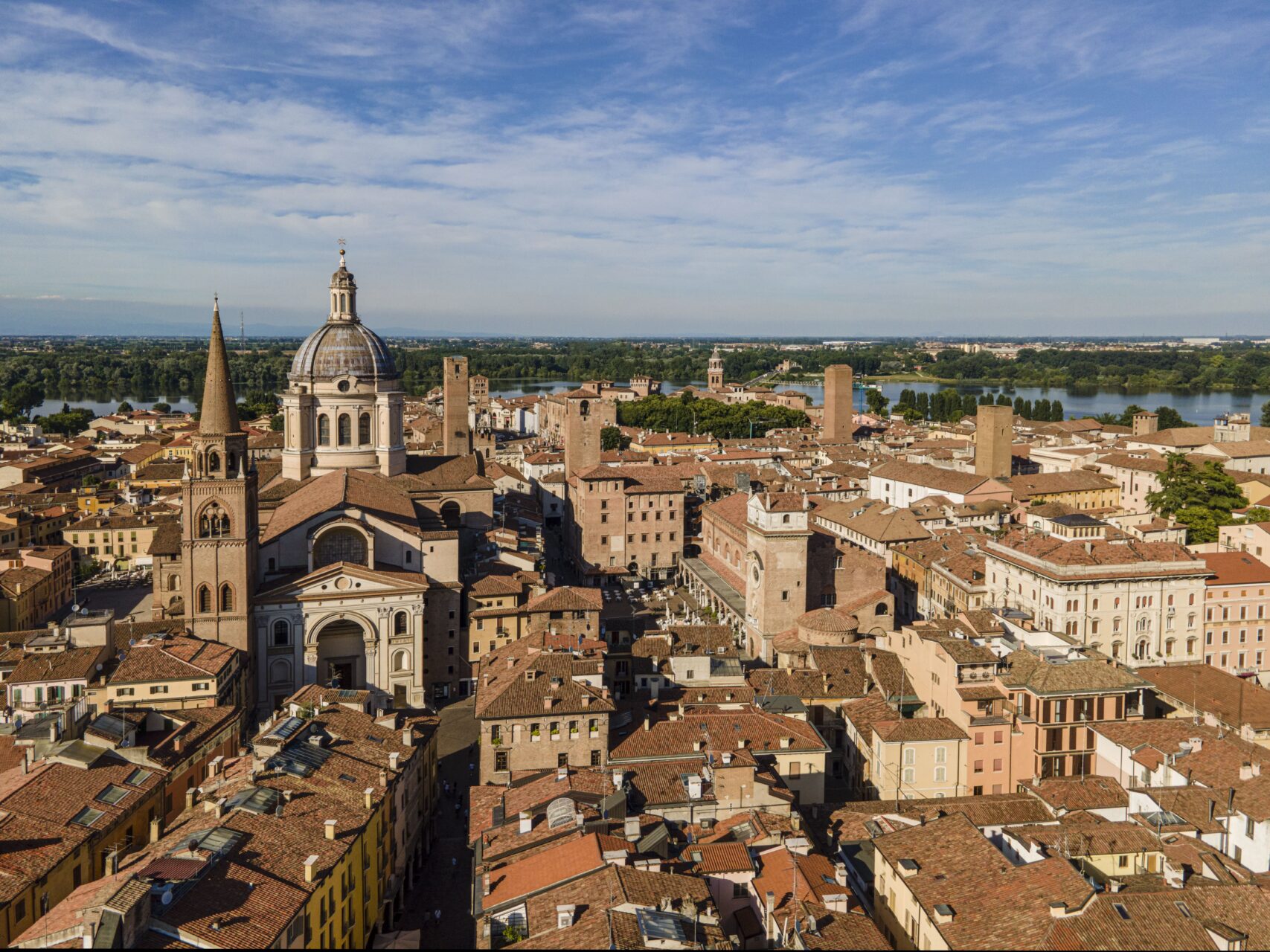
In Mantua, the evolution of the city can be perceived by following the so-called Prince's Path, the road that connects the Ducal Palace to Palazzo Te from north to south. This itinerary ideally passes through the three city walls, now lost and a symbol of Mantua, a city of transformation, which mark the urban development starting from the oldest area up to the Renaissance center. Between the shore of the Lower Lake and Sordello Square it extends Ducal Palace, one of the largest royal palaces in Europe: a palace in the shape of a city. This area corresponds to the oldest part of the historic center, of Etruscan-Roman foundation. In 1328 the Gonzaga, having become lords of Mantua, transformed it and made it a suitable setting for the representation of their power.
From Piazza Sordello you enter the vault of San Pietro, built in the sixteenth century on a medieval layout, which marks the limit of the first city wall and leads into the development area of the municipal era – renovated during the Renaissance.
There Mantua of the Renaissance, between the second and third circles of walls.
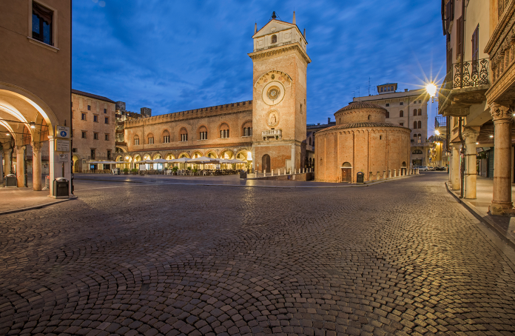
Here you'll find yourself immersed in the city's vibrant commercial heart, consisting of the interconnected Piazza Broletto, Piazza Erbe, and Piazza Mantegna. The squares are lined with Renaissance porticoes and some of the city's most significant buildings, both public and private: Palazzo del Podestà, Palazzo della Ragione with its Clock Tower, the Rotonda di San Lorenzo, the Casa del Mercante, and the Painted House.
A little further on, the Rio canal borders the second circle of walls, which marks the beginning of the Renaissance expansion. From here you proceed along Via Principe Amedeo to the southern edge of Gonzaga Mantua, where you find the Mantegna's House, The Temple of San Sebastiano And San Sebastiano Palace, in correspondence with which the third circle of walls arose.
Continuing beyond the third circle you arrive at Te Palace, a suburban villa – a masterpiece by Giulio Romano – built at the behest of Federico II Gonzaga for use as a residence, recreation, hospitality, and entertainment venue. At the time, Palazzo Te stood on the island of Tejeto, in the center of Lake Paiolo, Mantua's fourth largest lake, now filled in.