A jewel of the Renaissance
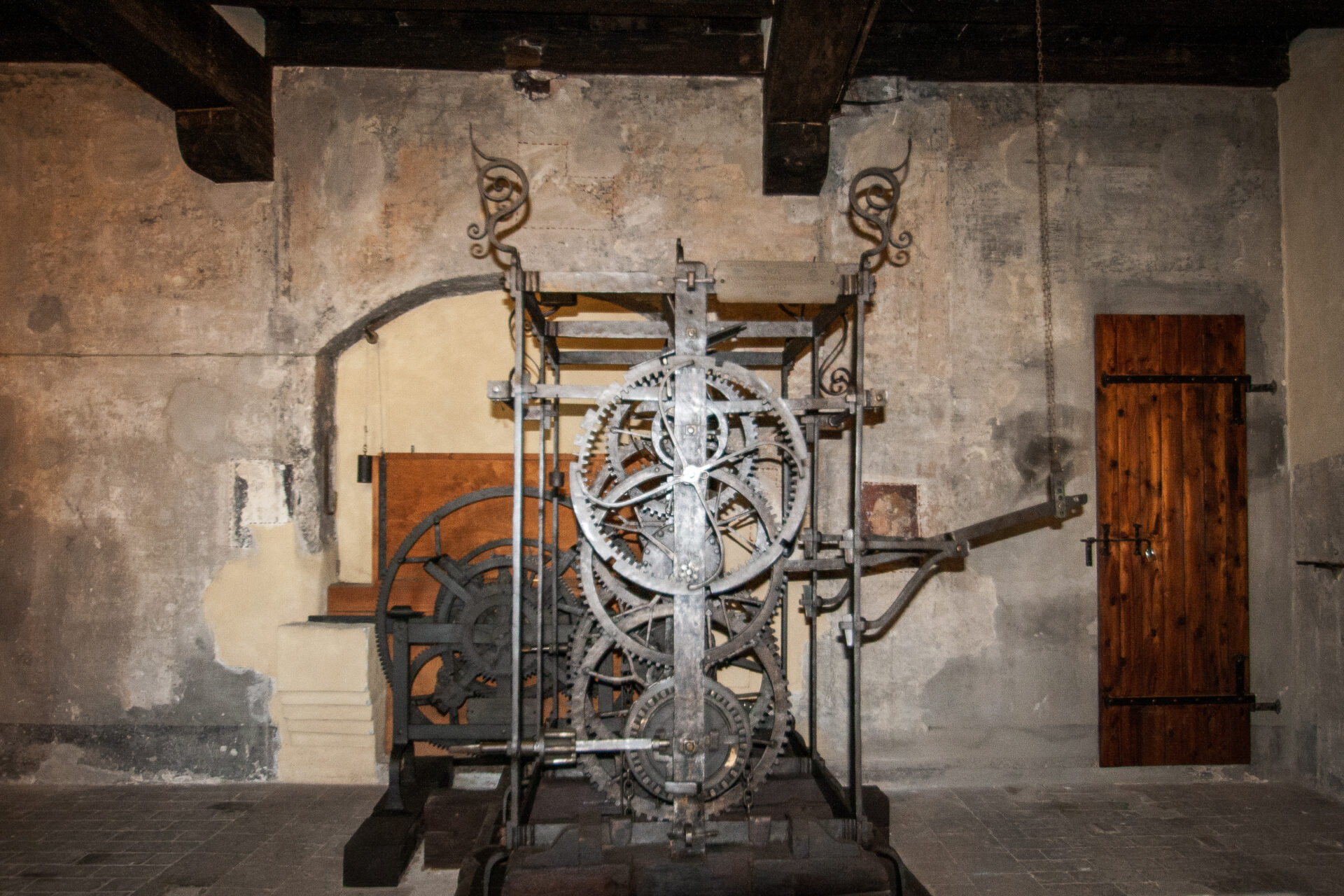
Installed on the tower in December 1473, the’Astronomical Clock It was created by Bartolomeo Manfredi, a mathematical astrologer at the court of Ludovico II and a pupil of the humanist Vittorino da Feltre.
Since its creation, this wonderful mechanism, a symbol of the time and magnificence of the Gonzaga family, has become a source of interest and curiosity for chroniclers of the time and for all citizens, who can read not only the passing of the hours, but also horoscopes and predictions on the course of the climate and the seasons, on the most favorable days for planting, and on the advisability or otherwise of making decisions, even very personal ones.
An extraordinary mechanism, with multiple levels of interpretation.
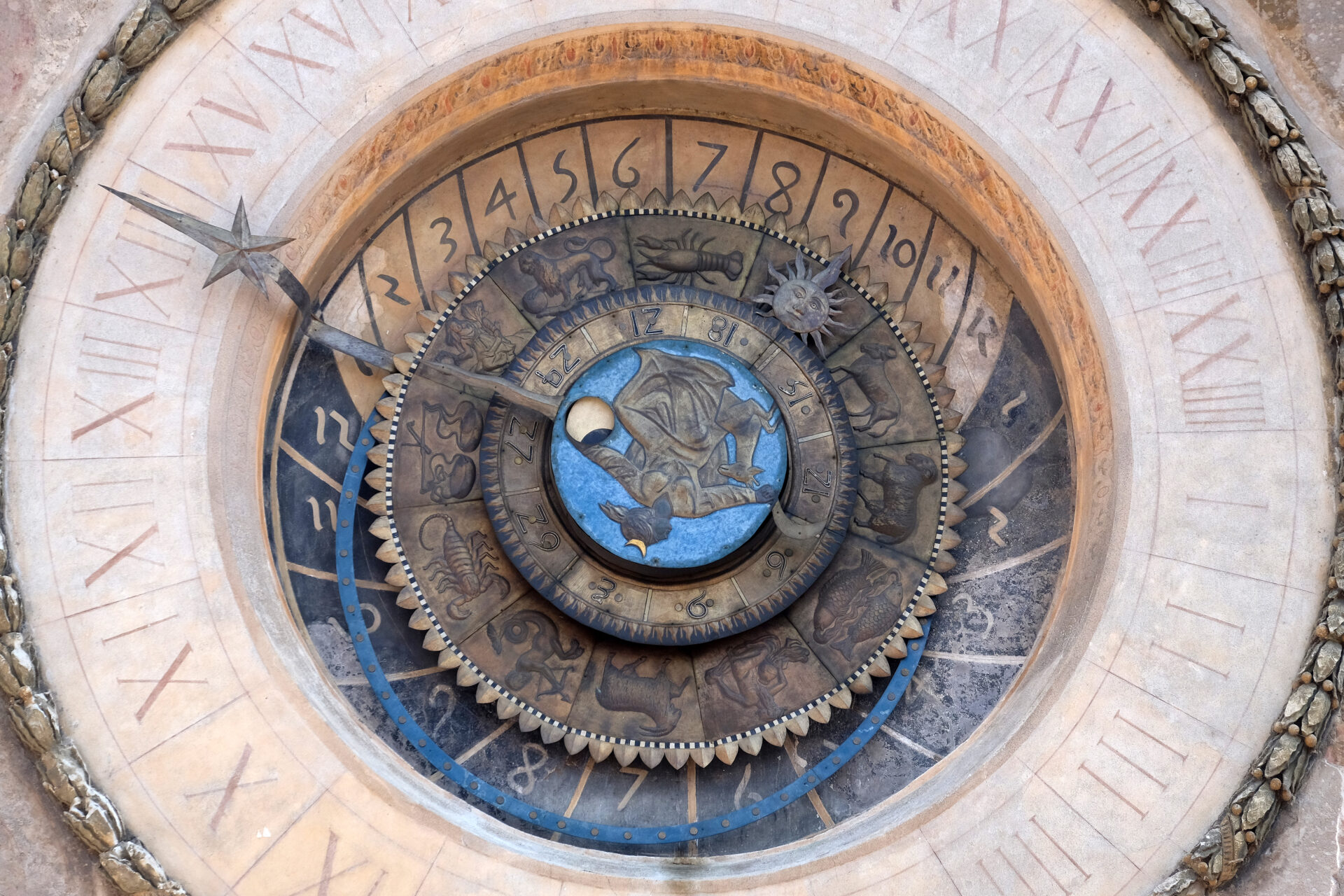
Reading the dial of the’Astronomical Clock The Manfredi dial is structured on several levels: the main hand, star-shaped, indicates the hours – twenty-four – marked in Roman numerals and framed by a laurel festoon with golden berries.
The clock originally displayed Italian time, which placed the beginning of the day at sunset. For this reason, the first hour is indicated on the right side of the dial, in the position where the setting sun can be seen. Further inward is the dial of the light and dark Planetary Hours, connected to the Celestial Equator (the thin blue circle with the gold dots): the combination of these two crowns and the Sun Hand allowed the user to determine which planet was ruling at a given hour. Further inward is the crown of the lunar month. In the center, a female figure, likely representing the goddess Leto, holds in her right hand the sickle indicating the lunar days and, in her left, the small circular window from which the lunar phases and the hand indicating the Moon's position in the zodiac can be read.