Cradle of Mantuan knowledge
The area of the ancient Grifone neighborhood, in the medieval historic center of Mantua, has undergone significant transformations over the centuries. The buildings near the Jewish quarter long housed prominent families and institutions, until Duke Guglielmo Gonzaga entrusted them to the Jesuits. This choice was strategic, as the clerics, with their preaching, would curb the spread of the Jewish faith.
In the 16th century the Jesuits They established their college here, which, thanks to the financial support of Eleonora Gonzaga of Austria, soon became a high-level educational institution. The institute focused primarily on the education of the wealthy social classes, offering courses in Rhetoric, Grammar, and Philosophy, until in 1625 it received imperial authorization to award degrees in Law, Medicine, Philosophy, and Theology, transforming it into a true university institution. From here, a century later, the Palace of Studies.
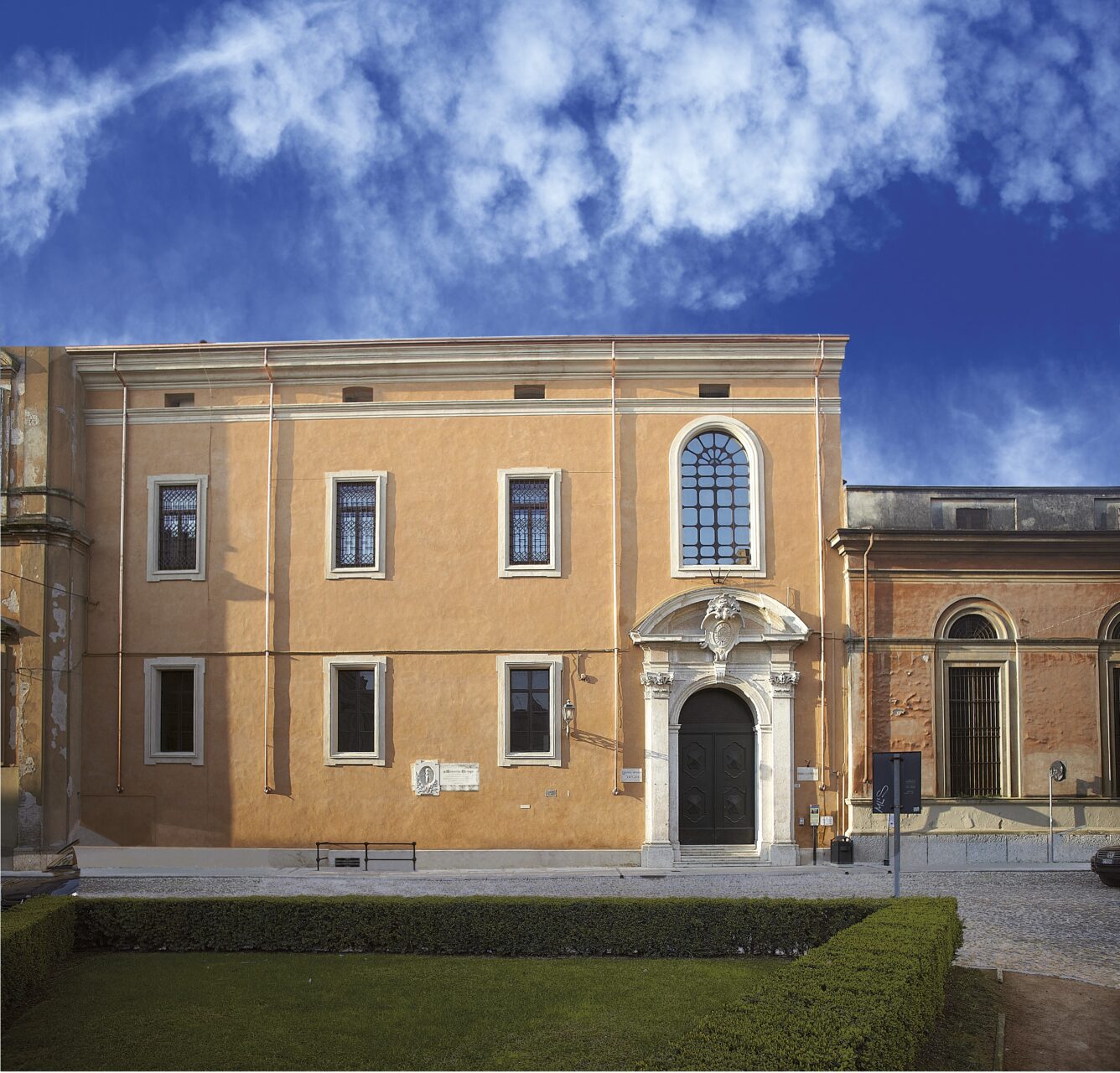
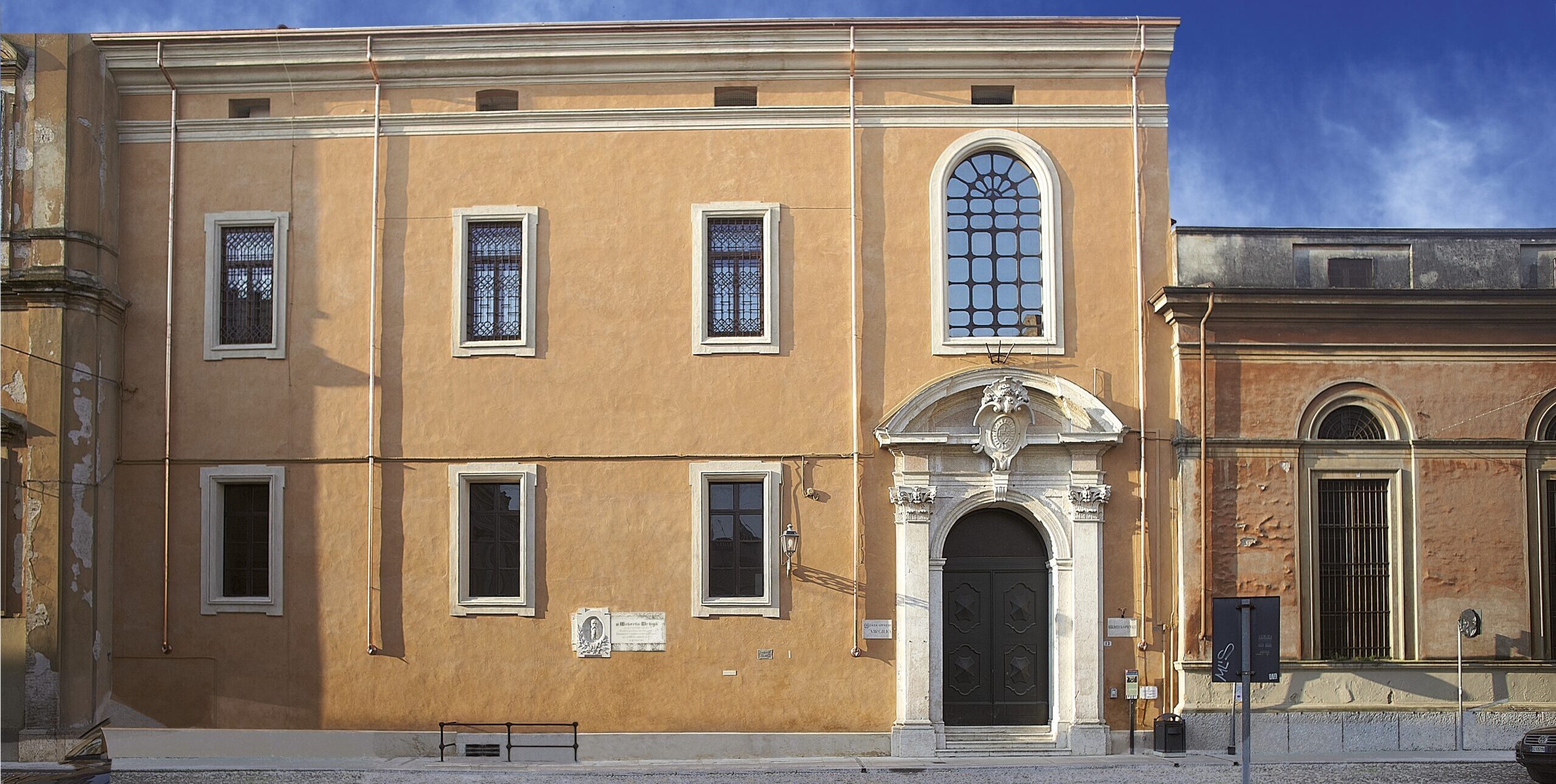
Born from a project of Alfonso Torreggiani
In 1753, the Jesuits commissioned the architect Alfonso Torreggiani to design the Palace of Studies, conceived as an additional wing to the Jesuit college. The building extends over two levels connected by an internal staircase and consists of spacious classrooms and a corridor. It is assumed that the more richly decorated ground floor was intended for philosophy, theology, law, and medicine courses, while the more sober upper floor was used for the school's daily life. The few frescoes still visible in the building date back to the late Baroque period and reflect an artistic scheme that harks back to Antonio Bibiena. Some of them appear to have been created by the Jesuits themselves, who relied on in-house painters and architects. Among the most significant decorations are the stucco-framed fresco in the refectory, attributed to Andrea Pozzo and dated 1695, and the "hall of doctorates," where degrees were conferred, with frescoes attributed to an artist close to the Bibiena family. Palace of Studies It has never lost its role as a school: home to the Imperial Royal Lyceum during the Habsburg era and the Virgilio High School since the unification of Italy. It houses the physics and natural science museums, which can be visited by reservation only.