The door of the duchy
In 1577, Emperor Rudolf II of Habsburg raised Sabbioneta to the dignity of duchy, granting Vespasiano Gonzaga the privilege of a personal coat of arms.
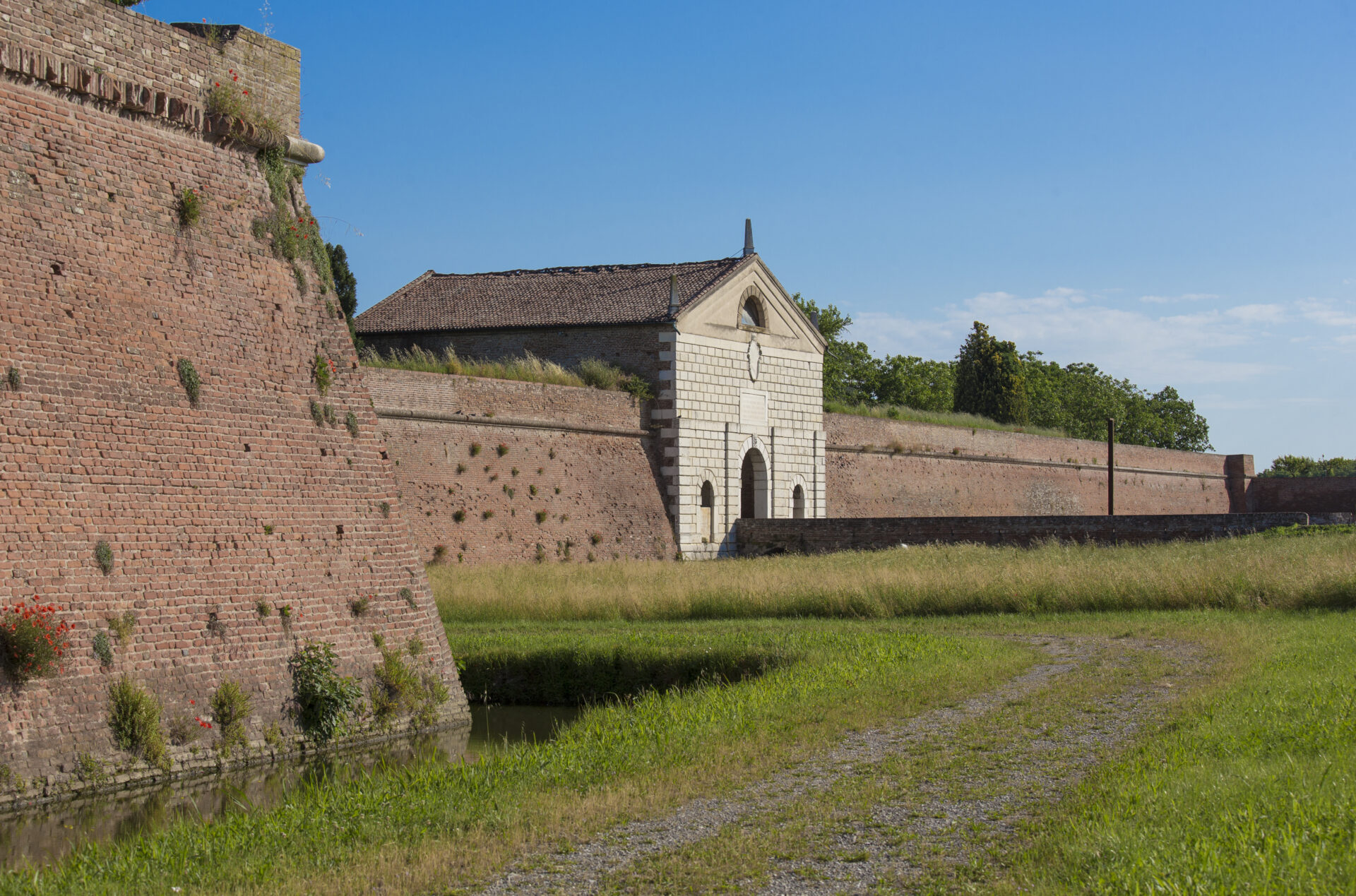
The nomination as Duke offers Vespasiano the emancipation from his cousins in Mantua, and for this reason in 1579, he decides to build Imperial Gate, a more majestic access, which completes the city walls and which will face east, precisely towards the Duchy of Mantua.
A door worthy of a duke, or perhaps, of a emperor.
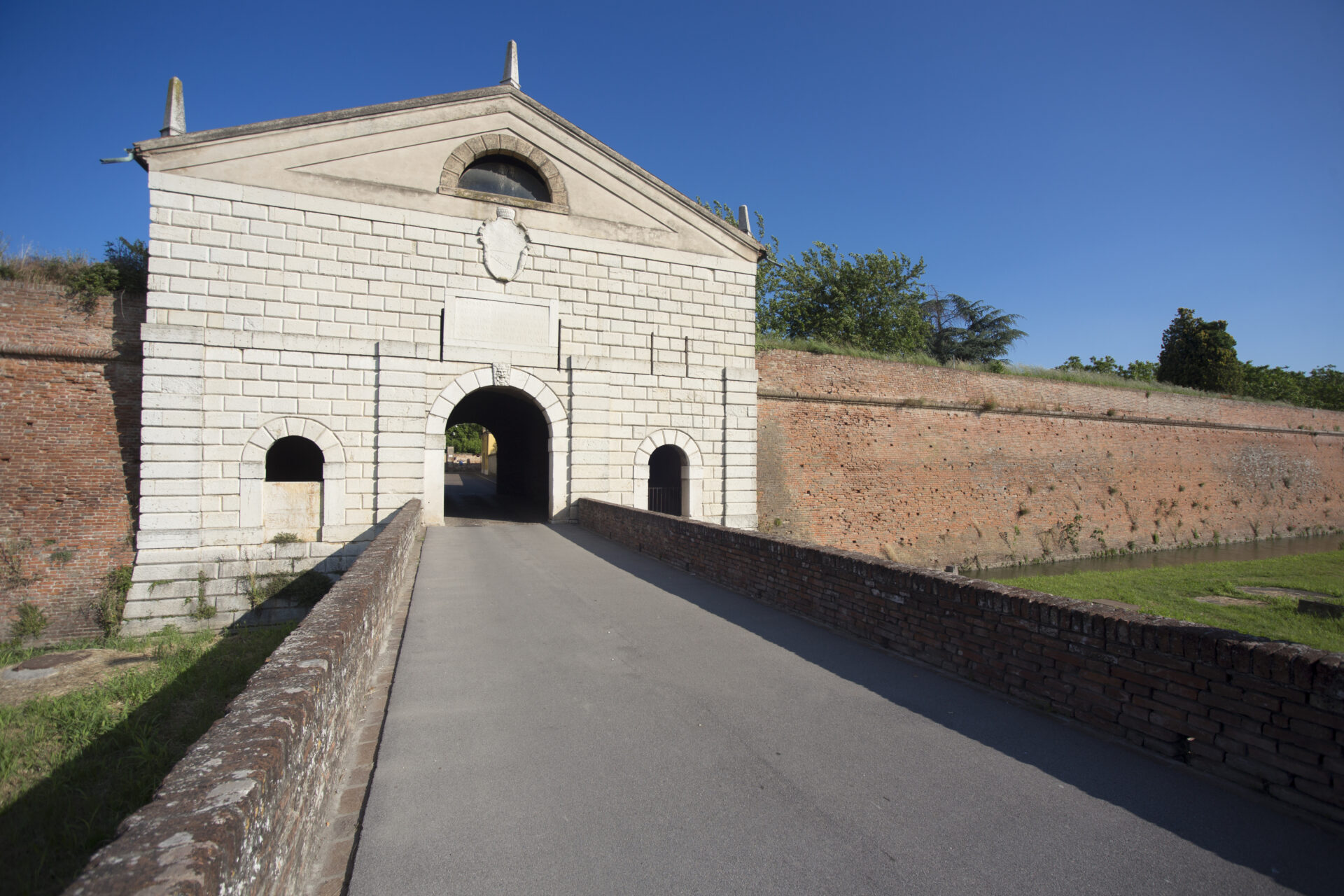
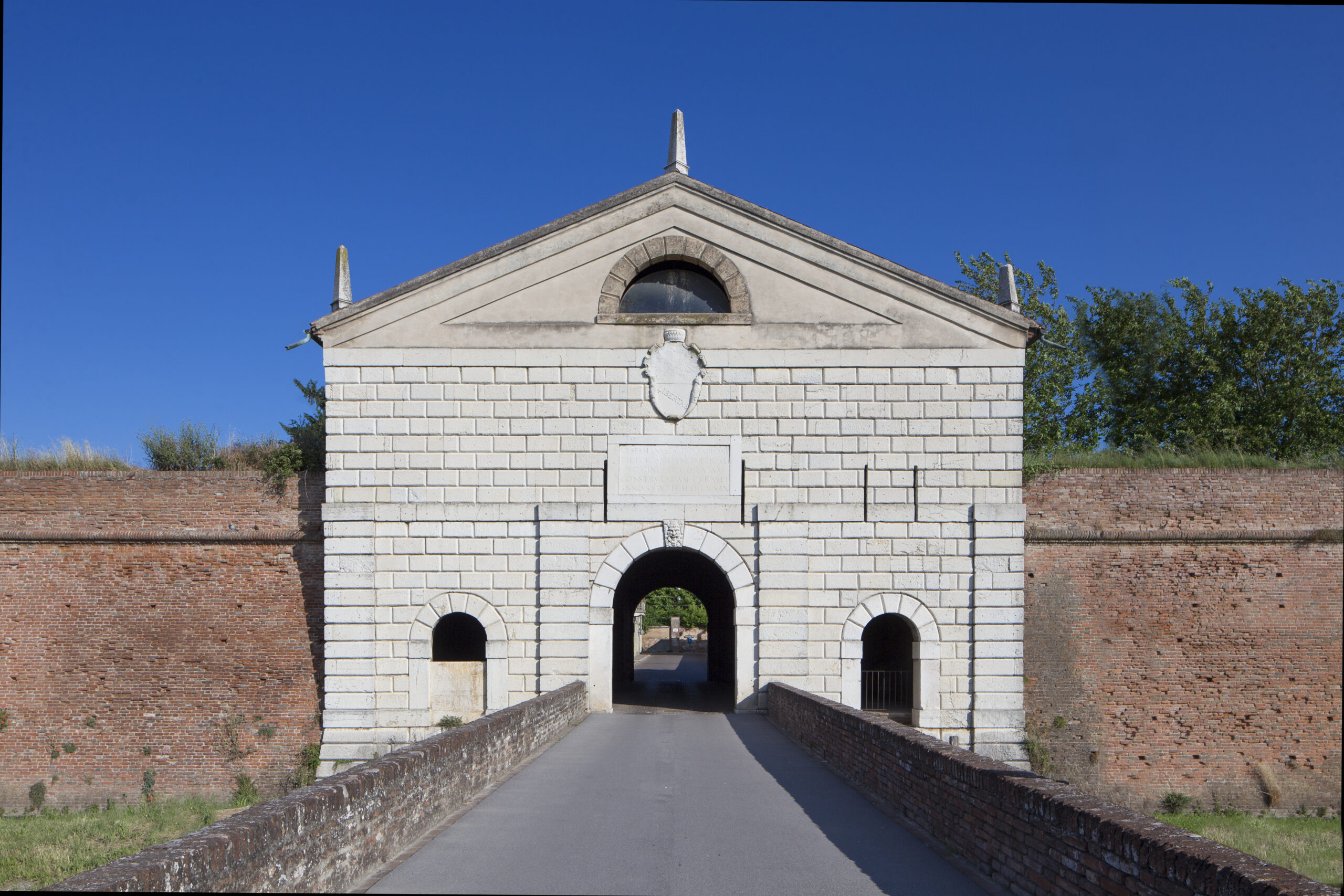
The facade of Imperial Gate It is imposing and majestic, and is entirely covered in rusticated white marble.
It has three vaulted openings, once equipped with two drawbridges, one of which was accessible to vehicles.
The tympanum is the result of a 19th-century architectural addition, which replaces the original, which is entirely similar to the one at Porta Vittoria.
The plaque on the main entrance reads:
VESPASIANVS D(ei) G(ratia) DVX SABLONE TAE PORTAM HANC IMPERIALI NOMINE DECORATAM CONSTRVENDAM CVRAVIT ANNO SALVTIS MDLXXIX (Vespasiano, Duke of Sabbioneta by the grace of God, promoted the construction of this gate decorated with the imperial name in the year of grace 1579).
As with Porta Vittoria, this epigraph is also signed by the ducal coat of arms in marble, with the double-headed eagle and the motto LIBERTAS, freedom. It is the coat of arms granted by’Emperor to Vespasian who represents independence from the Gonzagas of Mantua.