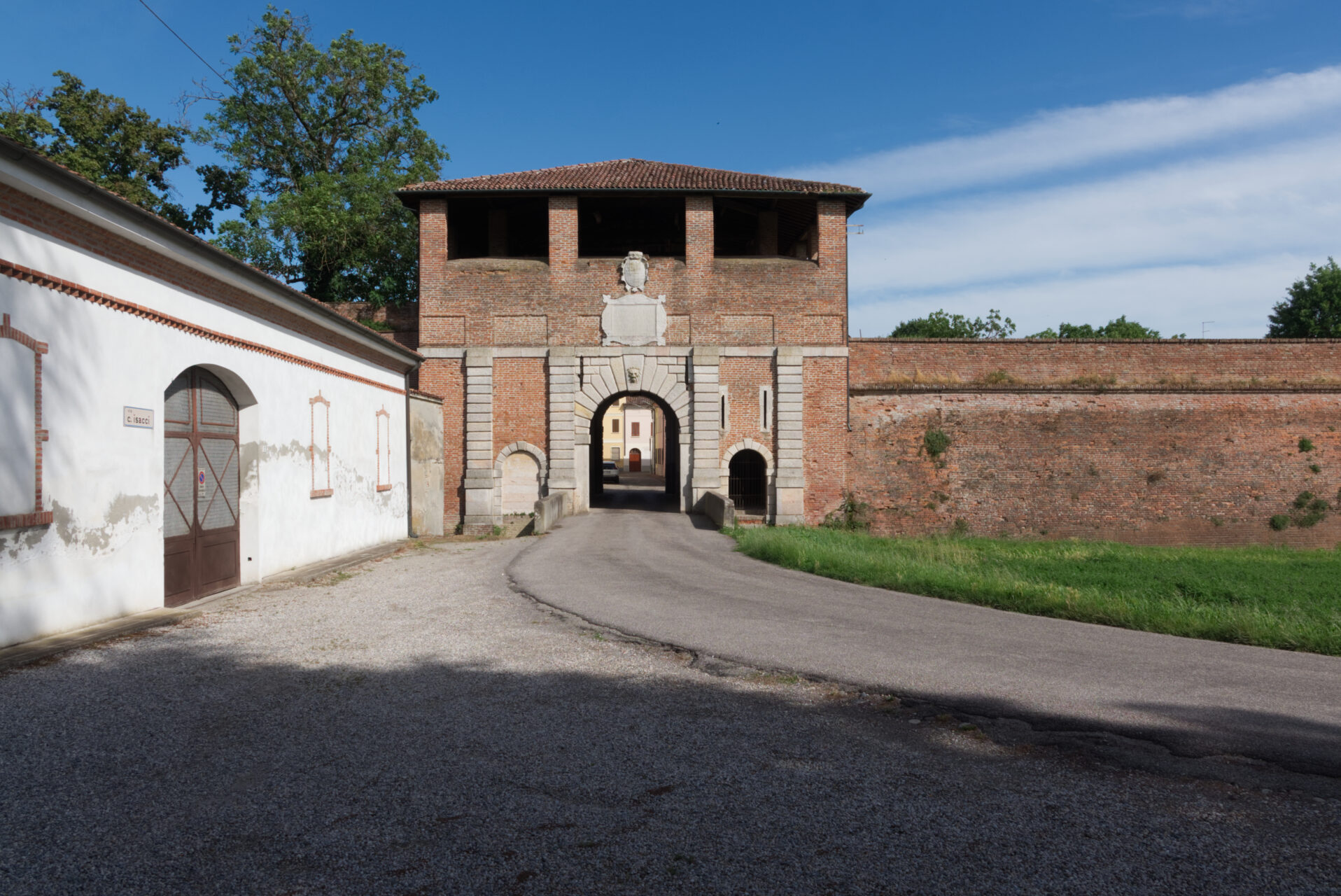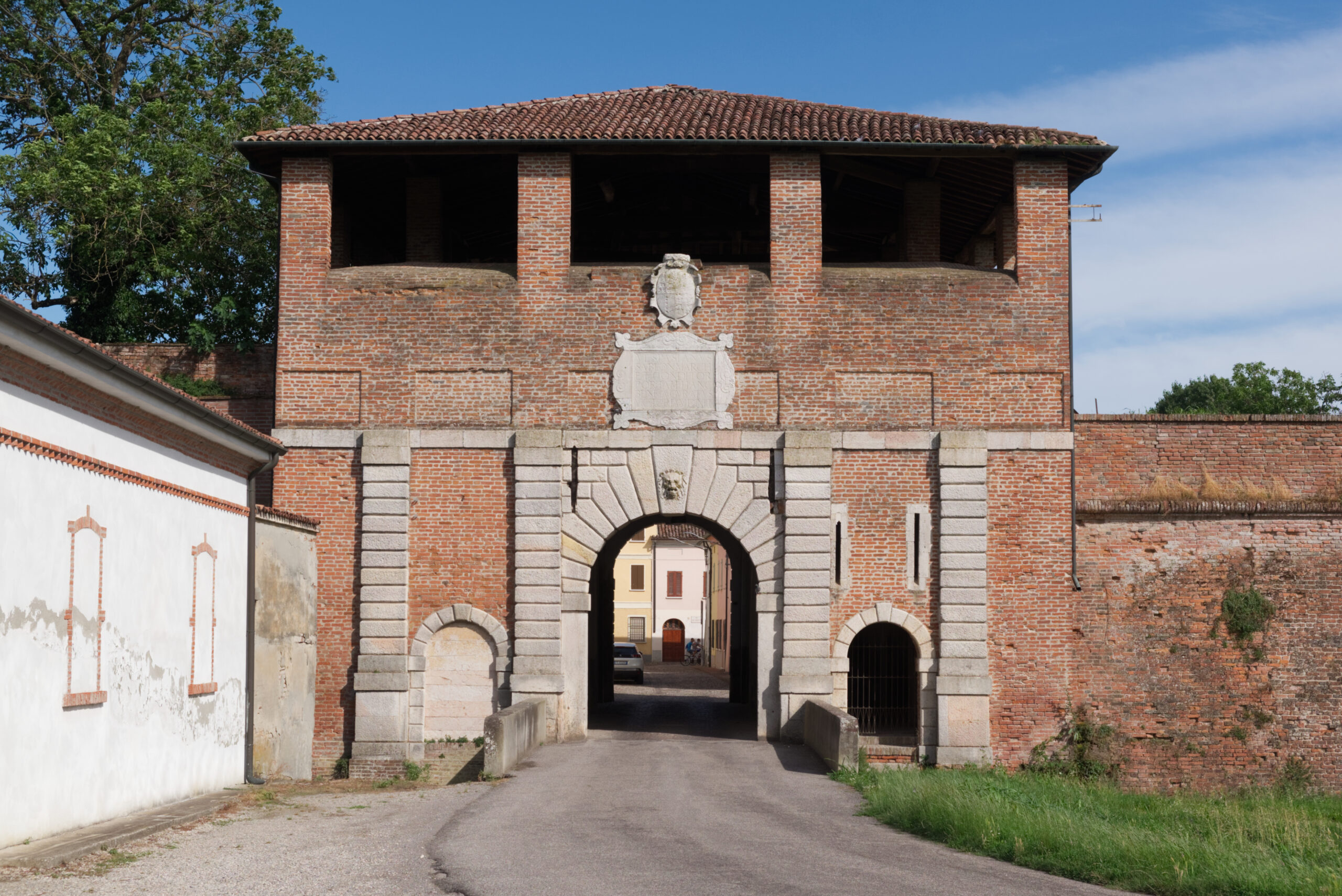
The first gate of Sabbioneta, Porta Vittoria
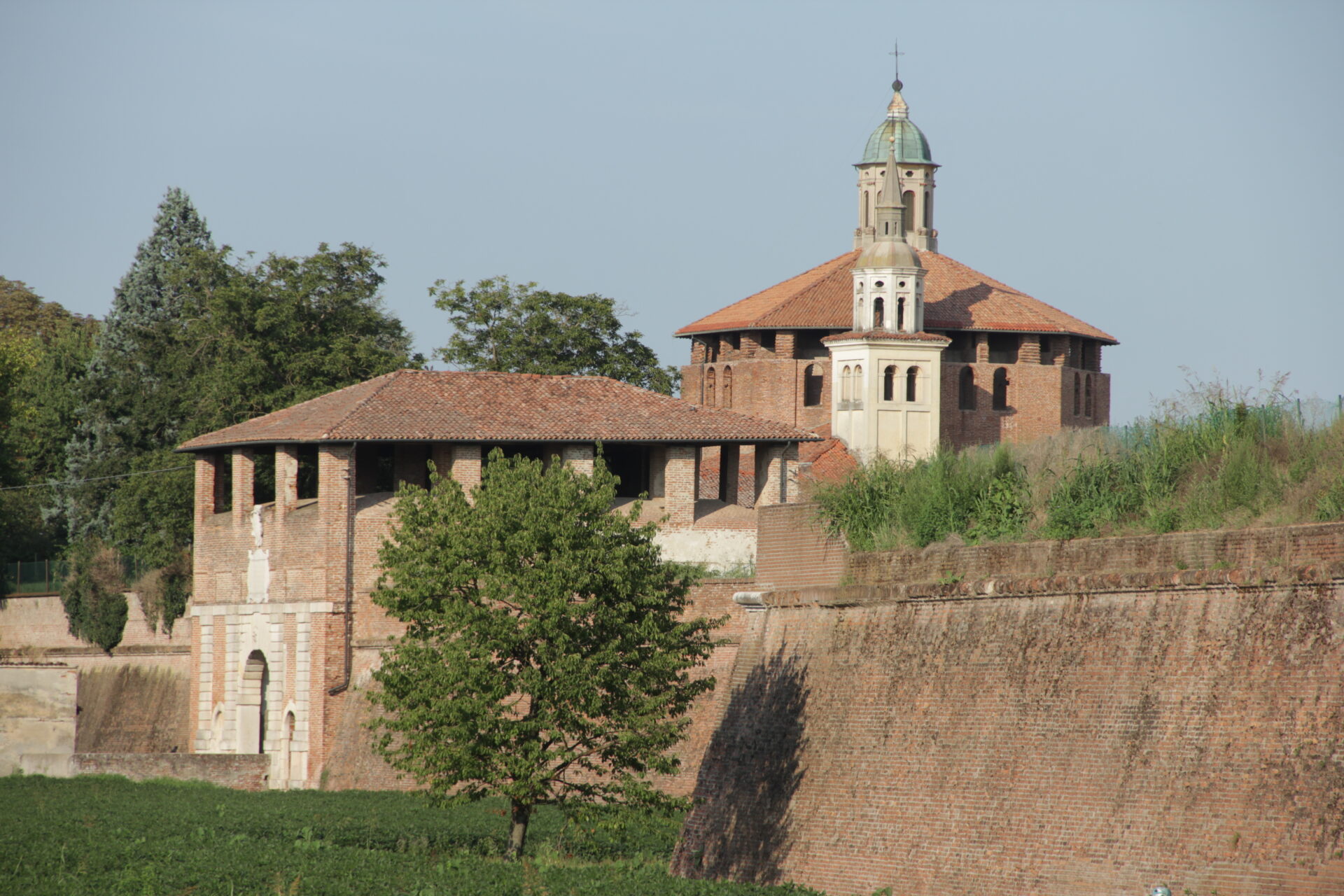
Sabbioneta still retains its city walls with arrowhead bastions and the two gates built at the time of its foundation. Vespasian In designing the city, he wanted to combine the ideals of Renaissance architecture with the military and tactical needs of a fortified citadel. The entrance gates therefore had to be functional for defense and, at the same time, convey the Duke's greatness.
Revolt towards the territories of Spanish Lombardy, Victory Gate It was erected as the first entrance gate to the city. The marble plaque above it reads: VESPASIANVS SABLON(etae) MARCH(io) ET CONDITOR PORTAM HANC BENE AVGVRATVS VICTORIAM DIXIT (Vespasiano, marquis and founder of Sabbioneta, chose this gate as a wish for victory).
This wish is intended to be both a good omen of victory and a warning to anyone who has ambitions of conquest.
Above the plaque, we find the marble coat of arms of Vespasiano, uniting the Gonzaga and Colonna families, to clearly show everyone who rules in Sabbioneta.
From Mantua to Sabbioneta: the use of the Julian rustication.
Some details of Victory Gate they take up the style of Julius Romano, who thirty years earlier, at the court of Mantua, built Palazzo Te. For the decoration of its doors, which were meant to recall the imperial glories, Vespasian preferred the Julian rustication, decoration with large blocks of worked marble that surround the round arch and on the decorative columns that mark the rhythm of the façade.
From this gate, soldiers had to monitor access to the city, so it features a loggia covered by a wooden roof. This space, now reopened to the public, offers a unique view of the city and allows us to understand its true size and identify the urban structure and perspective effects designed by Vespasian.
A curiosity: until the middle of the last century, this space was used for social housing.