One of the most important libraries in Italy
Built in 1780 in the “scaldatoio” area of the Jesuit complex, and later expanded to include other spaces of the Palace, the Teresian Library Today, it is among the most important libraries in Italy. It owes its name to Maria Theresa of Austria, who established it as part of the program of secularization and reform of cultural and educational institutions. She endowed it with volumes from various sources, including libraries in Vienna and Cremona, and private donations, as well as from the collection of the recently reformed Royal Academy of Sciences and Fine Arts Library.
The collections of the Teresian Library
In the Napoleonic period, at the Teresian Library all the manuscripts and volumes from the suppressed convents of the area converge, further enriching the collection which reaches 120,000 volumes at the end of the nineteenth century, when the library becomes a government institution (1866) and then a municipal one (1881).
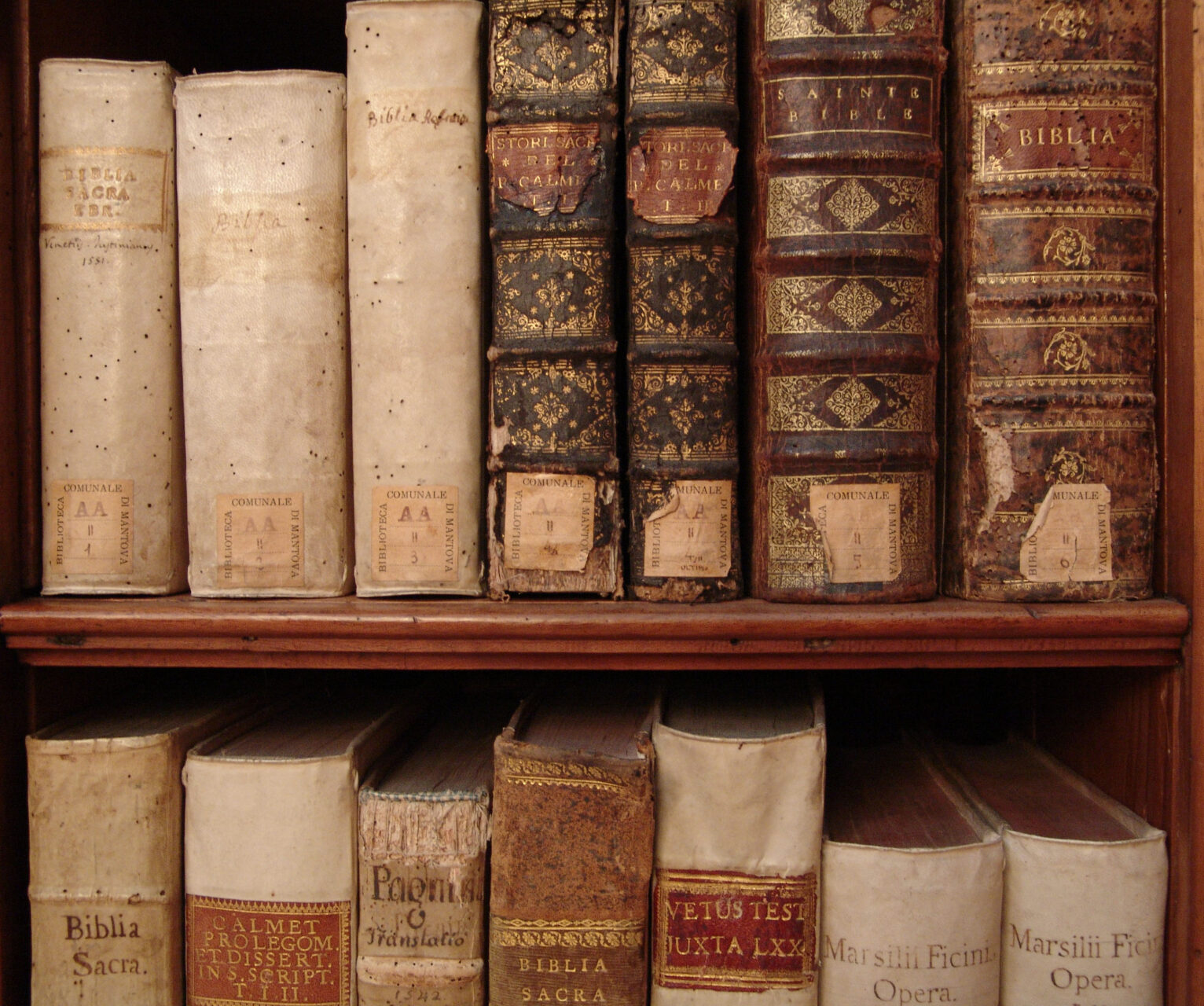
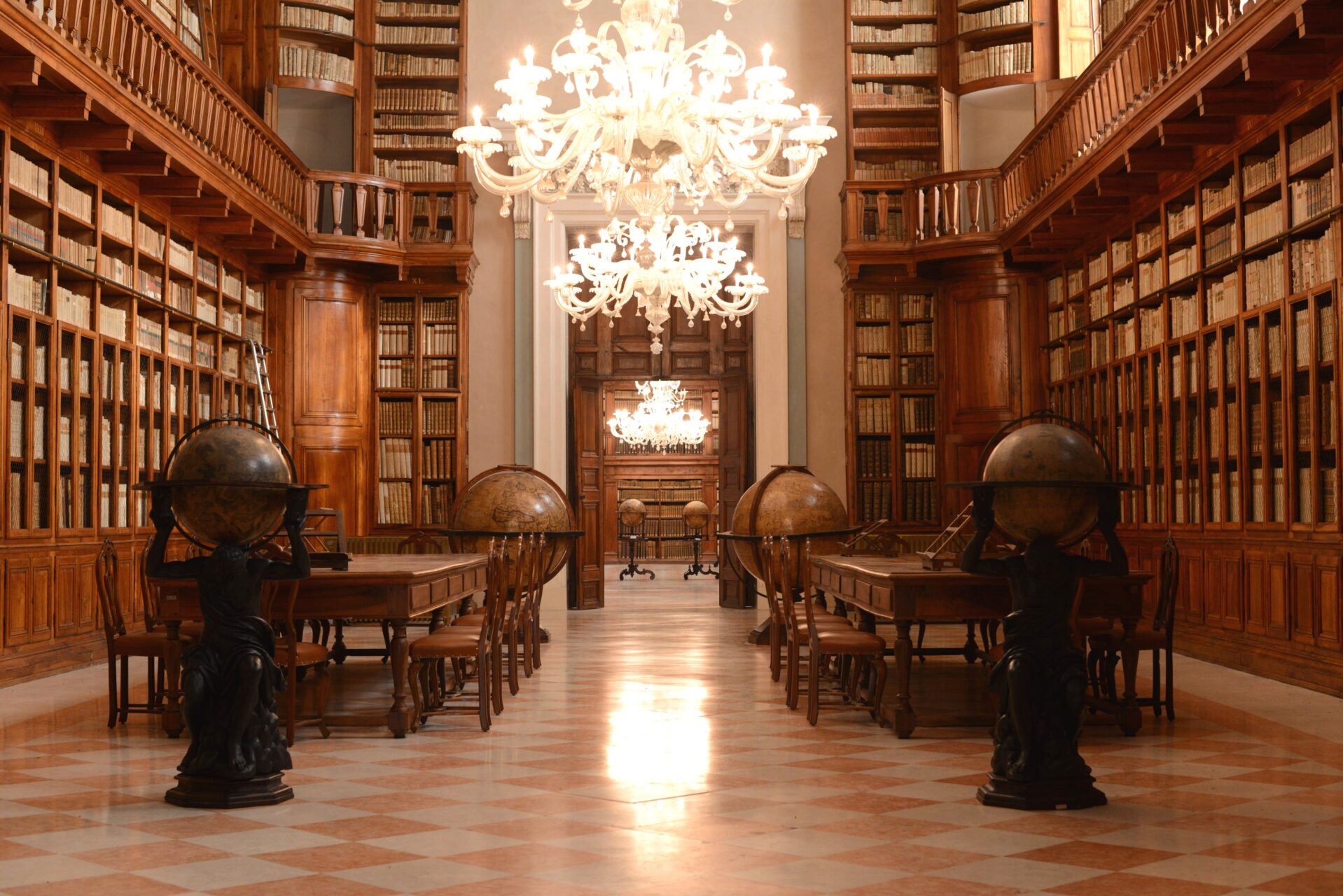
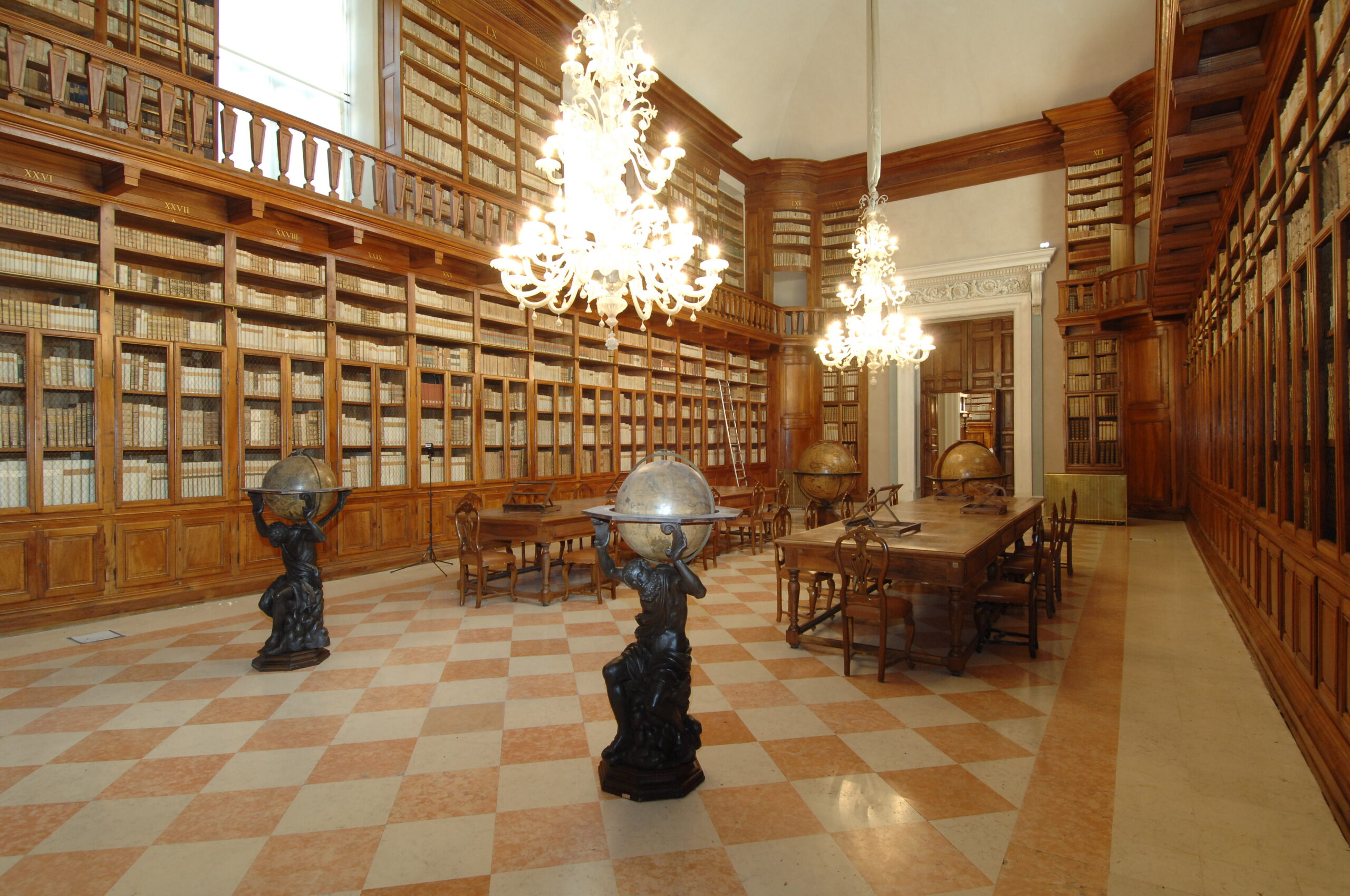
The imposing European Baroque walnut shelves house a vast collection of ancient and rare books, scientific, religious, and artistic works. Manuscripts, incunabula, correspondence, prints, and ancient and modern bibliographical material are preserved, testifying to the memory of the city and the surrounding area. The library also houses a valuable collection of terrestrial, celestial, and ornamental globes dating from the 17th to 19th centuries, which demonstrate the development of geographical and astronomical knowledge over the centuries.