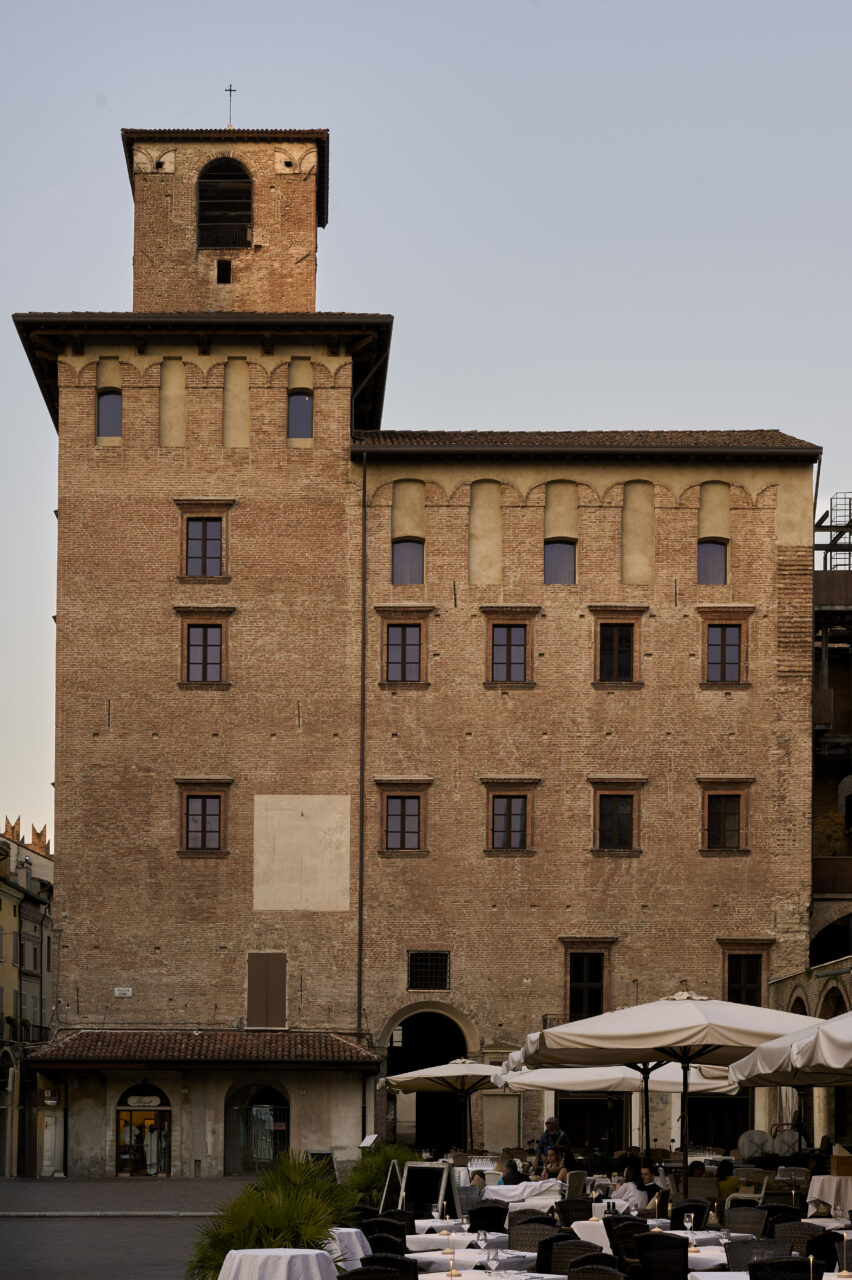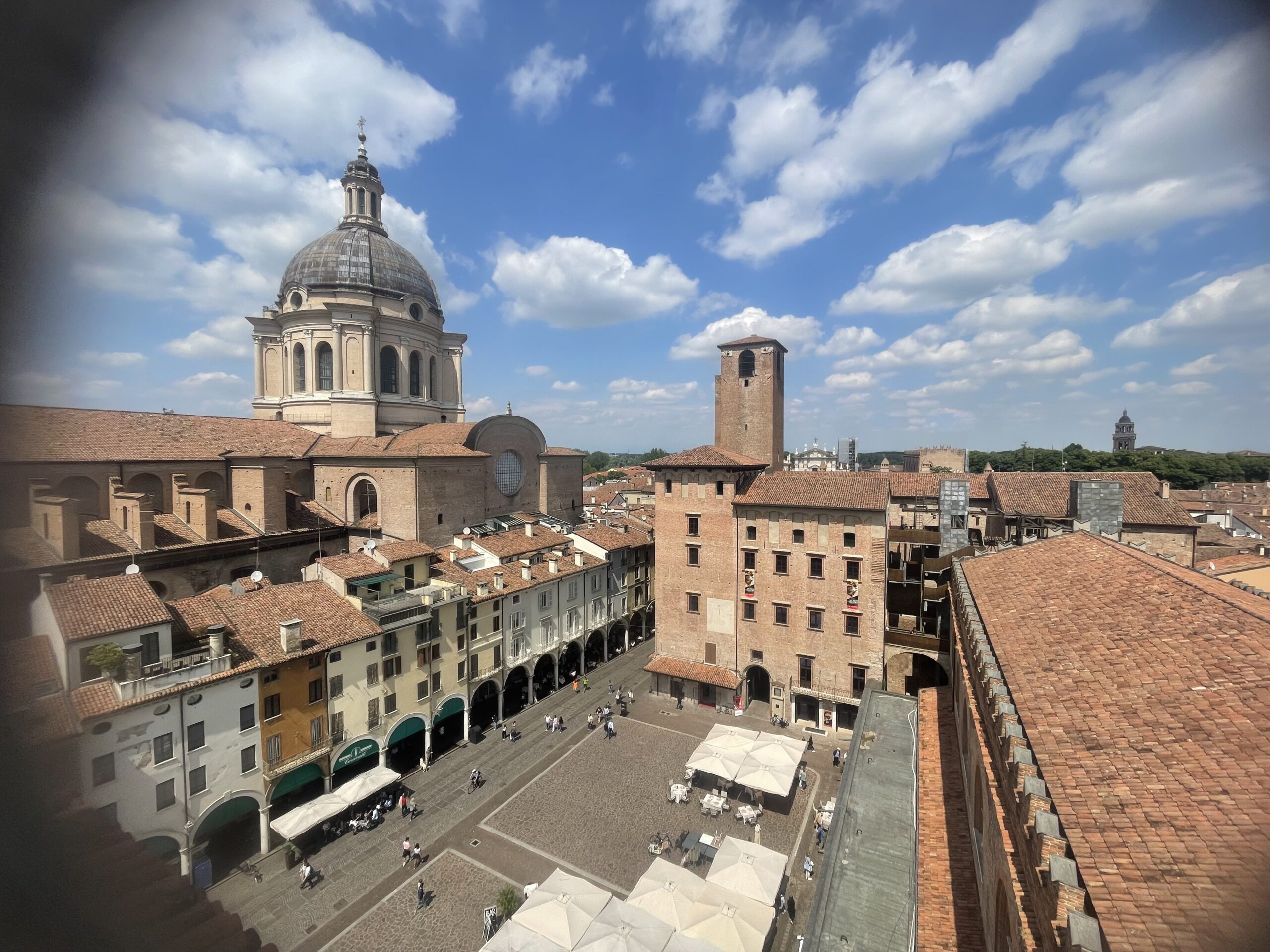
The palace was built in 1227 by order of the Podestà of Brescia, Laudarengo Martinengo, and served as the seat of political power until the arrival of the Bonacolsi family. Traces of the previous medieval structure can still be seen in the ogival windows, indicating that arched windows once existed.
In the fifteenth century, in fact, on the occasion of the Renovatio Urbis commissioned by the Gonzaga family and after a fire that partially destroyed the building, Luca Fancelli, a pupil of Alberti, revised the medieval structure making changes according to the taste of the time.
The windows of Palace of the Podestà They are in Renaissance style and the blind battlements along the entire edge are a clear trademark of Fancelli.
At the beginning of the twentieth century, during a renovation carried out by the architect Andreani, the remains of the ancient medieval windows were discovered and it was decided to keep them visible.
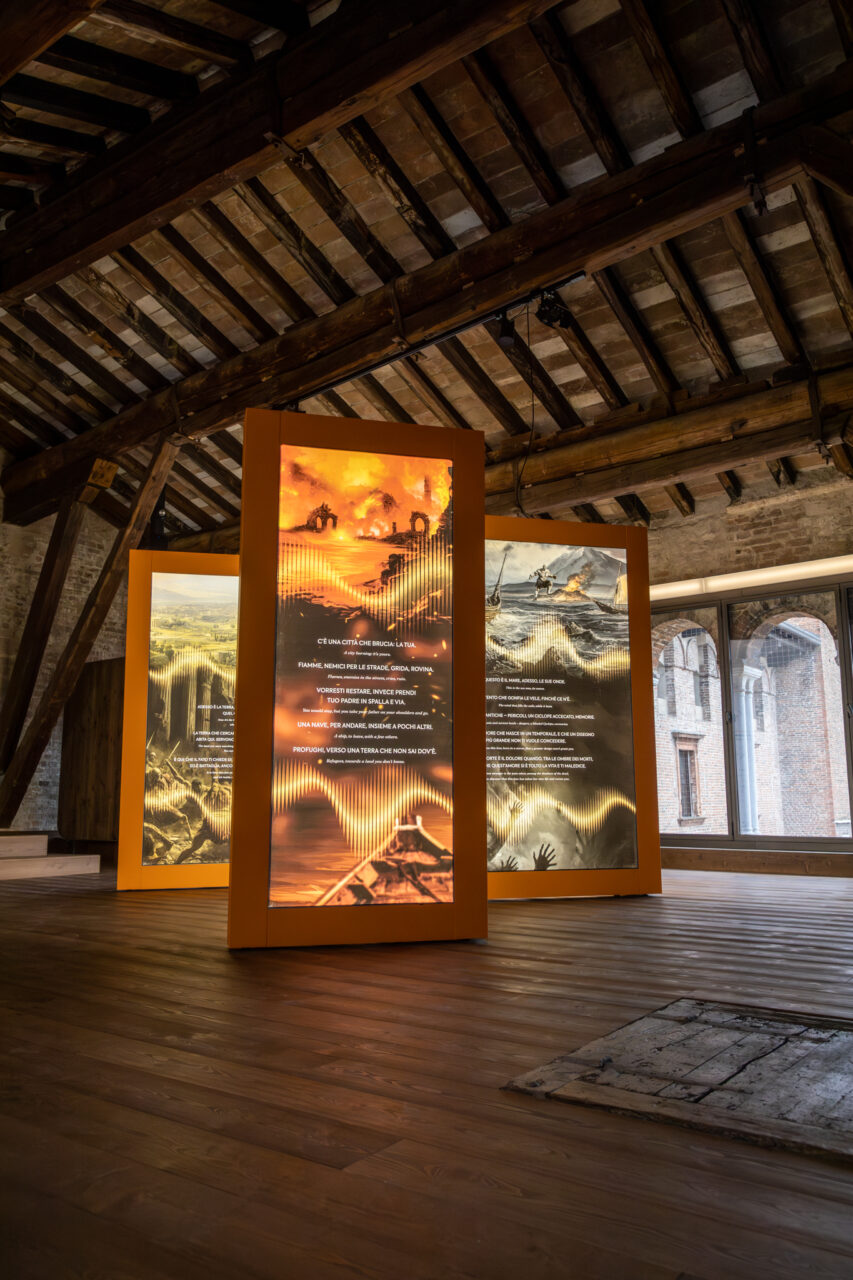
Palazzo del Podestà recently reopened to the public after a sophisticated process of consolidation and restoration. And it is precisely in this historic building that the Virgil Museum, a new one cultural and innovative space dedicated to the great Latin poet, which the city has decided to dedicate to him.
Moreover, the bond between Virgil and Mantua is as deep as live – it is no coincidence that, in the Middle Ages, Palazzo del Podestà earned the nickname “Palazzo di Virgilio”.
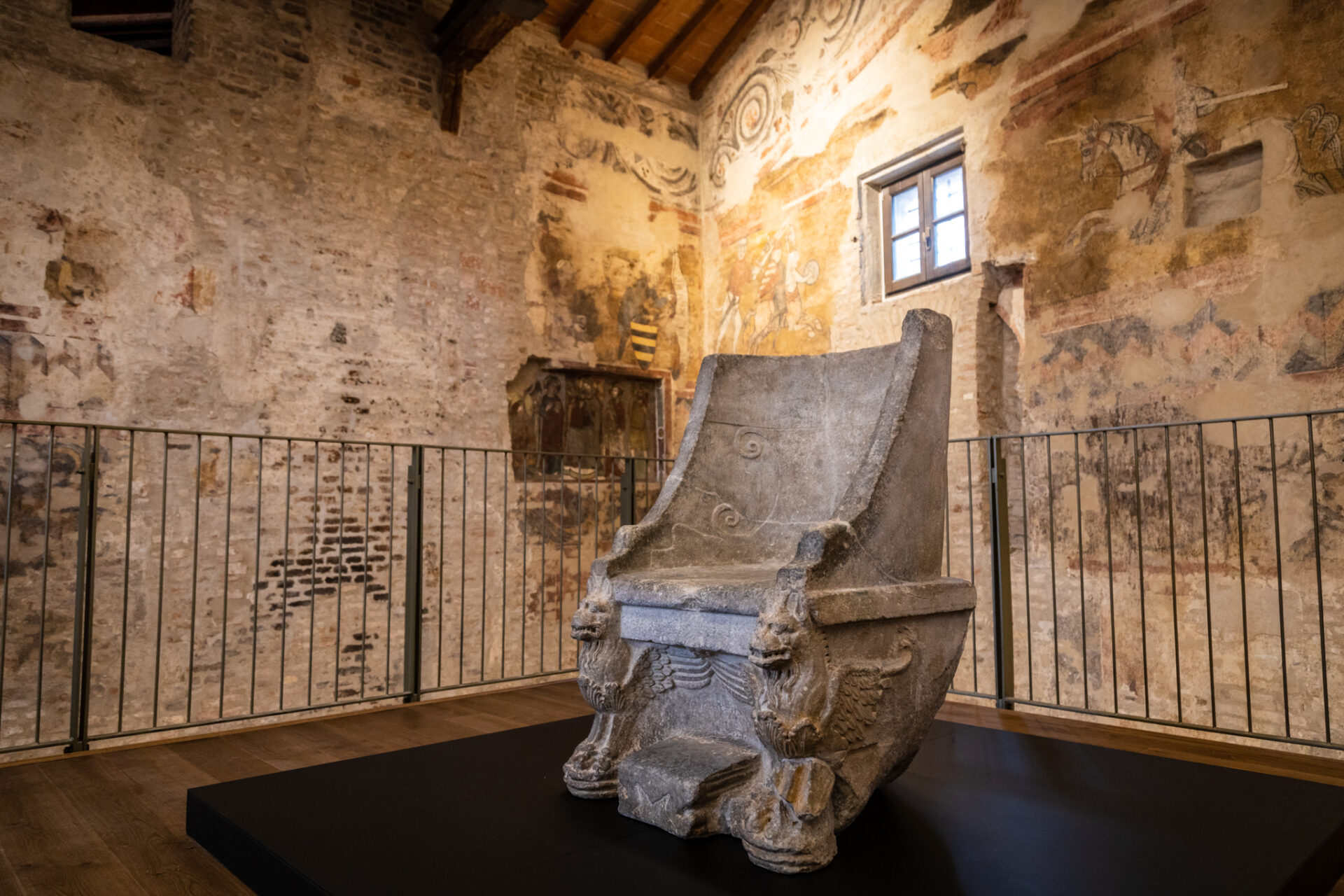
Palazzo del Podestà welcomes a contemporary museum Where precious finds, ancient specimens of the Virgilian works And multimedia content coexist with frescoes returned to see the light after centuries: all to involve visitors in an experience of discovering the poet who so many around the world feel so familiar, almost as if he were a friend as well as a guide, a prophet, a model.
Visit the site https://www.museovirgilio.it/