
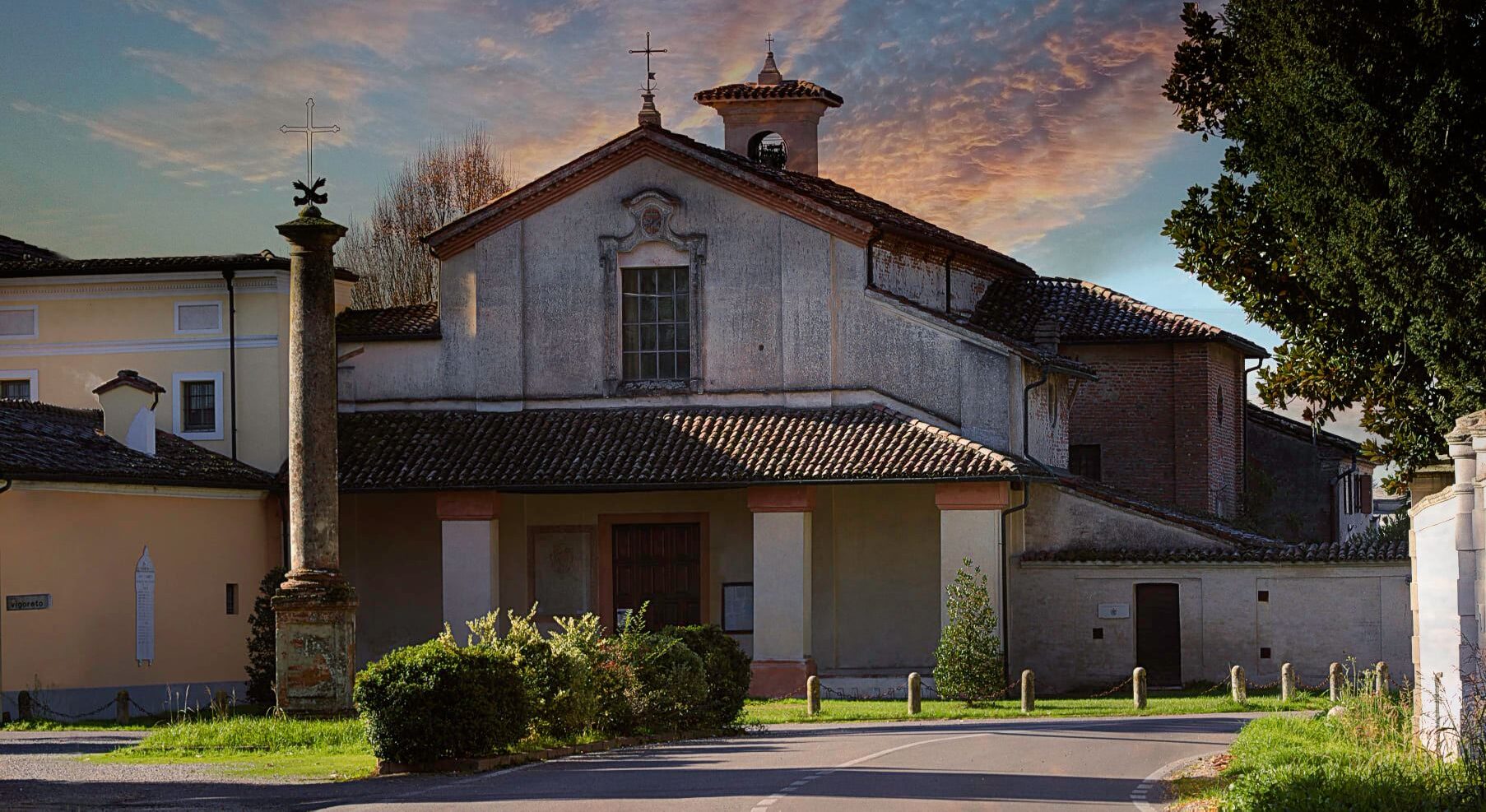
A 16th-century church, built where the Virgin appeared.
The sanctuary was built on the site where, in 1543, the Virgin appeared near a pillar near a crossroads on which a fresco of the Madonna of Loreto was found.
Work began in 1547 with the approval of Cardinal Ercole Gonzaga, guardian of the young Vespasiano. The condition was that the wall depicting the frescoed image be preserved in a side chapel.
The consecration took place in 1554. A few years later the Sanctuary was destroyed by a flood of the Po and immediately rebuilt thanks to the generosity of the Duke.
Simple and sober, in full Franciscan style.
The church still retains its original form; the simplicity of its interior reflects the sobriety of Franciscan buildings.
There are numerous paintings of excellent workmanship present in this sacred place.
In 1575, the convent was also built next to the sanctuary, entrusted to the Capuchin Fathers, who were responsible for promoting Marian worship and assisting the devotees.
In 1582 the cardinal Carlo Borromeo, later a saint, stayed in the convent and wrote here On Prayer.
In 1797 the friars were expelled by the French, the convent was closed and the sanctuary was stripped.
Today it houses the museum section Perfect joy, or “The Poverty of Saint Francis”.