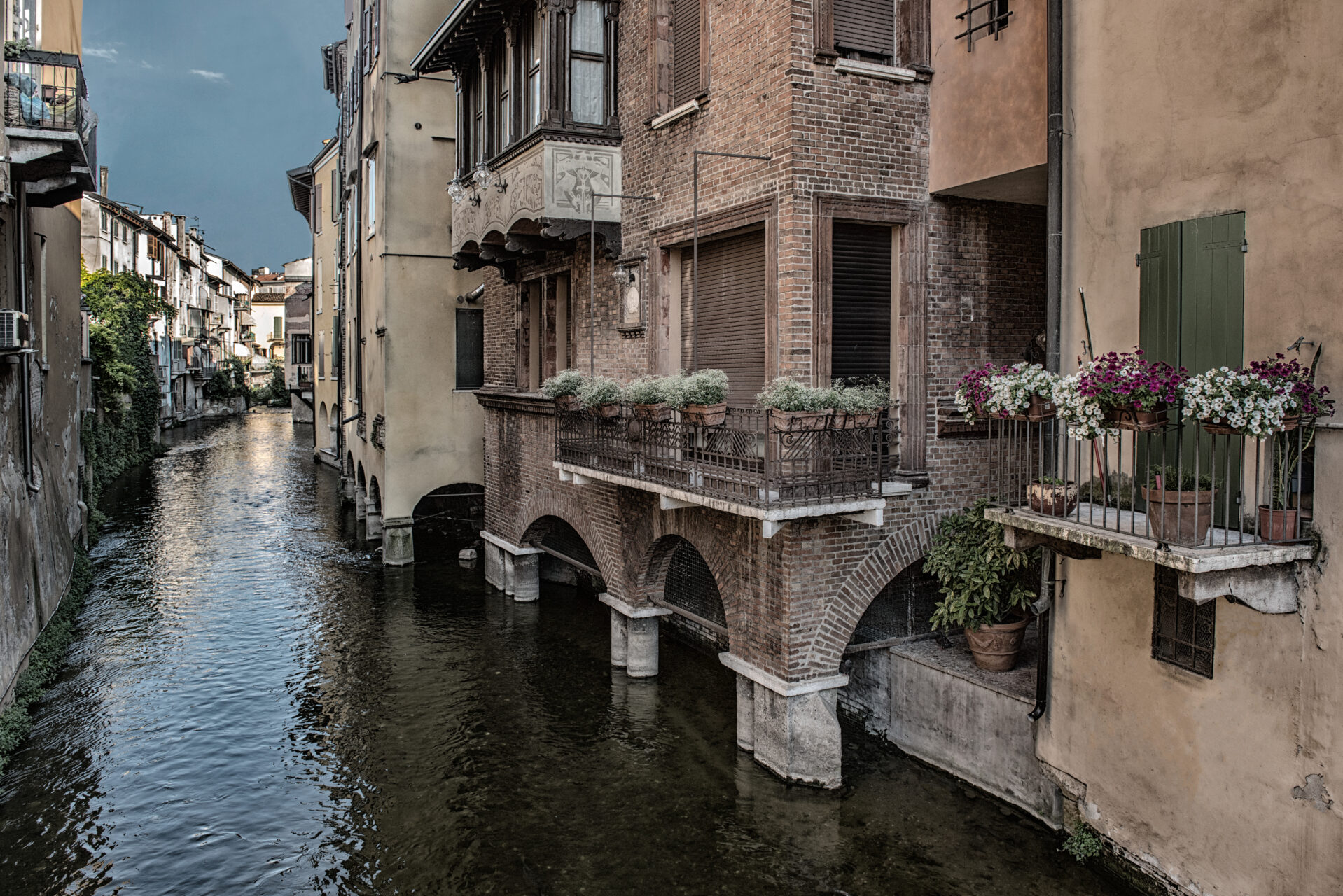
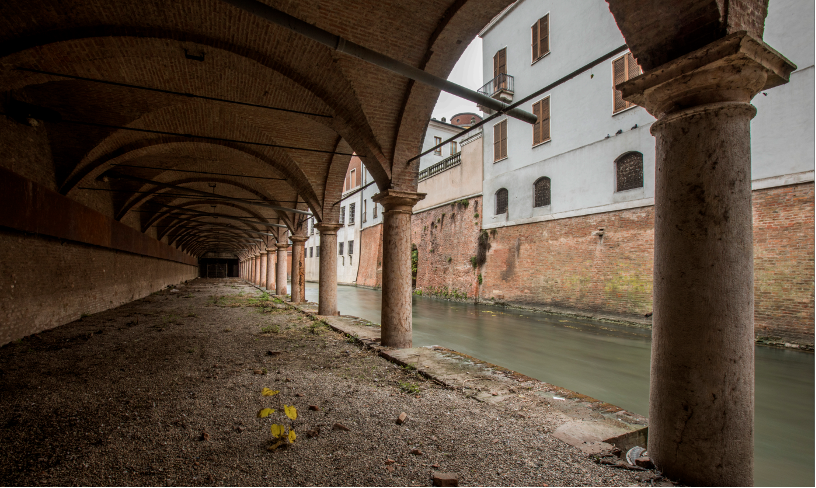
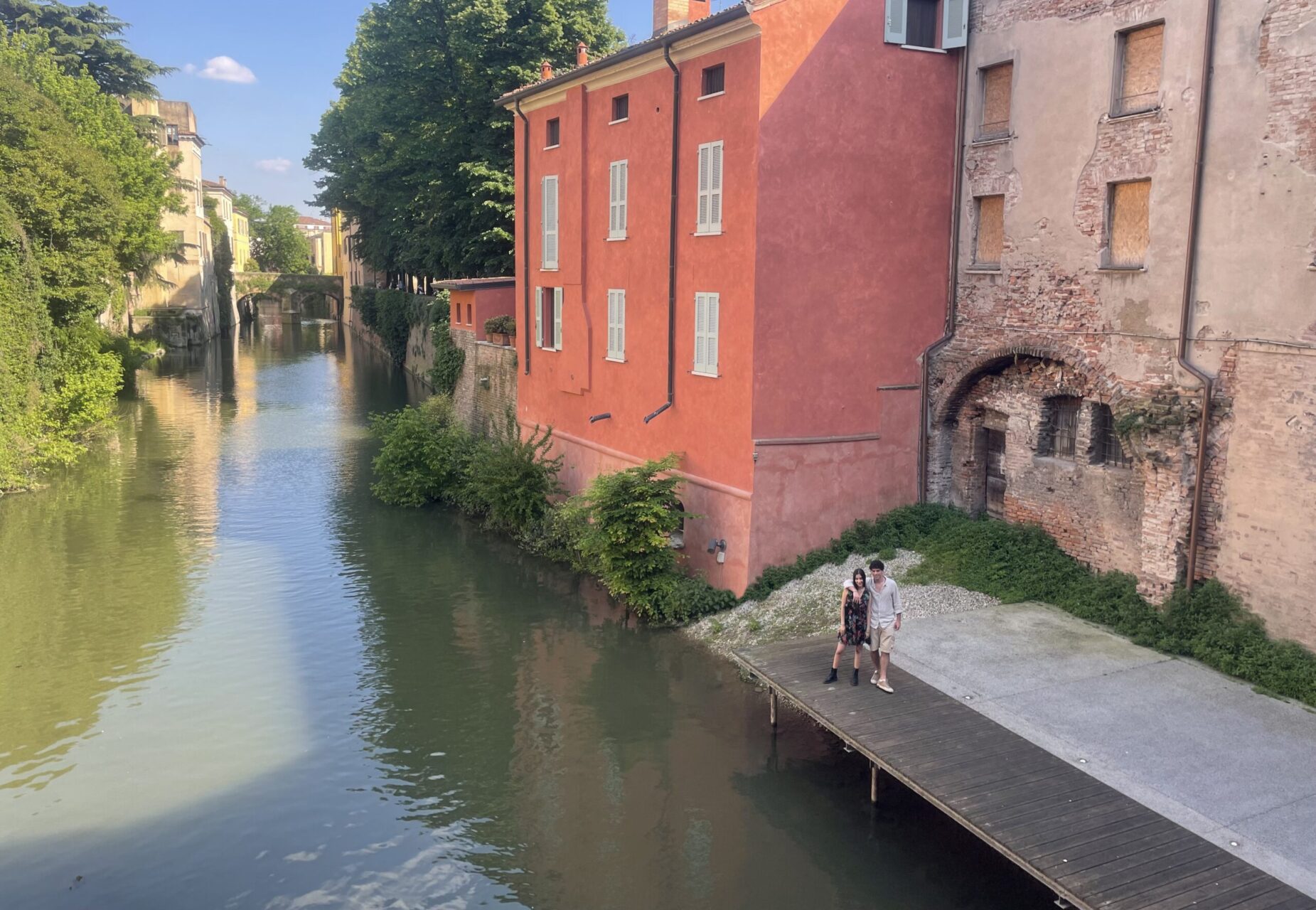
Mantua in the 16th century was a busy city, where manufacturing and trade were intertwined thanks to the waterways.
Along the Rio and near the ports, wool mills, silk factories, dye works, tanneries, goldsmiths, and artisan workshops were concentrated. Goods from the countryside and surrounding areas were processed in the city and then distributed via the river network. Even today, this vibrant urban economy is reflected in the names of streets and squares, such as Via Pescheria and Via Orefici. Vicolo Chiodare, from the nails on which wool was hung to dry, and Via Gelso, associated with the cultivation of silkworms, also bears witness to this vibrant urban economy.
Marconi Square (called Purgo)