GUIDE TO THE UNESCO SITE
A World Heritage Site must be a heritage “of all and for all”.
As expressed in the UN Convention on the Rights of Persons with Disabilities (Law 3 March 2009, n. 18), it is necessary to promote independent and self-determined living in daily life and free time (art. 19), just as it is an enforceable right to access information (art. 21) and to express interests and opinions.
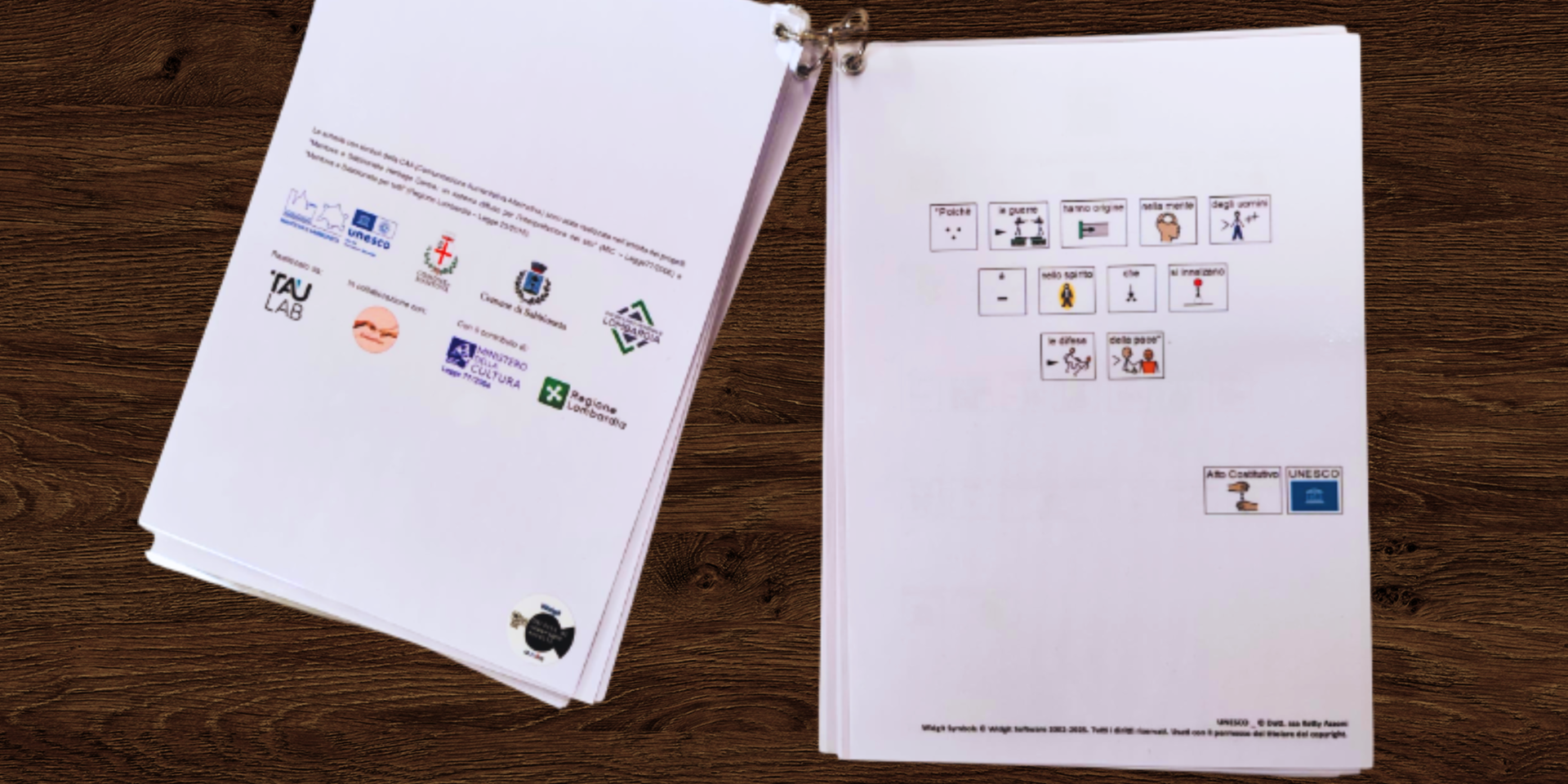
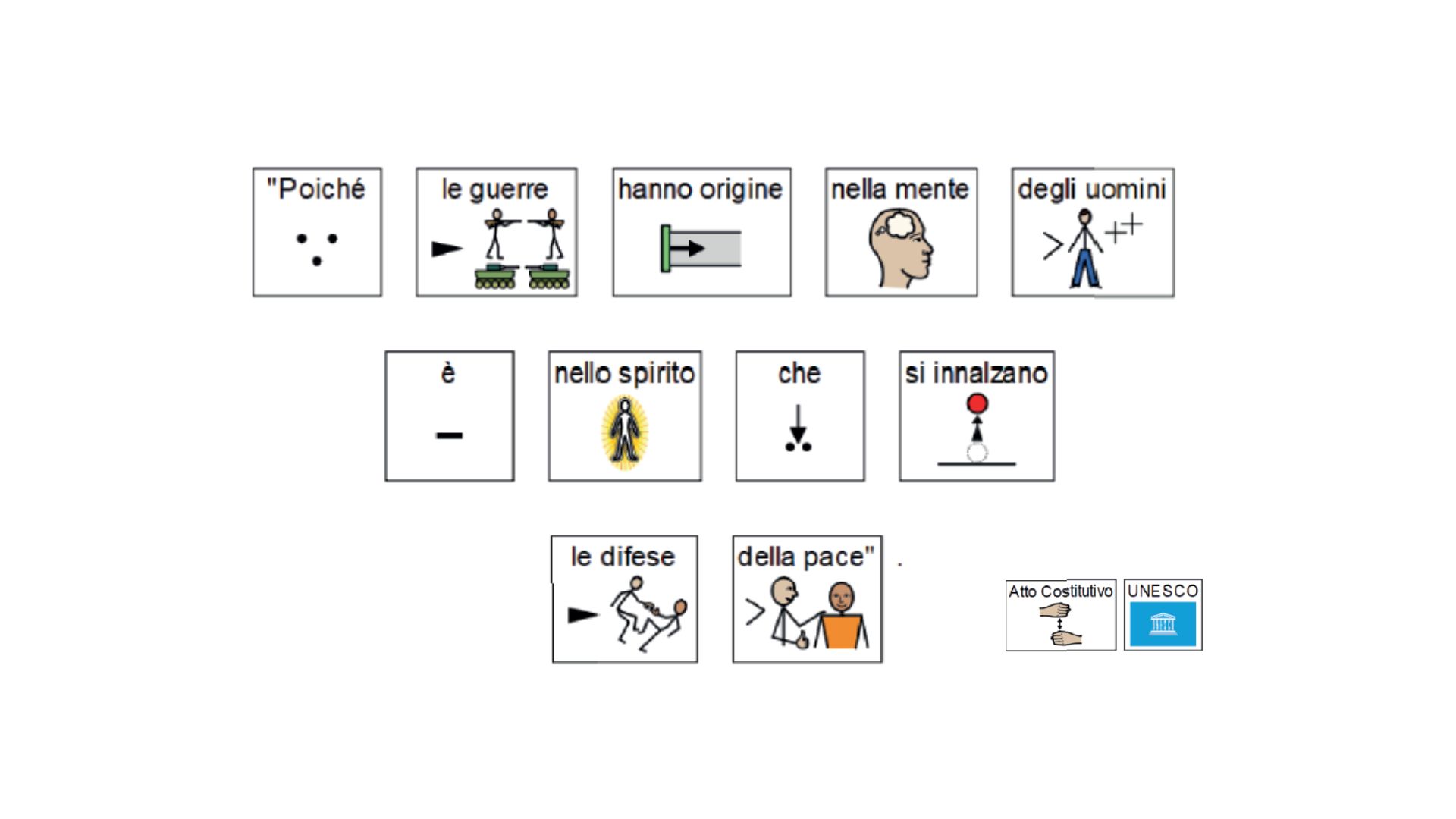
Therefore, to ensure increasingly broader accessibility to our heritage, regardless of individual perceptual, motor, or cognitive abilities, we have created information sheets using Augmentative and Alternative Communication (AAC) symbols to explain the main features of the UNESCO World Heritage Site of Mantua and Sabbioneta and the reasons for its inclusion in the World Heritage List.
Visitors can use them in the Mantua and Sabbioneta Heritage Centre (Giulio Romano's Fish Market in Mantua, Palazzo del Cavalleggero, and Palazzo Giardino in Sabbioneta). Upon request, the Mantua and Sabbioneta World Heritage Office makes them available for educational activities.
This action was carried out as part of the projects “Mantova and Sabbioneta Heritage Centre,” funded by the Ministry of Culture (Law 77/2006) and “Mantova and Sabbioneta for all,” implemented with the contribution of the Lombardy Region.
In collaboration with the TauLab network project (Laboratory of Technologies for Universal Accessibility) and with the scientific contribution of Dr. Ketty Azzoni, expert in Augmentative Communication And Alternative.
THE PROJECT
The descriptive sheets created for the Mantua-Sabbioneta UNESCO Site contain information aimed at understanding the essential urban characteristics of the two towns.
The uniqueness of the cards lies in the accessibility criteria with which they were designed for maximum usability. The contents, transposed into WLS symbols (Widgit Symbols © Widgit Software 2002-2025), are printed on both sides, laminated, and bound with a reinforced ring binder.
The accessibility needs related to content comprehensibility and supported by reworking with one of the AAC symbolic systems were supported by effective usability of the paper documents. The cards meet needs related to Complex Communication Needs (CCN) conditions and are intended to facilitate motor skills due to their ease of handling. The documents do not require leafing through; simple touch movements allow the child to move between pages.
The above-mentioned requirements for information/knowledge materials fall within the Design for All (DfA) parameters of Universal Design2 listed below:
Principle 1 – Equity – fair use: usable by anyone.
Principle 2 – Flexibility – flexible use: adapts to different abilities.
Principle 3 – Simplicity – Simple and intuitive use: operation is easy to understand.
Principle 4 – Perceptibility – the conveyance of actual sensory information.
Principle 5 – Tolerance for Error – Minimize risks or unwanted actions.
Principle 6 – Minimize physical effort – use with minimal fatigue.
Principle 7 – Sufficient space and size – making the space suitable for access and use.
A joint reading of AAC symbolic systems by practitioners is recommended in order to make signification processes more effective.