
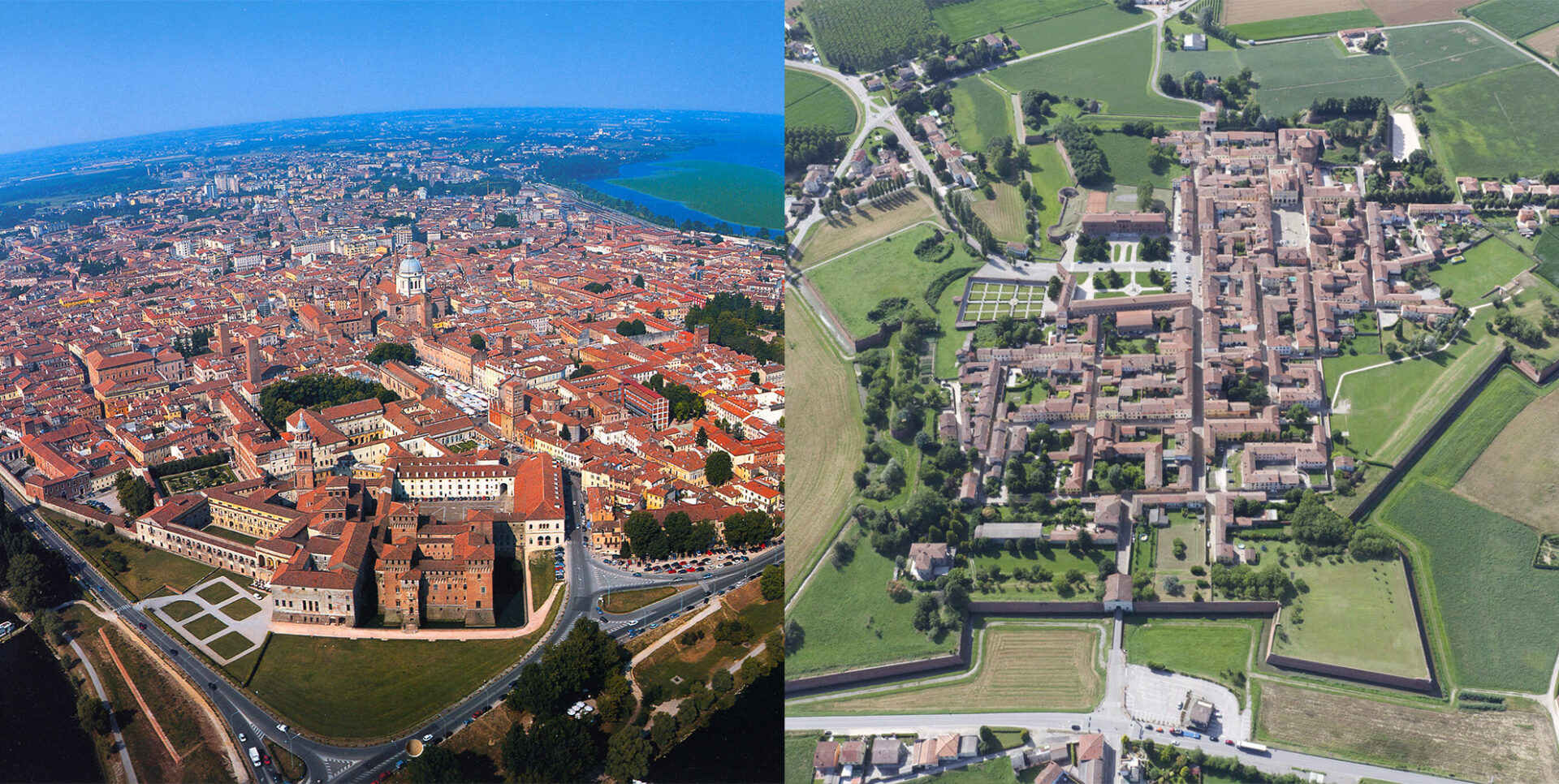
The exceptional value of Mantua and Sabbioneta lies not in their individual artistic excellences, but in the complexity of their urban planning.
The territorial planning undertaken by the Gonzagas is the symbol of Renaissance culture in the world.
Mantua and Sabbioneta draw inspiration from the ideal of the perfect city, theorized by humanist architects of the time, such as Leon Battista Alberti.
Transformed or founded from scratch, the city is built to measure according to the needs of the community that lives there and the aspirations of those who govern it.
It reflects the Renaissance principles of functionality, perspective and interaction with the natural landscape.
Cities are one of the most important typologies on the World Heritage List. The historic urban landscape is a repository of cultural, social, natural, and human values: a space for encounters and relationships, which contributes to creating a sense of place.
The strength of the identity of Mantua and Sabbioneta stimulates reflection on the role of cities today and planning those of the future.