
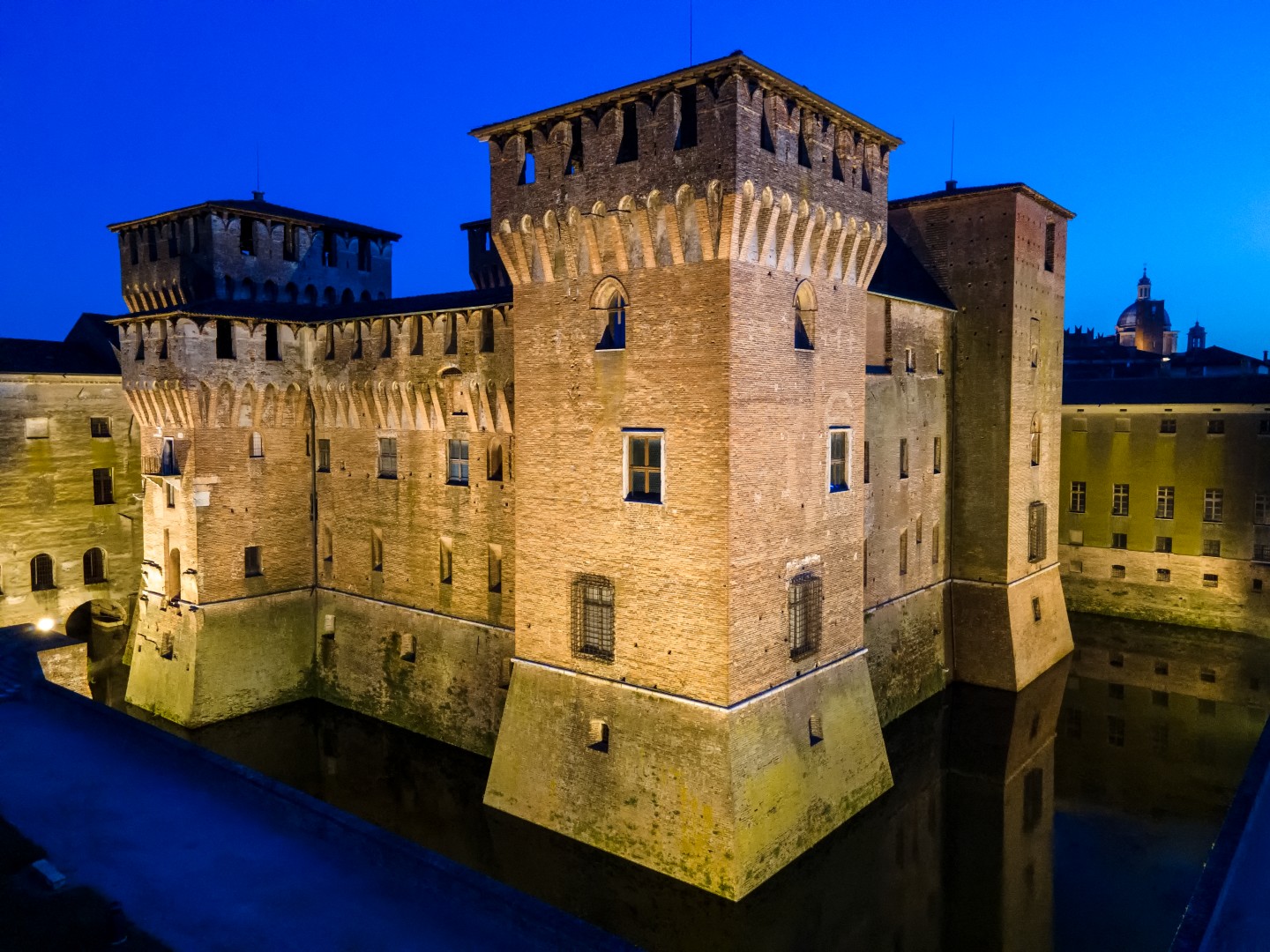
Some historic buildings and monuments can become refuges for various animal species: reptiles (geckos and lizards), bats, and birds find suitable sites for nesting and reproduction in the numerous cavities and niches present in these ancient constructions.
Since 2015, San Giorgio Castle has been one of these and has been declared a Living Monument by the Gruppo Rondoni Italia and the Gruppo Ricerche Avifauna Mantovano.
Among the species that live there, the following should be mentioned:
- The Gonzaga Bats (Miniopterus species): the basement of San Giorgio Castle hosts a colony of bats, offering a temporary refuge where females congregate before moving to their breeding grounds. The Miniopterus is considered Vulnerable (VU) by the Red List of Italian Vertebrates due to population decline, primarily caused by disturbance to its roost areas. It should be protected and promoted.
- Common SwiftA migratory species present in Mantua from late March to mid-July. Swifts spend the winter in tropical Africa and spend their entire lives in flight, where they can hunt, drink, sleep, and even mate. Throughout the month of June, Piazza Sordello is the scene of spectacular social flights. In the early morning and at dusk, nesting swifts and the previous year's fledglings, arriving from Africa to visit the breeding grounds, chase each other, emitting their characteristic screeches.
- Black RedstartIt owes its name to the colors of the male, which has sooty black plumage all over its body, except for its red tail, which is constantly shaken when it lands. Several individuals spend the winter at San Giorgio Castle, and at least one pair nests there.
- TransferBetween April and June, pairs choose a cavity to nest in; some of the castle's scaffolding holes offer ideal characteristics for this purpose, and around the moat, the cries of the nestlings fed by the adults can be heard.
- Italian Sparrow and Tree SparrowBoth nest in the castle cavities and under the tiles of the Cavallerizza Portico. They feed on seeds and generally lay two broods per year. Italian populations have been declining for several years, but several pairs still nest near San Giorgio Castle.
- Wallcreeper: It finds an ideal habitat for wintering near the walls of San Giorgio Castle. It arrives in October and departs in March for its breeding grounds.
- JackdawFor centuries, it has learned to exploit man-made structures that offer suitable nesting cavities, including the scaffolding holes found on the Castle of San Giorgio and other towers in the city of Mantua. The loud calls they emit during group flights are distinctive.