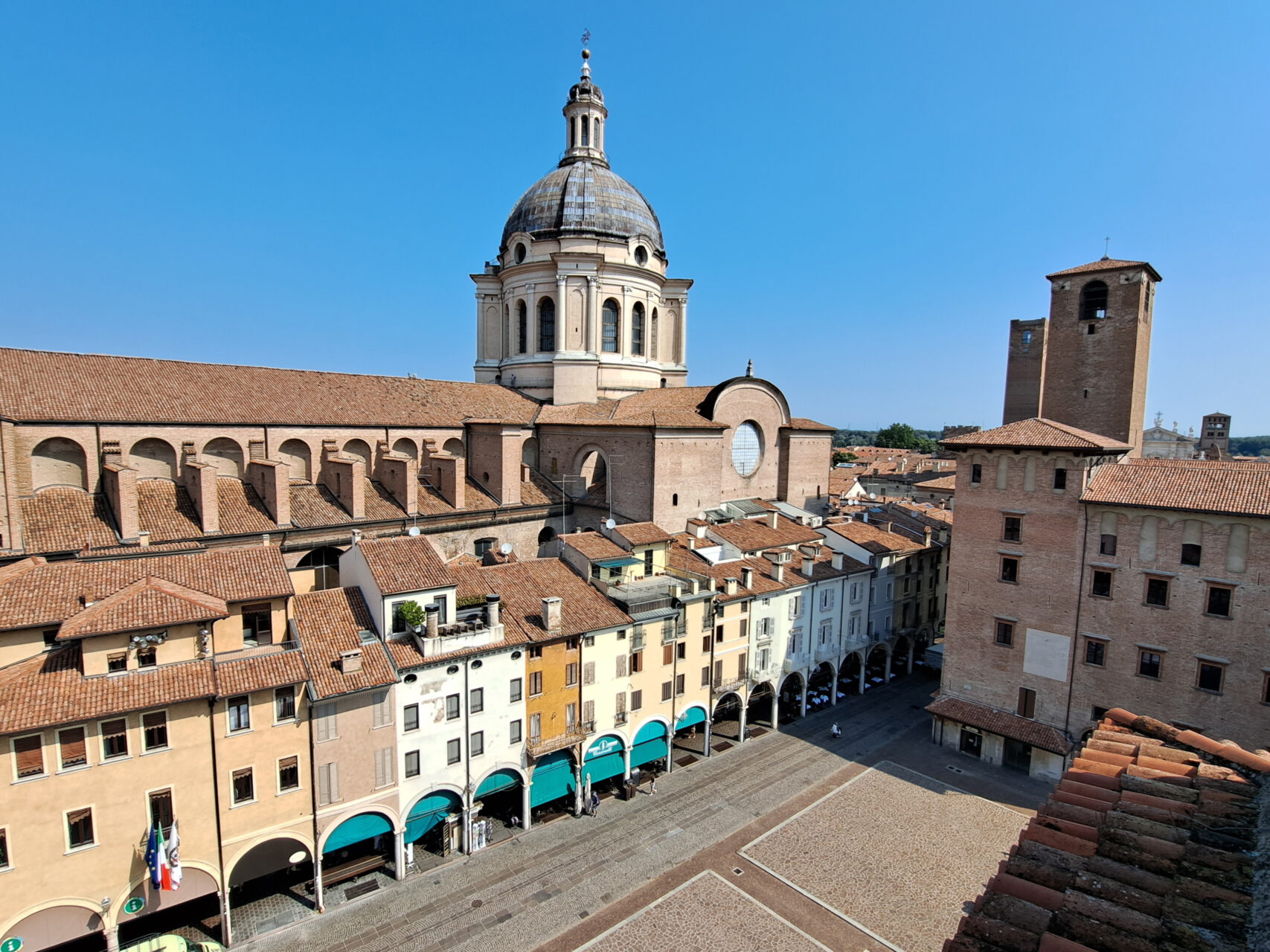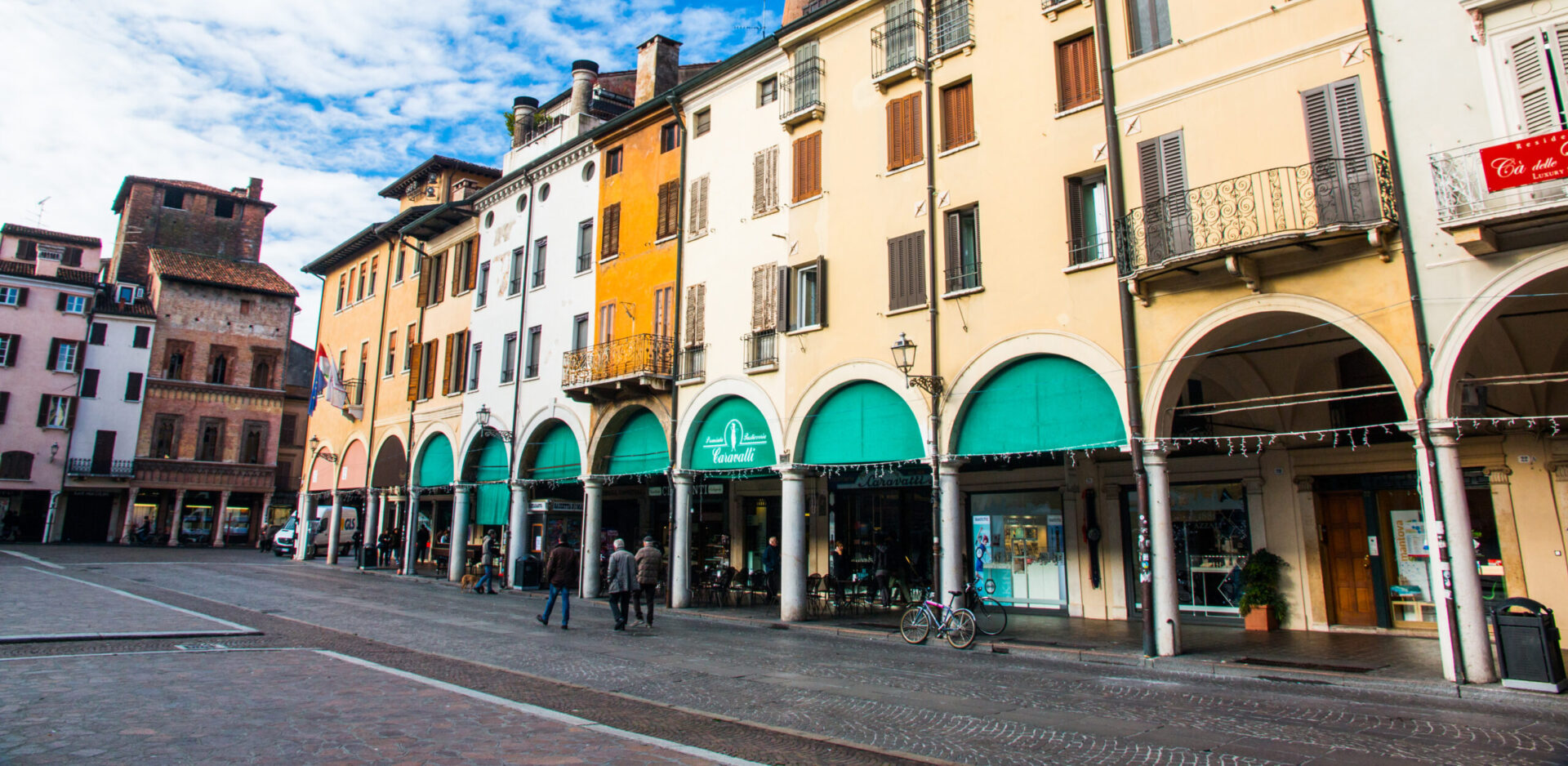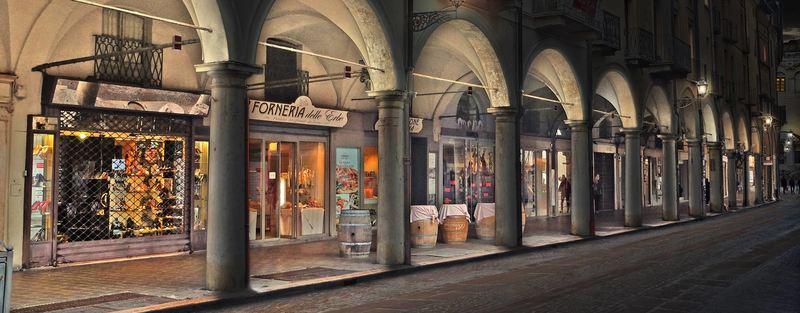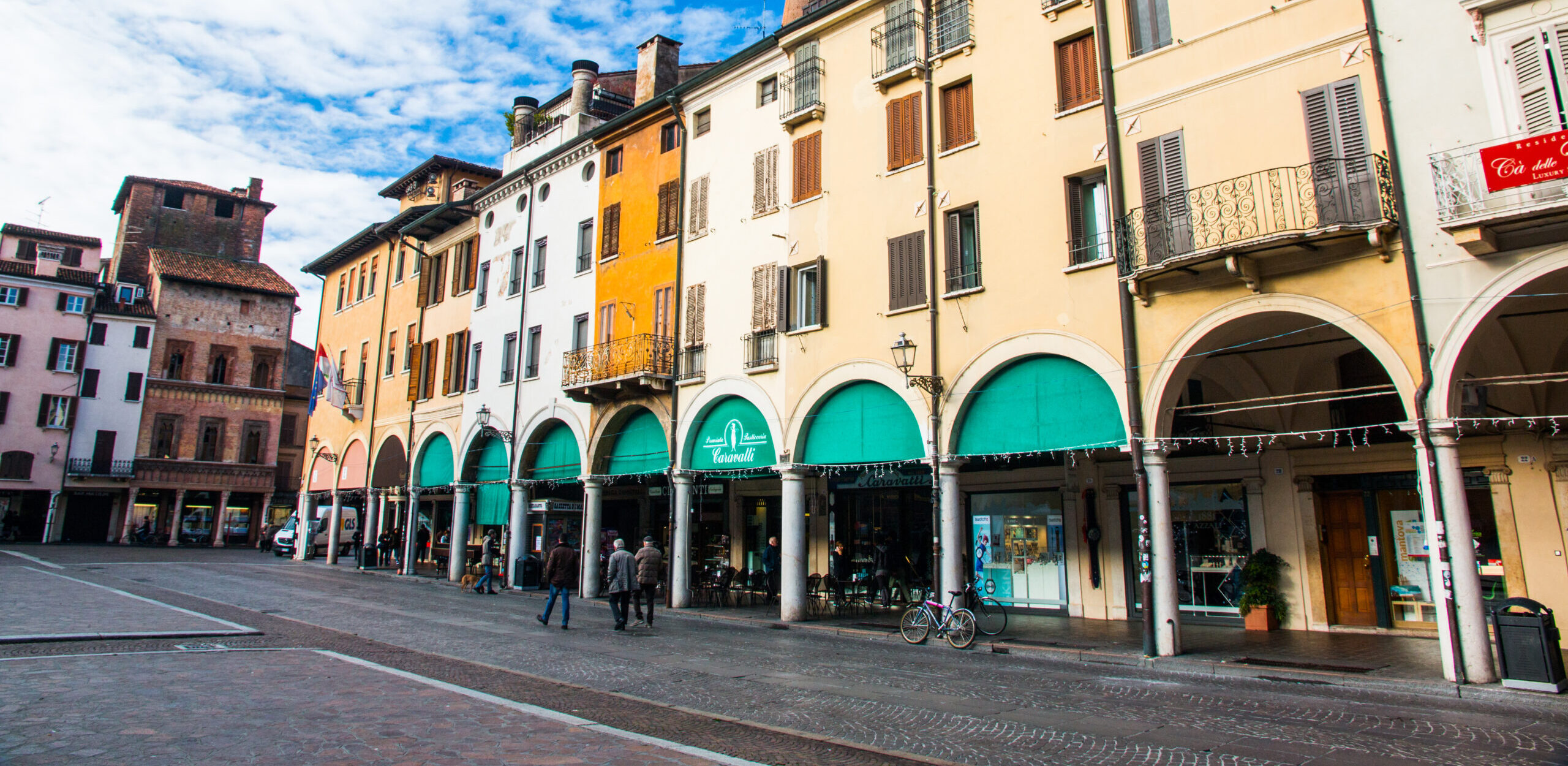
The porticoes that line the main streets and frame the squares of Mantua are an identifying element of the city.
The system of Renaissance porticoes, supported by columns with capitals from different eras and of various origins, begins in Broletto Square, crosses the squares of the historic center and continues up to Corso Umberto I. Since each arch corresponded to a different shop, the capitals have different decorations, indicating the activities that took place there.
From the Middle Ages onwards, the city was formed essentially for reasons linked to the economic activities that arose near the areas intended for trade.
The dwellings constitute a compact urban fabric, which results from the aggregation of several buildings placed next to each other.
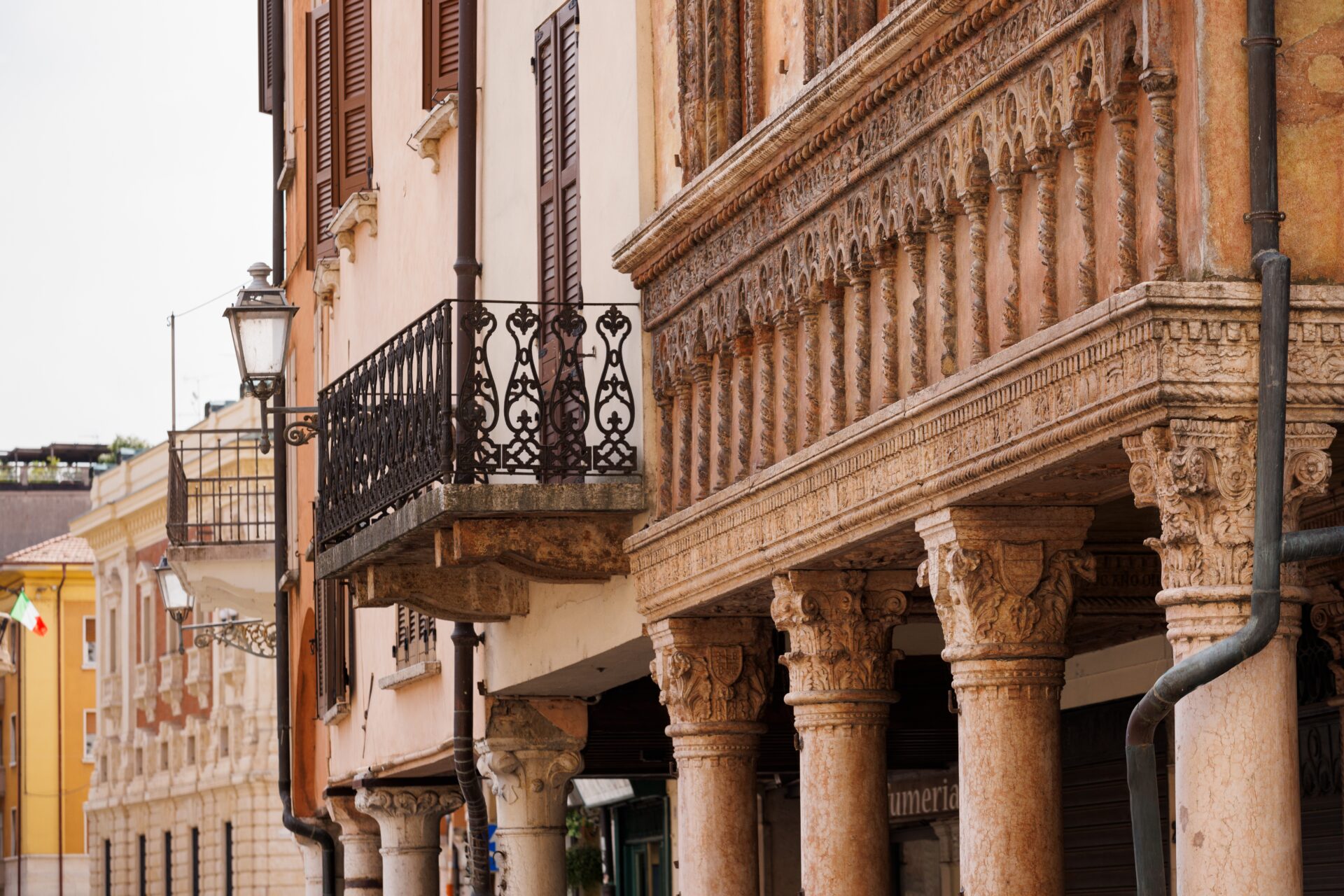
In Mantua we find the shop-houses: elongated two- or three-story dwellings, arranged side by side, with the living quarters on the upper floor and storage areas or warehouses in the attic. On the ground floor are artisan workshops or commercial businesses, with the street view often framed by a portico, a mediating element between the private and public spheres. Owned by private individuals who ran their businesses there, the columns and capitals, like a modern advertising sign, are customized to report goods and services. Even today, the variety of materials, shapes, and decorations tells the story of the city, through the names of its inhabitants and the activities they carried out.
Find out more
Porticoes of Via Broletto
Around 1190, Benedictine monks built a series of shops, each with a front portico, along what is now Via Broletto, with the intention of renting them out. The entrance to each shop coincided with a single arch of the portico, eight feet wide by eight feet deep. The span of the medieval portico was maintained during subsequent renovations, and the same original measurements can still be seen today. Flanking the entrance on Via Leon d'Oro, you can see a capital carved with an eagle holding a bale of wool in its talons. It was the symbol of the Universitas Mercatorum, the seat of the Mantuan merchants' guilds.
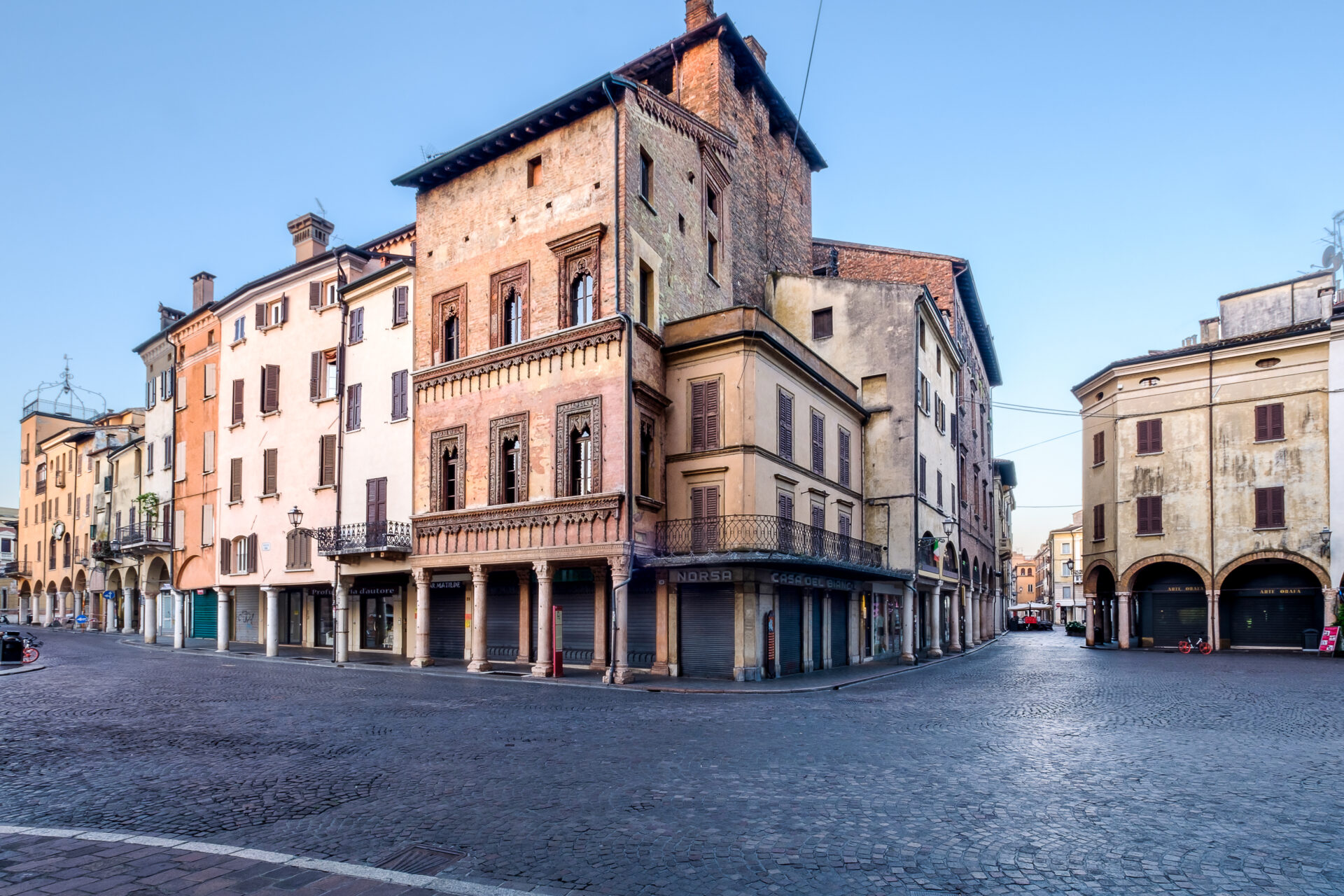
Merchant's House, Piazza Erbe
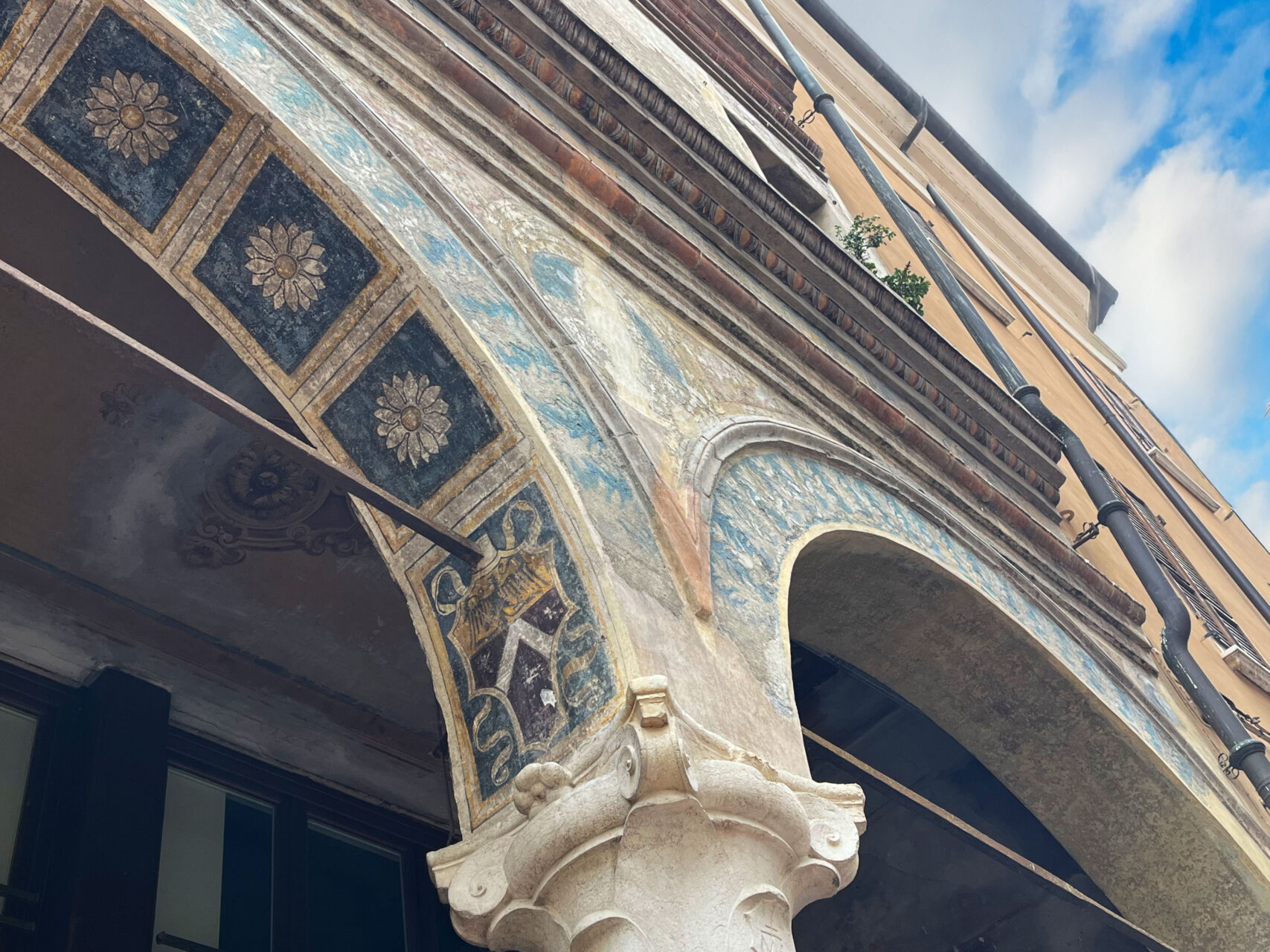
The splendid Venetian-style residence overlooking Piazza Erbe, on the corner of Piazza Mantegna, was the home of the merchant Boniforte da Concorezzo, who had obtained a monopoly on the sale of Venetian goods from the Gonzaga family. Under the portico's vault, the owner's name is still inscribed, while the friezes surrounding it display, almost like a stone catalog, all the goods sold in the shop, from combs to skeins of wool, from spindles to gloves.
Corso Umberto
Information about the porticoes of Corso Umberto is currently very scarce. The porticoes consist of 162 columns, erected between 1444 and 1484 by the Marquises Ludovico and Federico Gonzaga. They were not built from scratch, but rather reused pre-existing columns. For this reason, the porticoes of Corso Umberto feature a varied gallery of capitals, bases, and shafts, in which the columns are arranged in rows and display distinct characteristics.