
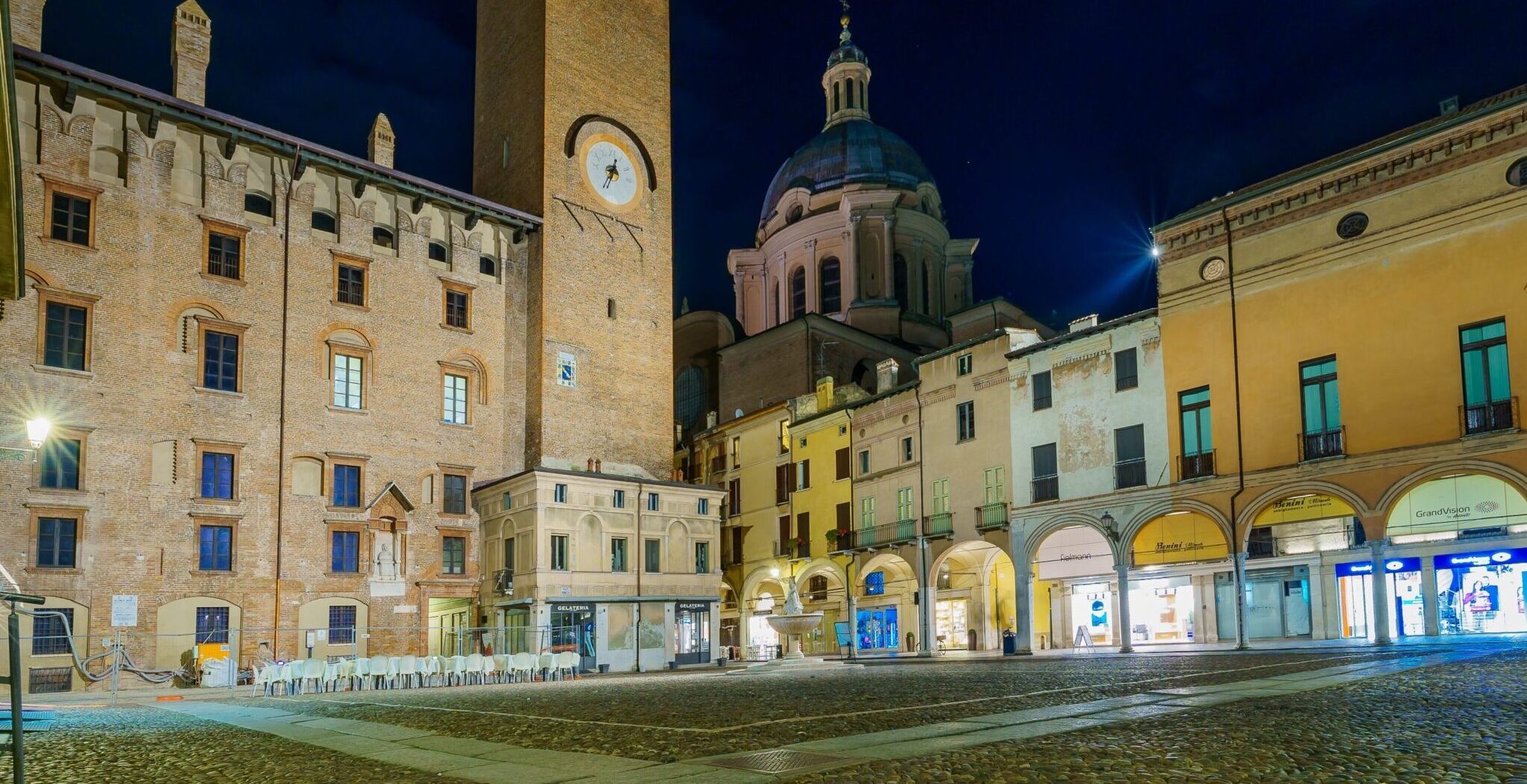
The term Broletto, derived from medieval Latin, refers to a fenced courtyard. Since the early Middle Ages, fruit and vegetable markets have been held in these orchards.
During the Middle Ages, the main government buildings overlooked this space: the Palazzo del Massaro, which was responsible for managing municipal assets; the Arengario, where citizens were addressed; and the Palazzo del Podestà, the residence of the head of the municipal government and the seat of government.
The Podestà continued to exercise his role even during the Gonzaga rule, although in a significantly reduced form compared to the past, as appears from the Gonzaga statutes of 1404, to the point of becoming only a city judge.
The Palazzo del Podestà, restored after the 2012 earthquake, has hosted the Museum dedicated to Virgil, the great Latin poet of Mantuan origin, the city's tutelary deity. Virgil has been considered a sacred figure for the people of Mantua since the Middle Ages, and you can see him seated on the judge's throne on the side wall of the Palazzo del Podestà in a marble sculpture that has stood out since 1227 beneath the aedicule that protects him.
Near Virgil in the chair you can see the plaque that commemorates the insertion of the Mantua and Sabbioneta site in the UNESCO World Heritage List. The site represents the synthesis of Renaissance urban planning ideals: Mantua as a city of evolution and Sabbioneta as a newly founded city.
Find out more