
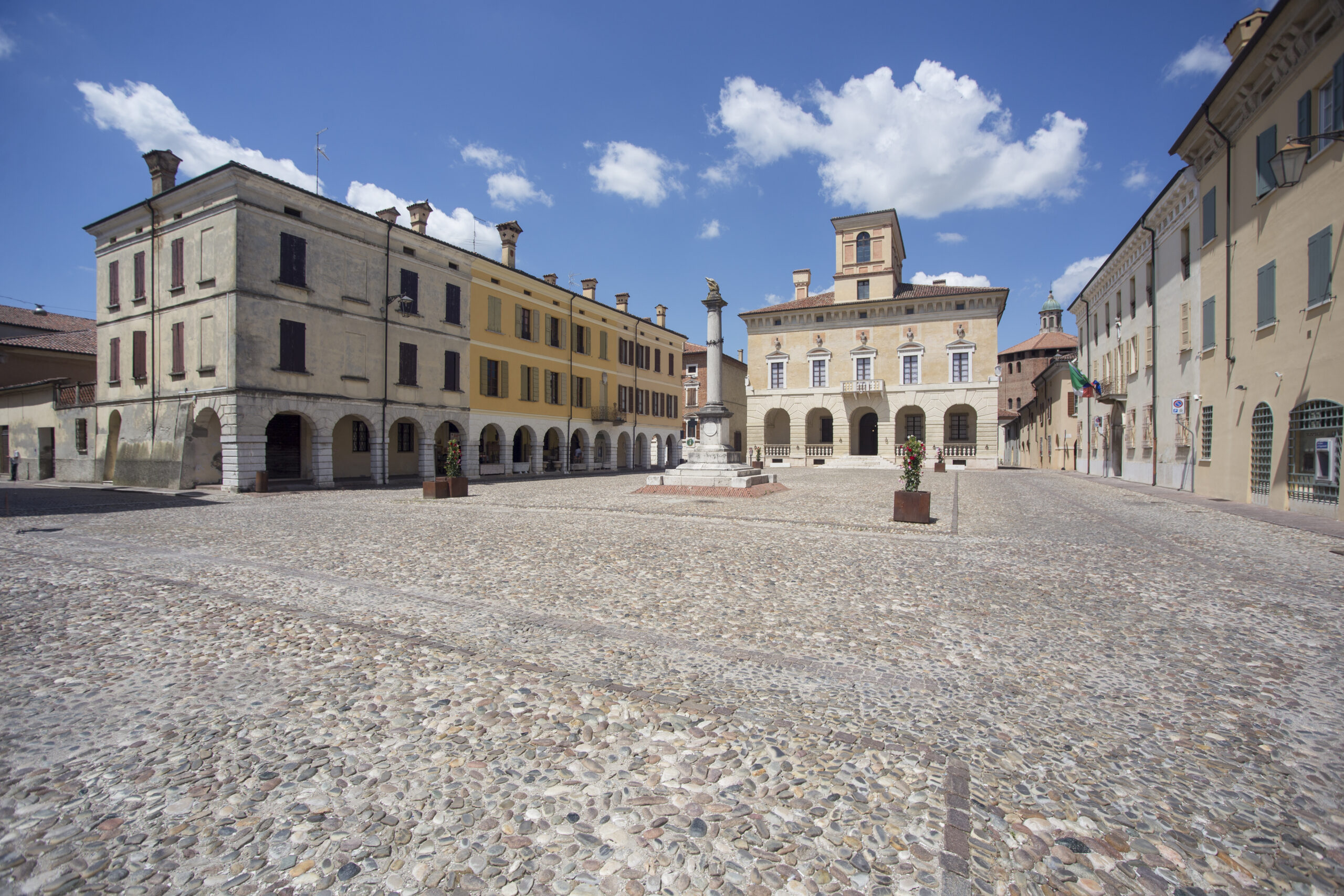
In Renaissance cities, the piazza was much more than an urban space: it represented the heart of economic, political, and social life. Weekly markets, fairs, trade, and public activities took place here. Piazzas were designed to foster encounters between citizens, merchants, and travelers, becoming places where not only goods but also information, ideas, and relationships circulated.
As we have seen for Piazza Erbe in Mantua, in Sabbioneta this role belongs to Ducal Square. The square, located at the center of the urban layout, was the main place of representation of the ducal power but also the hub of commercial activity. Under the porticoes were workshops and artisanal businesses, while the open space hosted markets and exchanges involving citizens, local farmers, and merchants from nearby towns.
The presence of the mint, artisanal businesses, and the Jewish community, engaged in trade and credit, helped enliven the area around the square, transforming it into a place where political power and economic life intertwined daily.