The oldest of the buildings constructed by Vespasian
Home of the family of Vespasiano Gonzaga and centre of the city's administrative and political life, Ducal Palace It is an expression of the prince's personality and ambitions, a celebration of his successes and virtues.
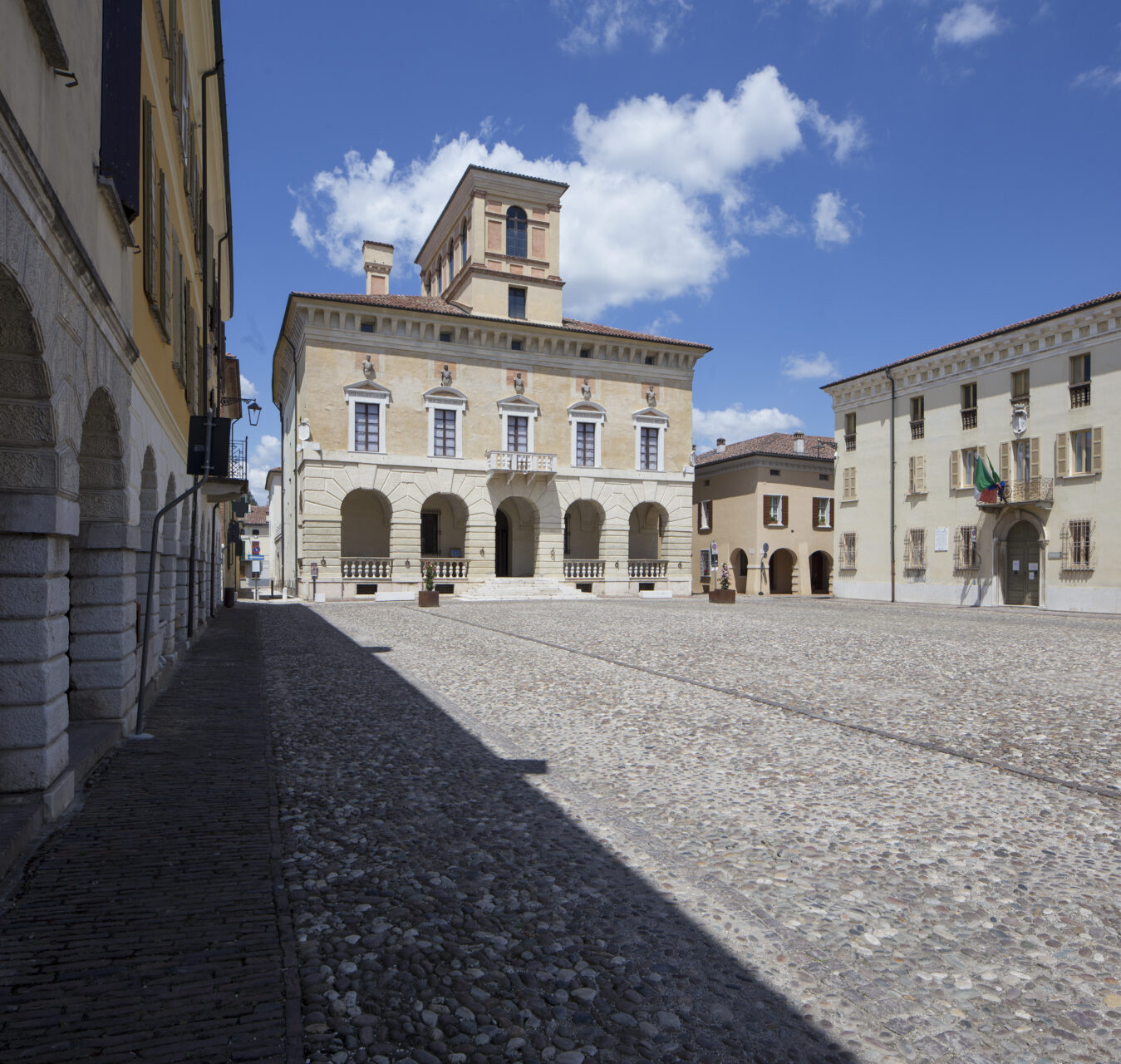
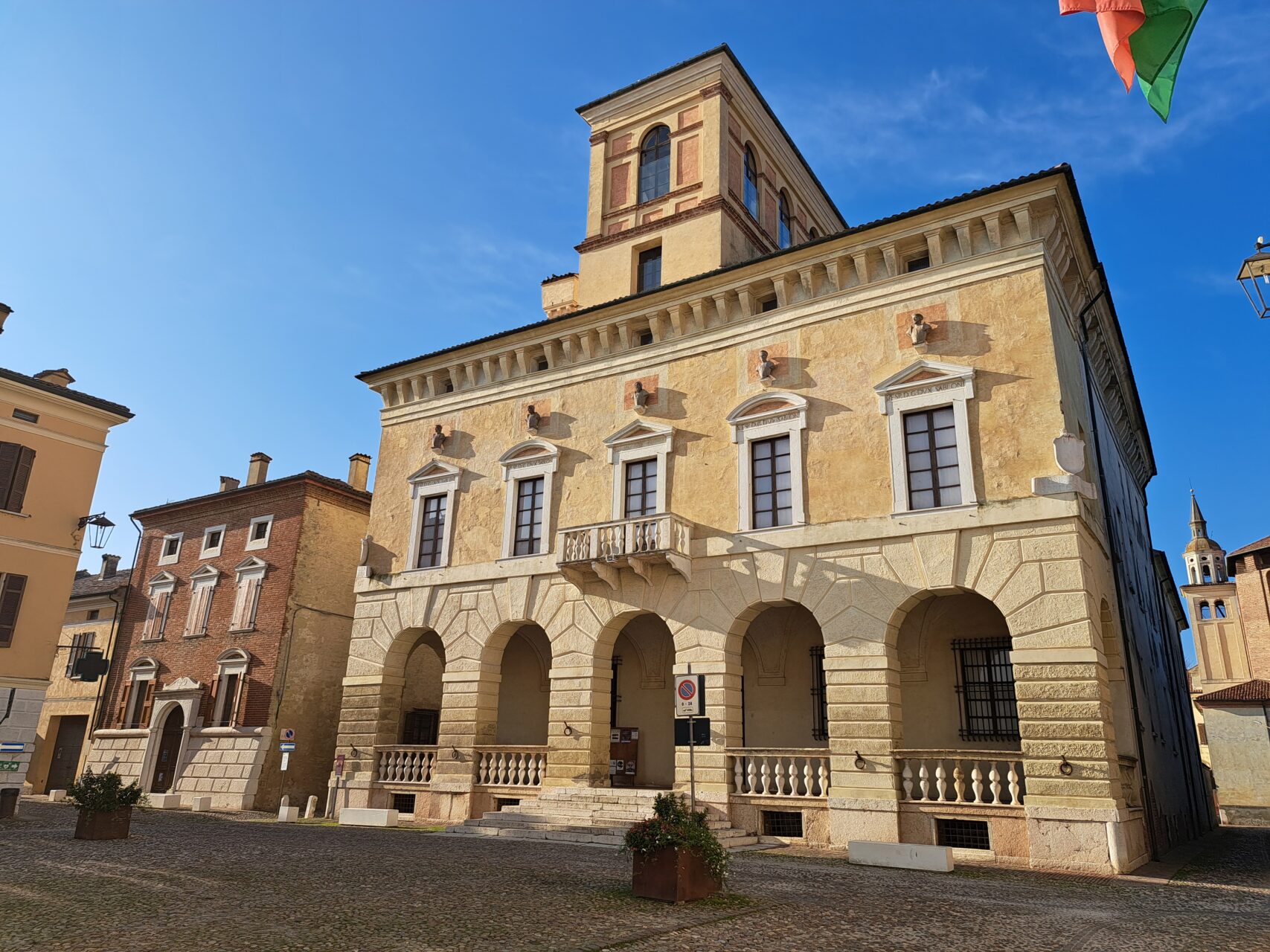
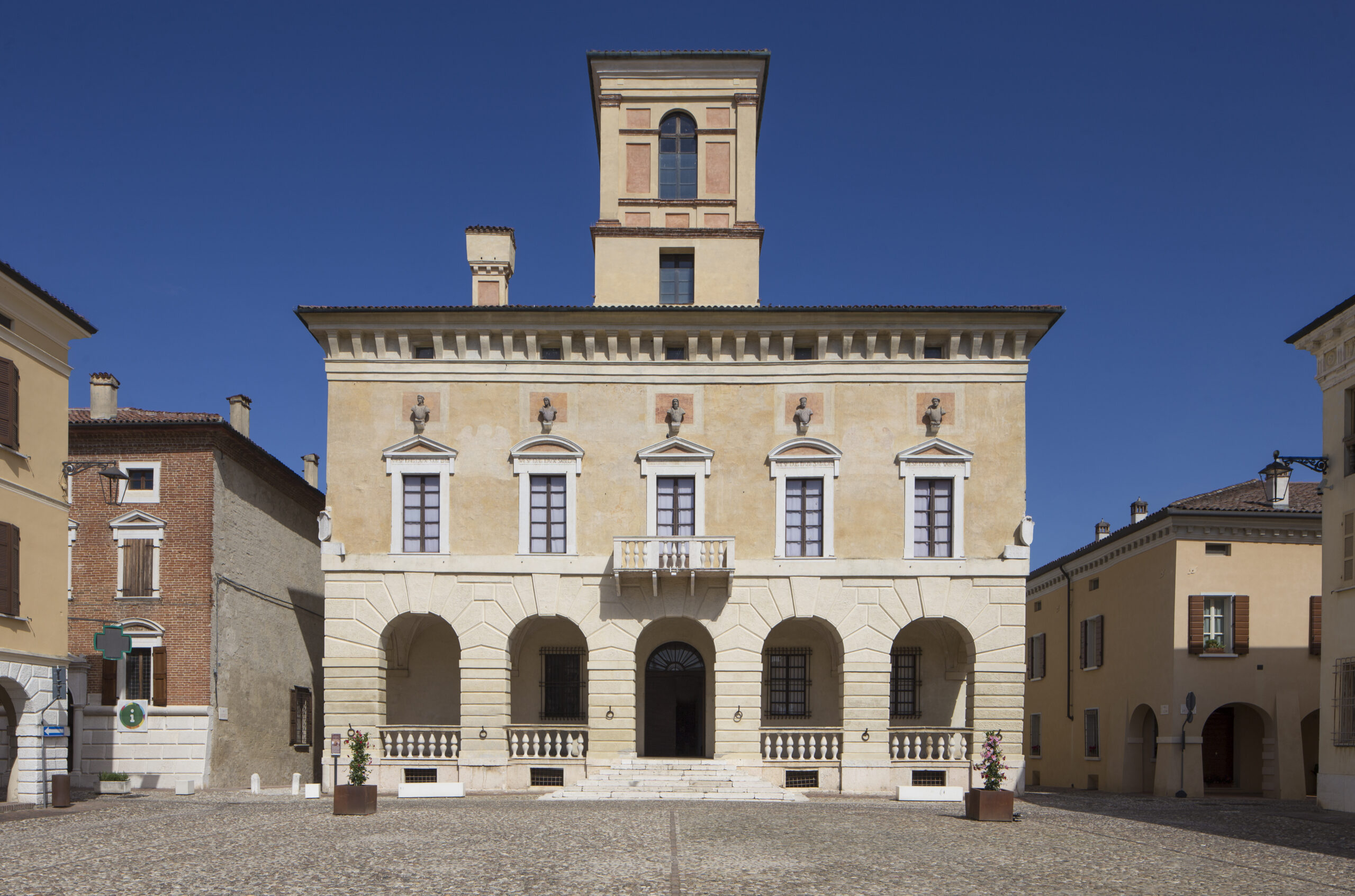
The building represents a significant example of Renaissance architecture and further testifies to the grandeur of the lords of Mantua, starting with the majestic and elegant façade, characterized by a rusticated portico and a white marble entrance staircase. A cornice divides the upper and lower floors and serves as a support for the five marble-framed windows with loggia openings, surmounted by tympanums. The architraves are engraved with the inscription VESP. DG DVX SABLON. I. (Vespasian by the grace of God, first Duke of Sabbioneta).
At one time, marble busts of Roman emperors were placed on the window shelves, today replaced with resin busts of some Gonzaga members.
The interior of Ducal Palace, between mythology and empire.
The decorations of Ducal Palace They present symbols linked to power, to the Gonzaga dynasty and to the alliance with the Habsburgs.
The main floor is enhanced by the so-called golden salt, with a gilded and painted wooden vault. In one of them, the Darts Room, there is the Duke's coat of arms surrounded by the collar of the Golden Fleece: the important knightly honor conferred on Vespasian by Philip II, King of Spain.
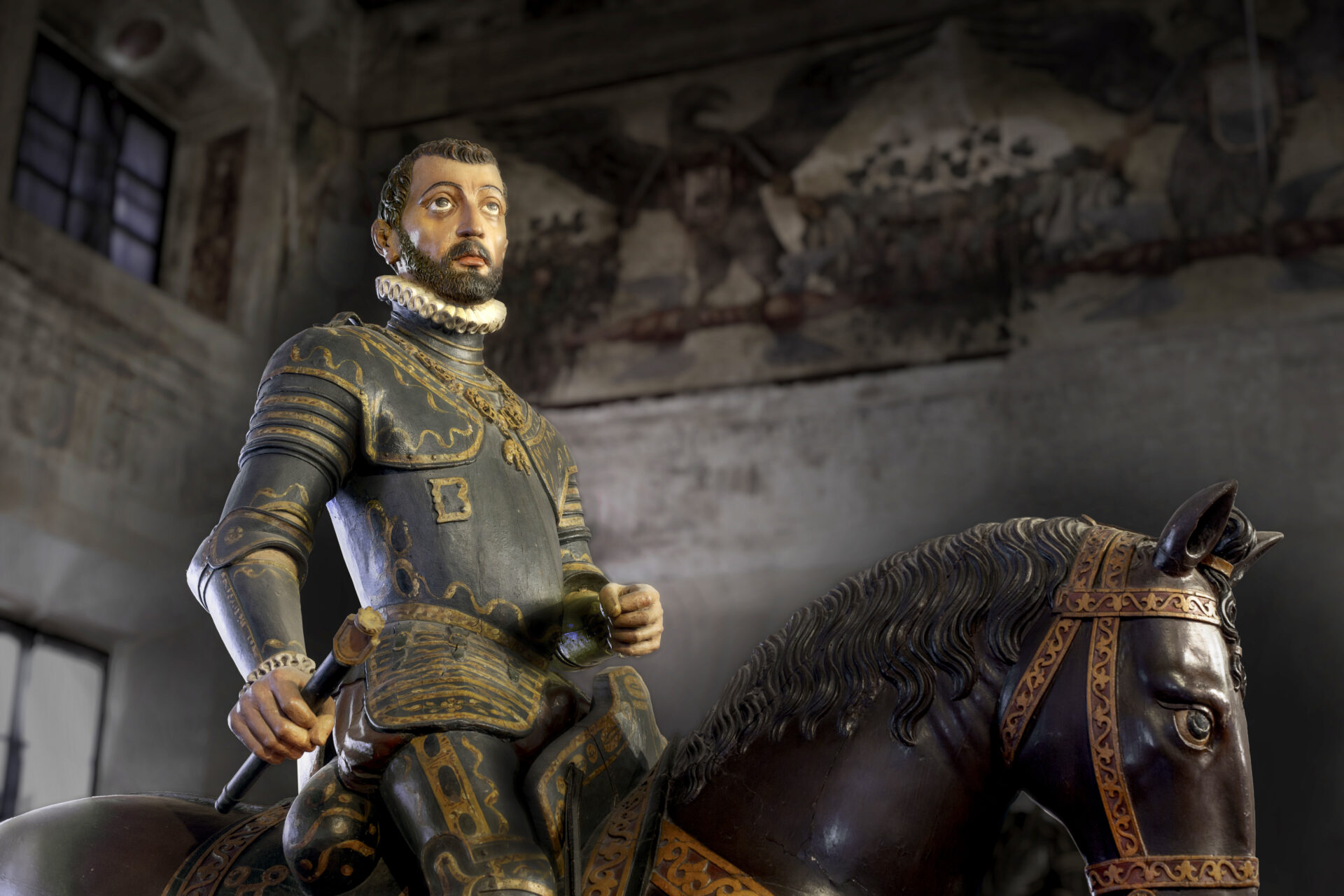
In the Hall of the Eagles, it is possible to admire the remains of the wooden equestrian statues of the Cavalcade, which celebrates the military virtues of the Gonzagas. The ten statues were originally located in the Horse Show, a large room located at the rear of the palace, destroyed by a violent fire in the early 19th century. At the center of the room is Duke Vespasiano Gonzaga Colonna in parade armor with the medallion of the Order of the Golden Fleece around his neck (the original will be found at Vespasiano's tomb).
Interesting fact: on December 6th, the anniversary of the birth of the Duke of Sabbioneta, the sun shines into the palace through the central window on the façade.