
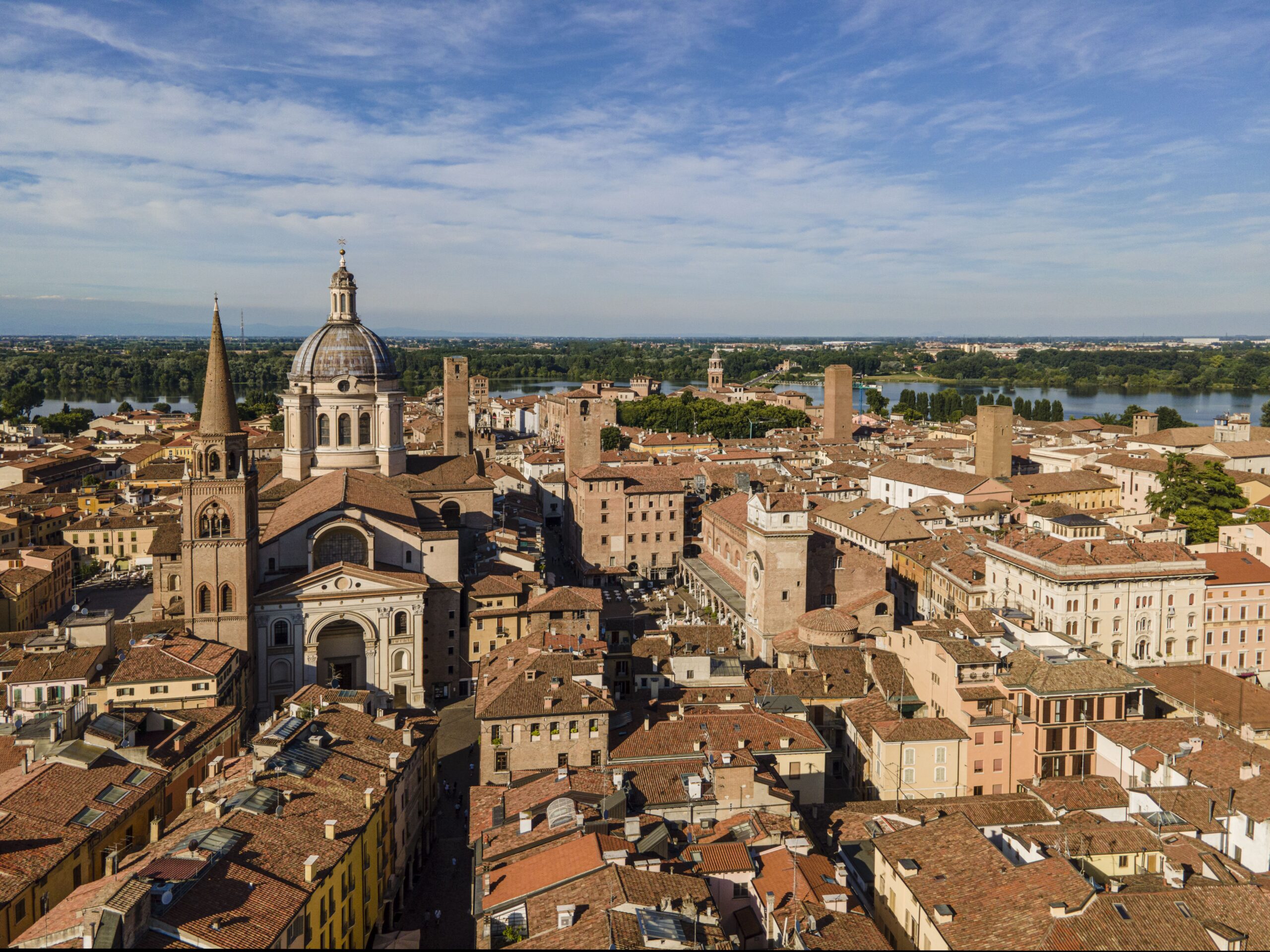
In the 15th century, the Gonzaga family, now Lords of Mantua, invited the greatest artists of the time to the city. Thanks to their skills in painting and architecture, they created the great monuments that characterize a Renaissance court. The city was transformed and became a meeting place for important figures and the cultural world. Louis II implements the so-called Renovatio Urbis, the renewal of the city.
The construction site of the Basilica of Sant'Andrea, in 1472, is the heart of this urban planning project: many roads lead pilgrims to the church to visit the Sacred Vessels, a religious and cultural emblem of the Renaissance city. At the instigation of the Gonzagas, streets were paved, house facades were painted, and noble palaces were built to redevelop the outskirts. Every building was intended to exalt the Signoria, including service buildings such as the sixteenth-century Giulio Romano's Fishmongers intended for the fish trade.
Many artists worked to modernize and embellish Mantua, including Andrea Mantegna, who paints the Bridal Chamber, Leon Battista Alberti, who designed the Basilica of Sant'Andrea and the Temple of San Sebastiano in the Renaissance expansion area, and Giulio Romano who was entrusted with the creation of Te Palace.