The greatness of Rome goes on stage
Commissioned by Vespasiano Gonzaga to the architect Vincenzo Scamozzi, a pupil of Palladio, the Ancient Theater It writes an important chapter in the history of Italian and European theatre, as it can be considered one of the first examples of a permanent theatre of the modern age.
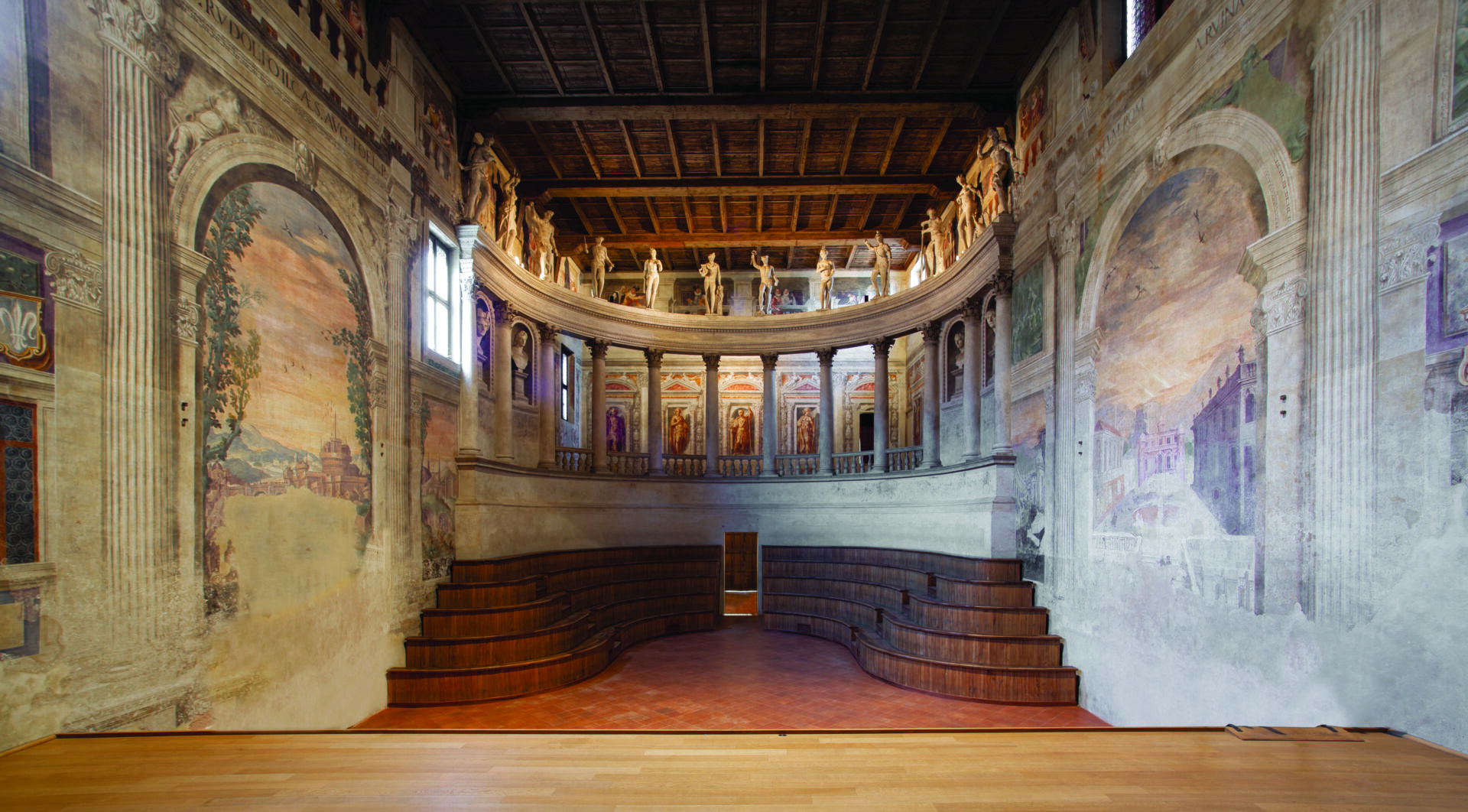
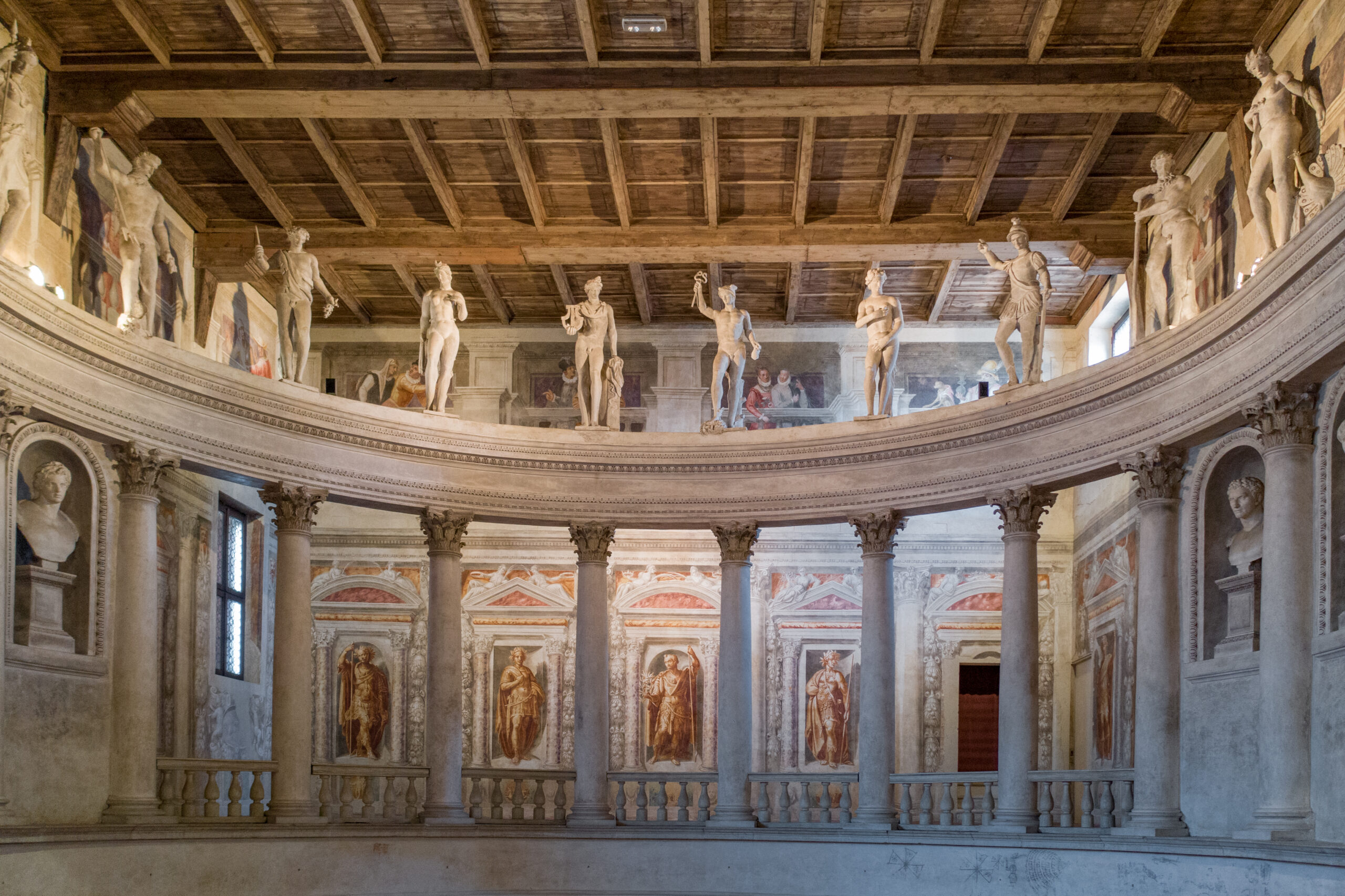
The theatre, inaugurated in 1590, is enriched by a spectacular Corinthian loggia on top of which stand the stucco statues of Hercules, Minerva, Neptune, Bacchus, Diana, Apollo, Mercury, Venus, Mars, Hephaestus, Hera and Jupiter.
The loggia is the place of the prince's epiphany (manifestation of divinity in visible form), for this reason, the painted wall in the background portrays Vespasiano Gonzaga Colonna invested with the office of the new emperor, placed among the Caesars who surround him.
A Ancient Theater, built according to modern criteria.
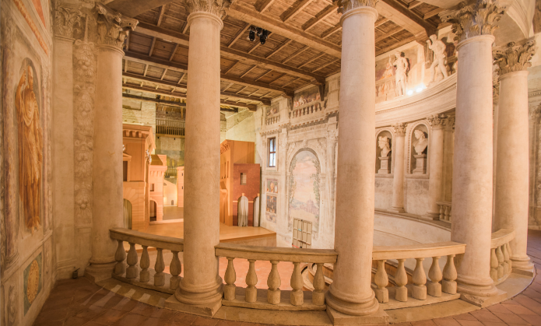
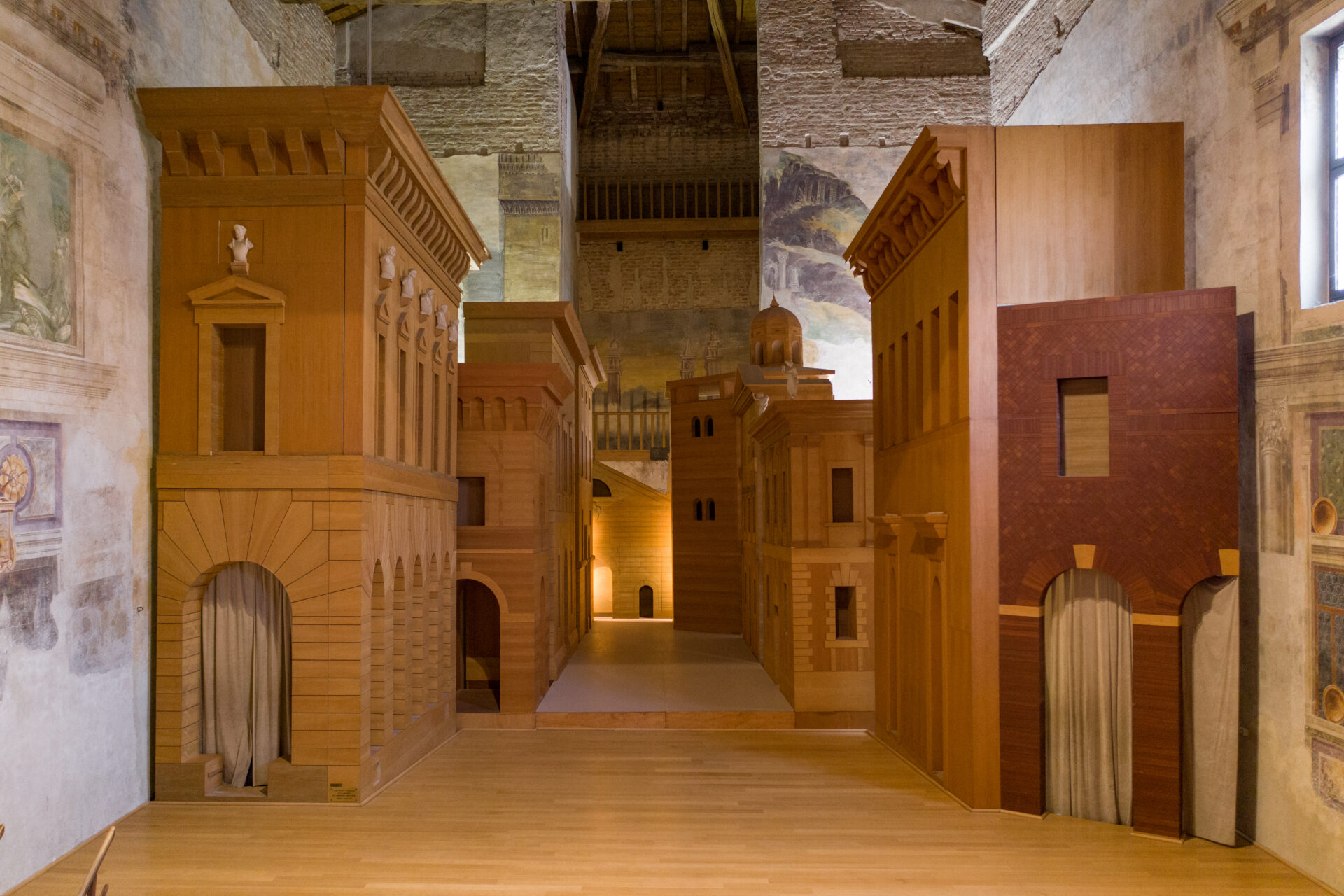
Scamozzi builds the Ancient Theater equipping it with dressing rooms for the artists and a foyer, a staircase intended for the nobility surmounted by a loggia for the ladies, and a fixed stage formed by a perspective of buildings, built in painted wood.
Between one performance and another, the real protagonist is Rome.
On the side walls of the Ancient Theater, in correspondence with the orchestra, two views of Rome stand out: on the left, looking at the stage, the Piazza del Campidoglio is depicted, while in front we can recognize the Mole Adrianea with the bridge of Castel Sant'Angelo. Above the arch of the Campidoglio we find the inscription: QVANTVM ROM(ae) (extat) A RVINA D(icatum), (How great Rome was, its very ruin teaches [it]). The same inscription is repeated four times also on the external frame of the building, to underline that the City is the constant model of reference for Vespasiano Gonzaga.
In the niches at the ends of the colonnade, on the right, we can recognize the busts of the emperors Augustus and Trajan, on the left Alexander the Great, the greatest leader of antiquity, placed to celebrate the warrior virtues of the Duke of Sabbioneta.
The bust of Cybele inserted in one of the niches is placed as the protective deity of fortified cities, but also as the personification of Sabbioneta: an intellectual game typical of late Mannerism.