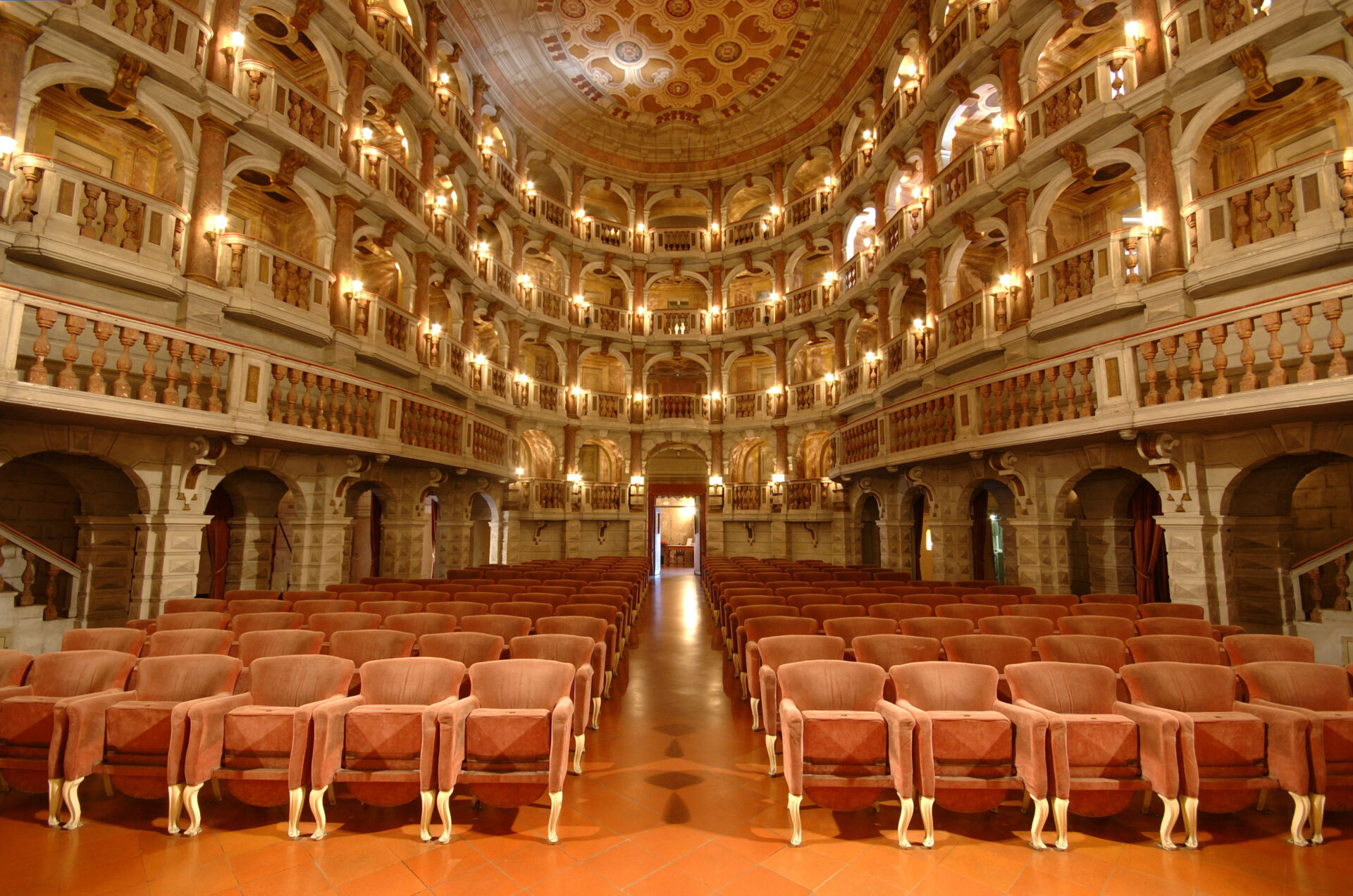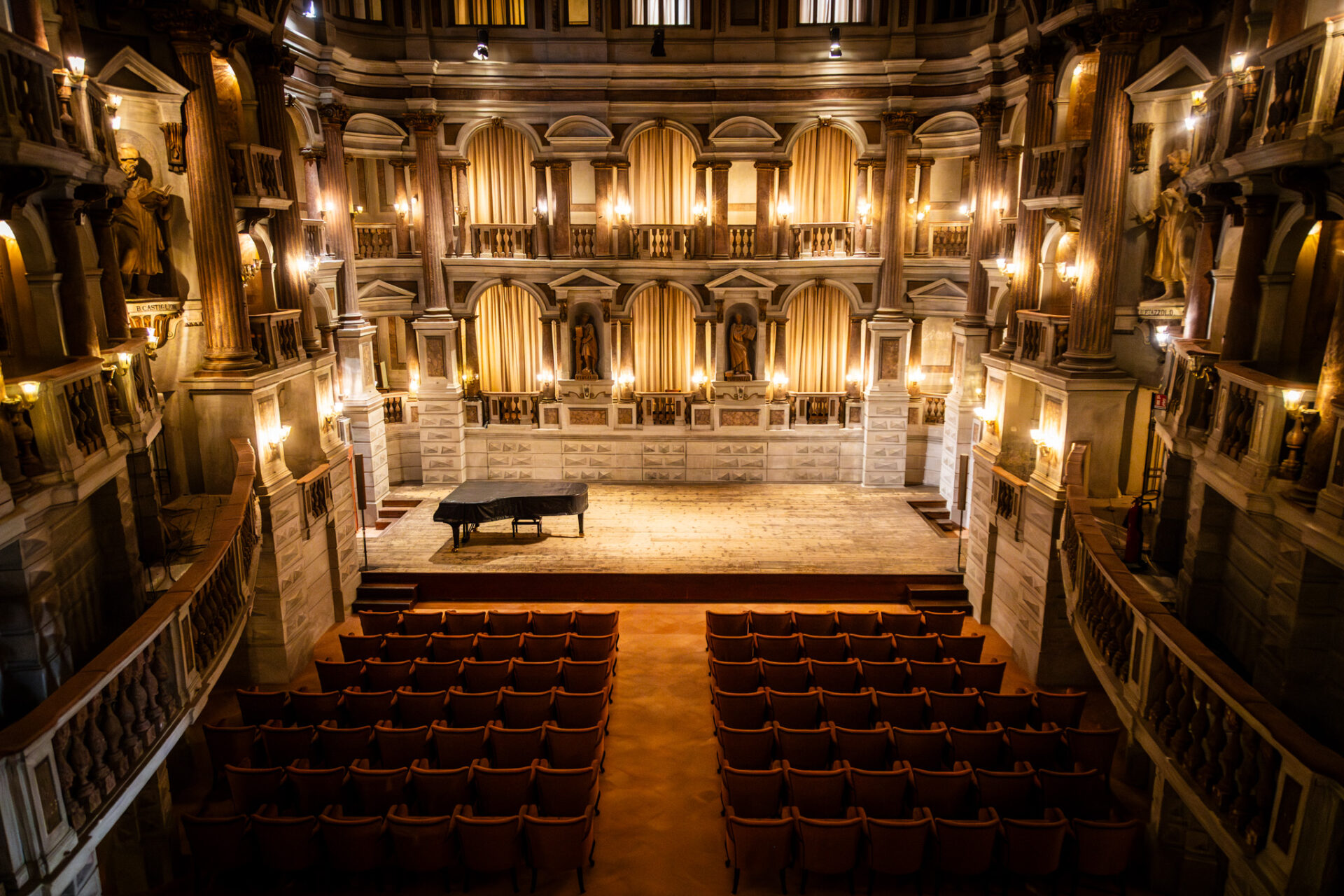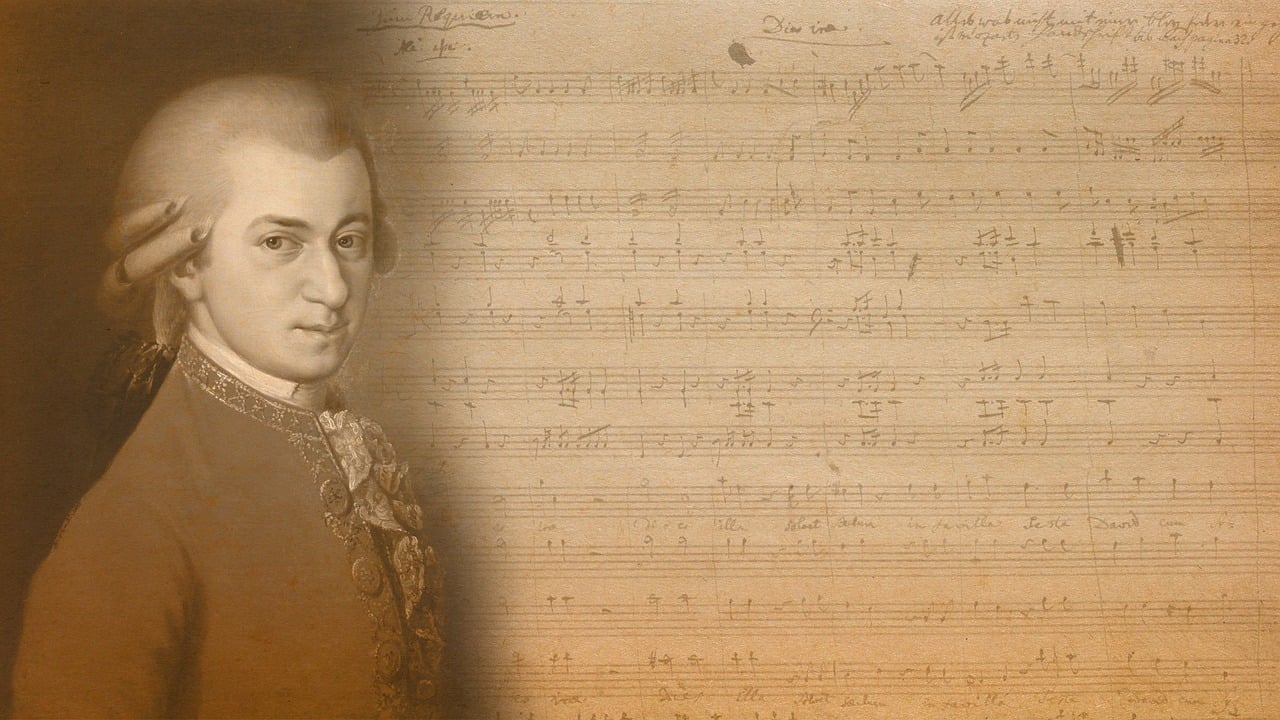
“In my life I have never seen anything of its kind more beautiful.” These are the words of the father of Mozart he wrote to his wife in January 1770 after the concert of the little Amadeus in the new Teatro Scientifico, when he saw for the first time the majesty and splendor of the polished gold, the new plaster and the lively rococo friezes.
The Scientific Theater, designed and frescoed by Antonio Galli Bibiena, rises inside the Academy Palace and was born as a Great Hall to host the Lectio Magistralis. Windows were built behind the loggias and the stage to take advantage of natural light during the day, while its bell shape and use of wood ensured excellent acoustics. It was also used for musical performances from the very beginning. Just a month after its inauguration on December 3, 1769, the theater hosted a piano concert by the young Mozart.
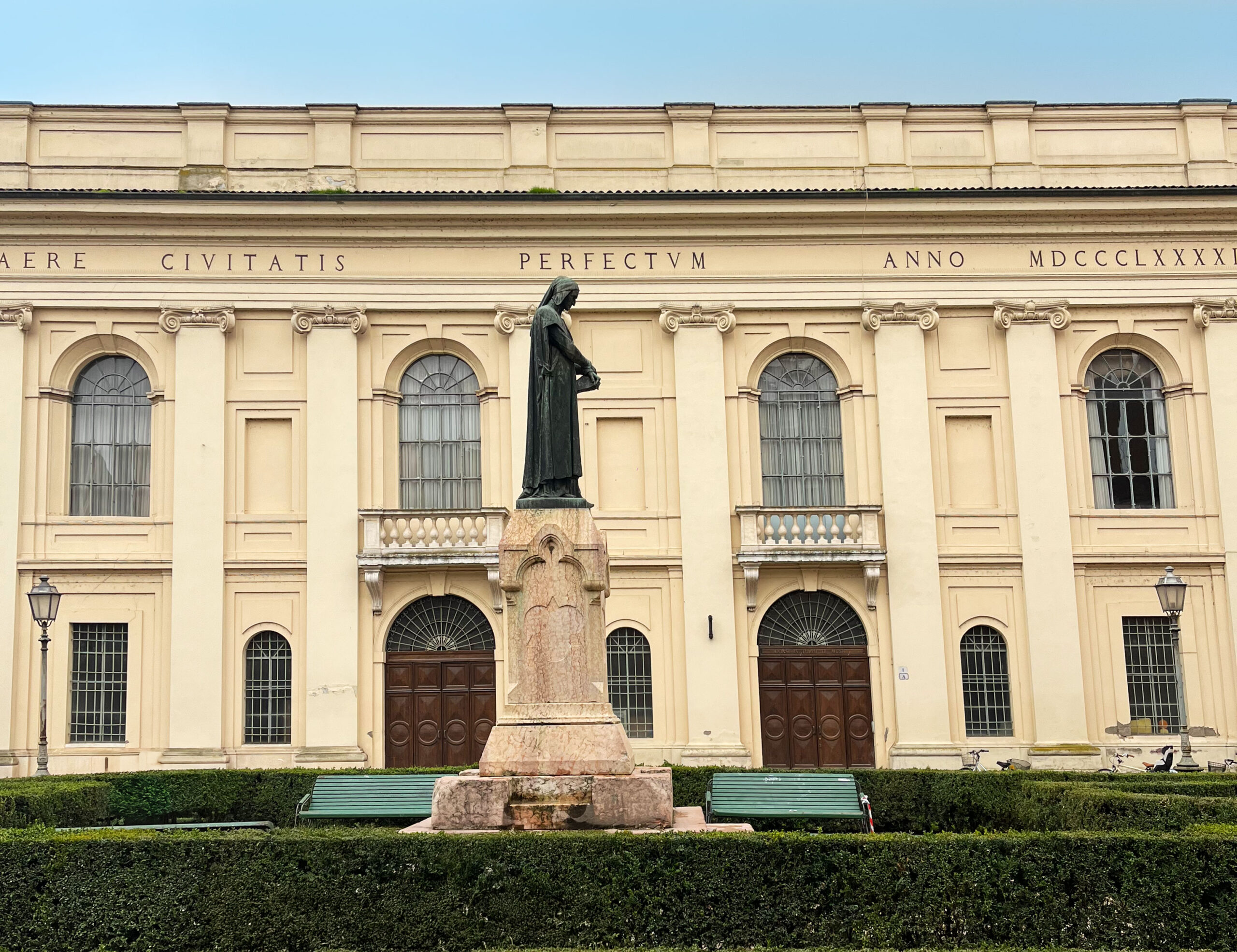
The palace is the seat of the "Royal Academy of Sciences and Fine Arts", now the National Virgilian Academy, founded by Maria Theresa of Austria in 1768. It houses a rich collection of ancient medical instruments, drawings, prints, and cartographic maps, as well as a vast archive.
In this area, Maria Theresa of Austria concentrated many places dedicated to culture and higher education, thus confirming Mantua's role as a cultural hub for artists and intellectuals of the time. Walking around the Palazzo dell'Accademia, you come across the Palazzo degli Studi, once home to the Jesuit College, and the wonderful Teresian Library.
Find out more
Academy Palace
Bibiena Scientific Theater
The Academy and the world of studies in the eighteenth century