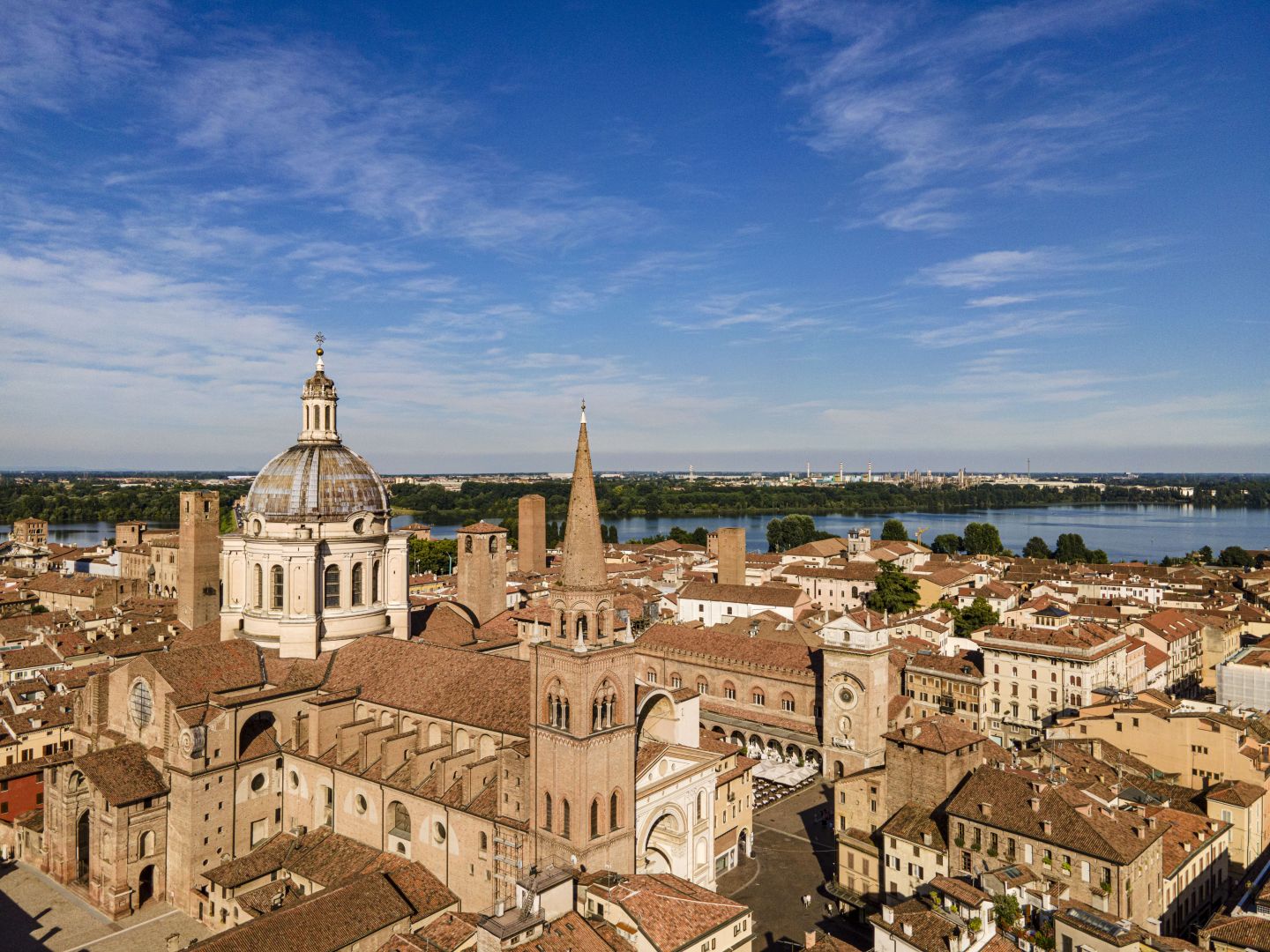
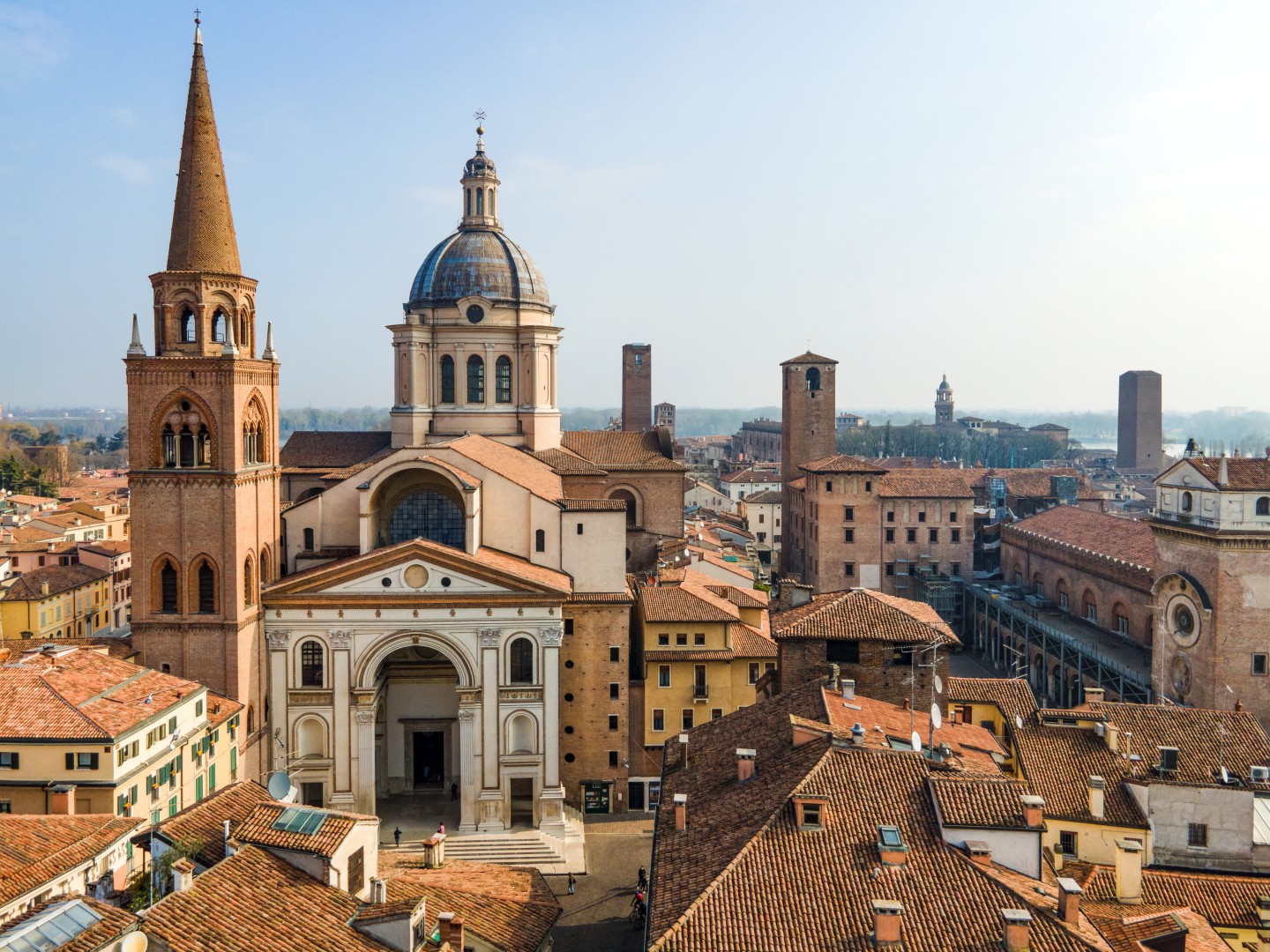
The Basilica of Sant'Andrea is one of the most important religious buildings of Renaissance architecture.
The works for the new basilica, designed by Leon Battista Alberti, began in June 1472, after the demolition of the pre-existing church.
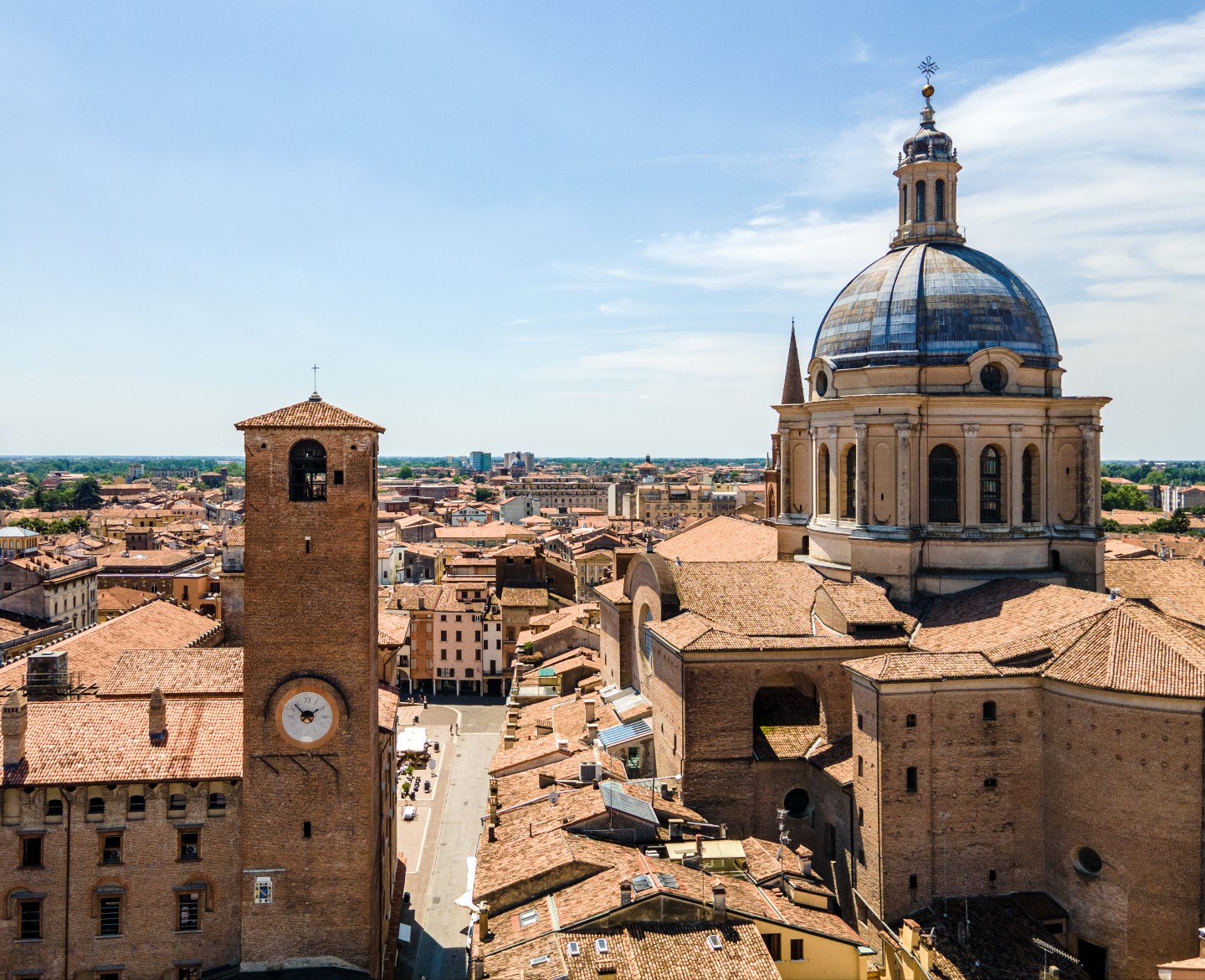
The project was ambitious and sought the perfect union between the forms of classical Greco-Roman art and the humanistic-Renaissance principles based on reason and harmony and on man as the measure of all things. The church was completed only in the 18th century with the addition of the dome, one of the largest in Italy, built by Filippo Juvarra in 1732.
The building, an expression of the magnificence of the Gonzaga patronage, was built to house one of the most important relics of Christianity: the Sacred Vessels which contain the Most Precious Blood of Christ. With the construction of the basilica, the Gonzaga family, Lords of Mantua, presented themselves as the new custodians of the Sacred Relic, asserting a spiritual power alongside their political one. Preserved in the crypt, the Sacred Vessels are still displayed today and carried in procession through the city streets on Good Friday.
Sant'Andrea is perhaps the most important testimony of the overall urban regeneration (the Renovatio Urbis) promoted by Ludovico II Gonzaga to transform Mantua from a medieval city to a Renaissance city according to the canons proposed by Alberti.
Inside the church the funeral chapel of Andrea Mantegna.
From 2024 it will be possible to climb to the top of the dome and admire the panorama of the city and the internal frescoes.
Looking from the square toward the Basilica's façade, you can see seven golden rectangles framing the triumphal arch, doors, and windows. Their measurements are an expression of what the Renaissance called divine proportions, the archetype of universal harmony and the absolute canon of beauty.
Find out more
Renovatio urbis
Longinus and the Sacred Vessels