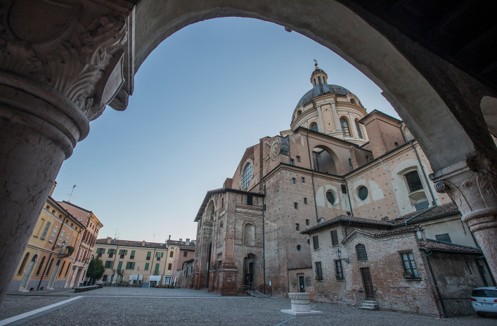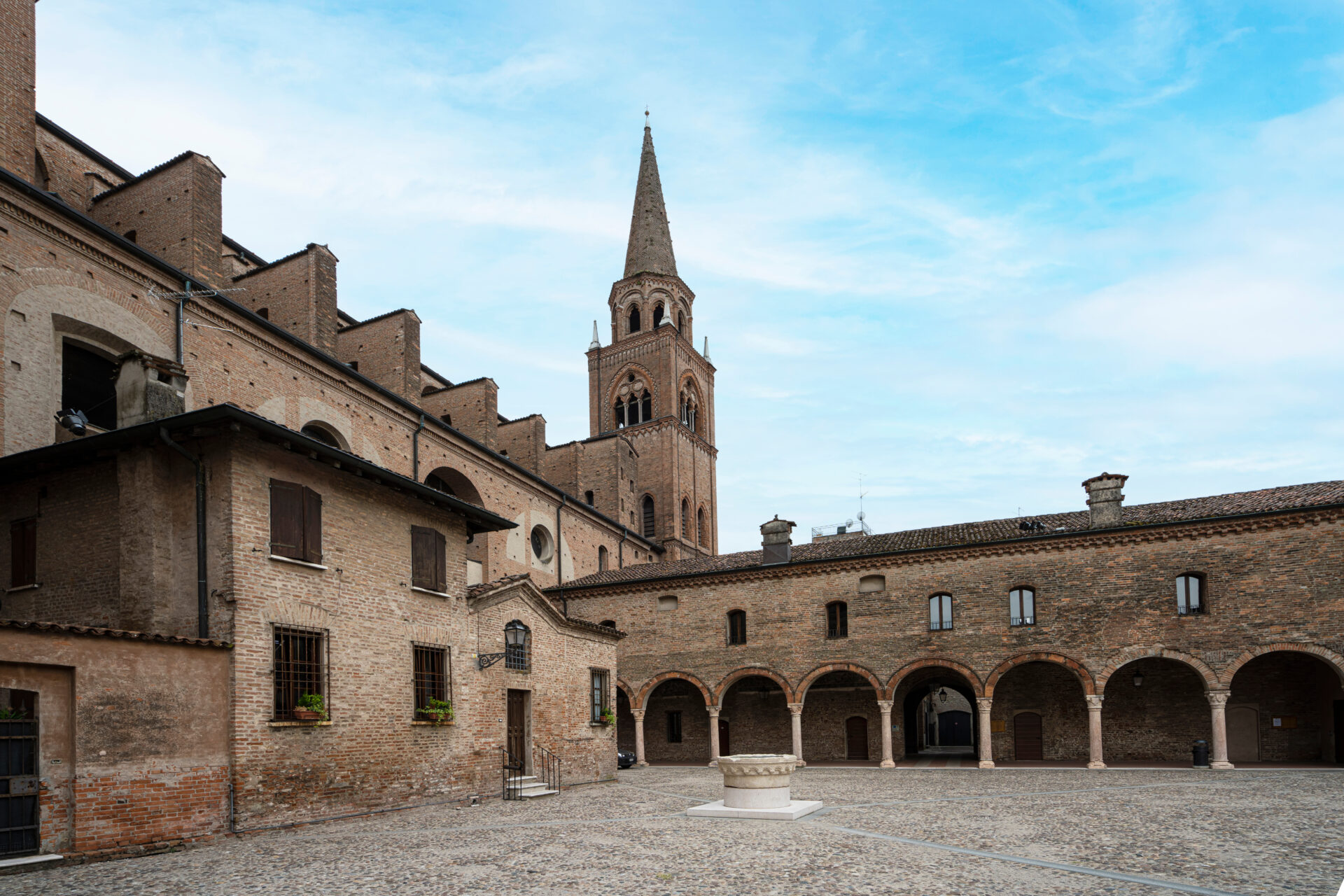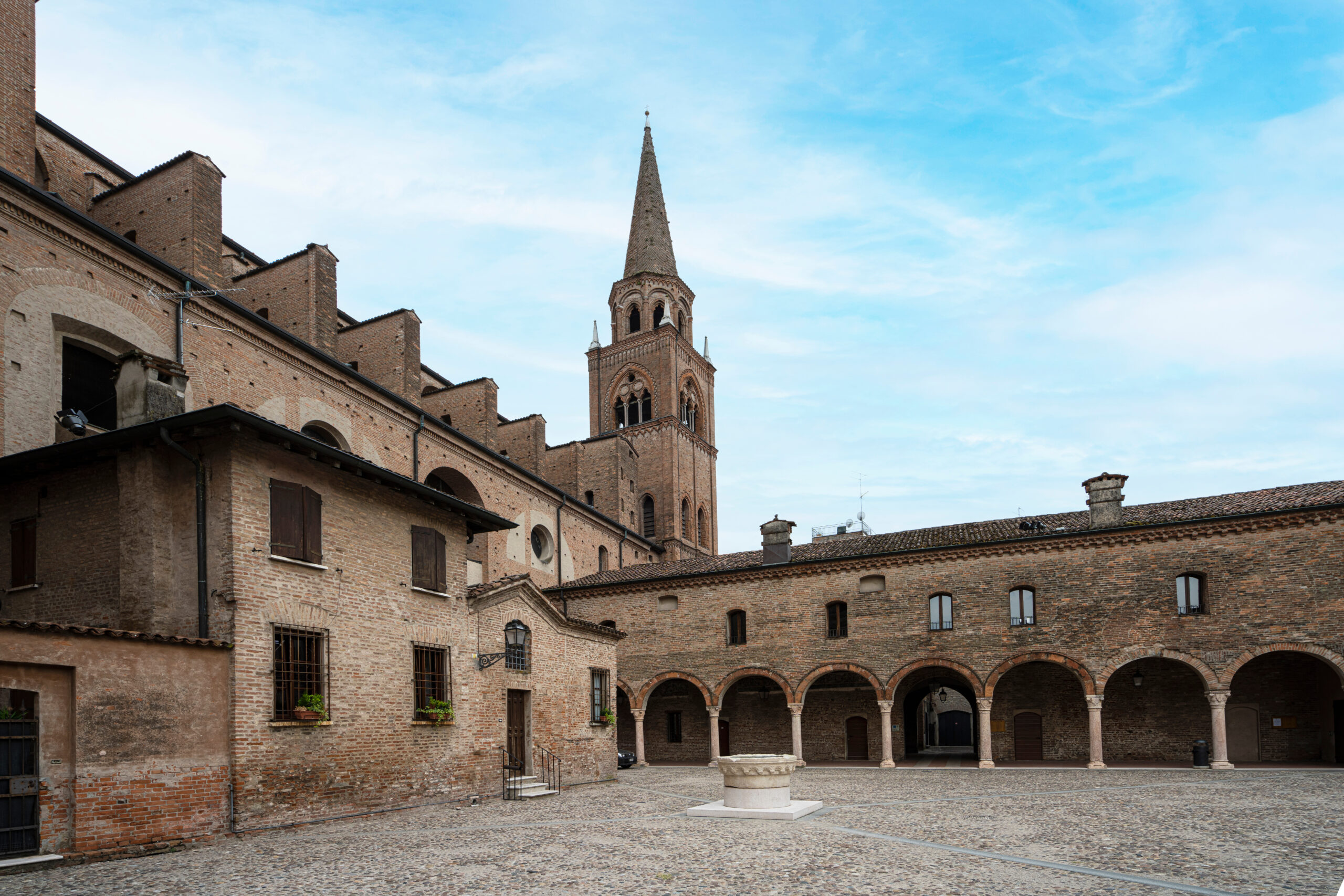
This area was not originally a square; it only became one after the demolitions of the 1930s. In fact, a Benedictine convent with a guesthouse once stood here to accommodate pilgrims visiting the Relic of the Most Precious Blood of Christ.
The white stone outline you see on the floor indicates the original perimeter of the monastery's cloister. The highly prestigious decorations commissioned by the Gonzaga family are still visible on the porticoes. The style could be compared to that of the workshop of Lorenzo Leonbruno, student of the Mantegna.
The square is today dedicated to Leon Battista Alberti, the master who theorized the principles of humanist architecture, becoming a point of reference for all his contemporaries. Ludovico II Gonzaga entrusted the reconstruction of the basilica to Alberti, who had proposed "a more capacious, more eternal, more dignified, more joyful project.".
The renovation of Sant'Andrea is part of the overall urban redevelopment project of Mantua: the Renovatio Urbis.
Next to a seat, some original marble artefacts from the basilica are on display, as well as a bas-relief that allows the façade to be read even by the Blind.
The square is a stage of the Carolingian Way: under the portico of the side facade of the church there is a plaque commemorating the miraculous discovery of the “Holy Blood” in 804, during the time of Pope Leo III and Charlemagne.
As you can see, the side facade of the church is incomplete in almost all its parts, with the exception of some terracotta sections. From the structure and the volutes, it is possible to see that the project was entirely similar to that of the Church of Santa Maria Novella in Florence, Alberti's masterpiece.
Find out more
Basilica of Sant'Andrea
Longinus and the Sacred Vessels
Carolingian Mantua