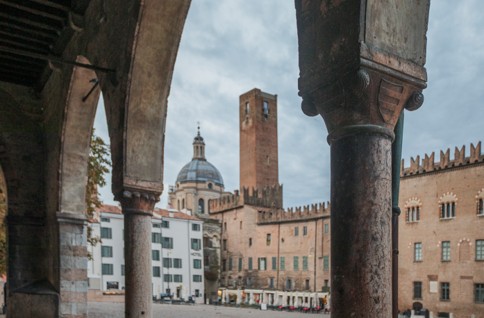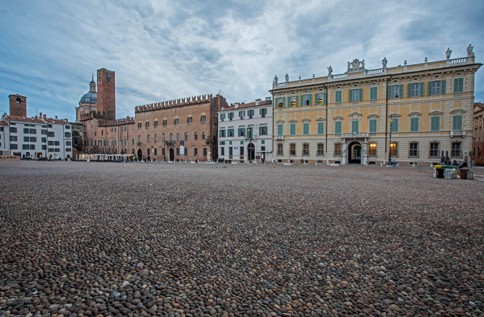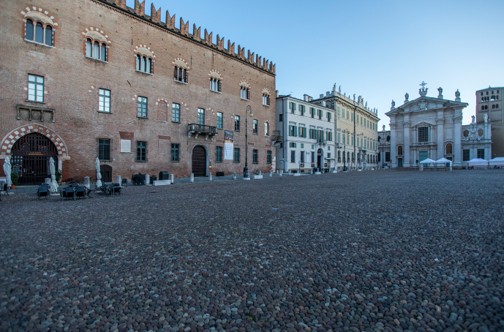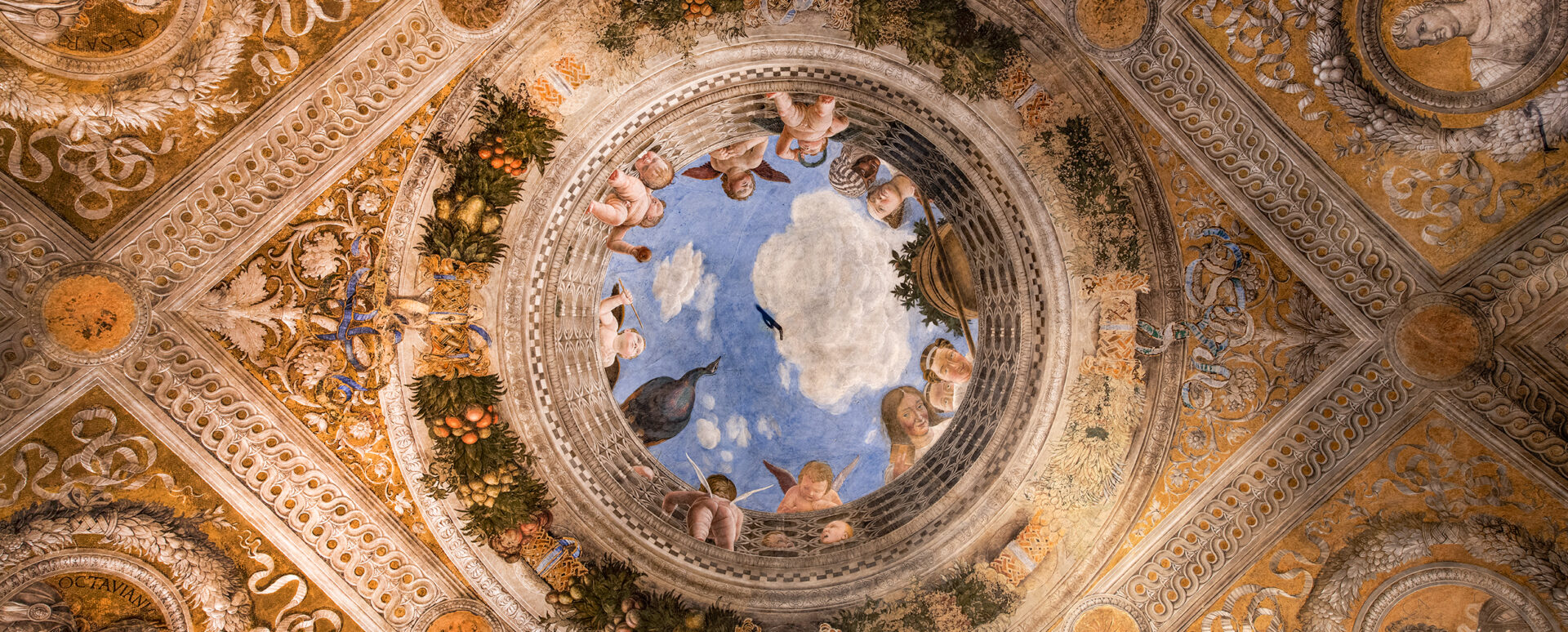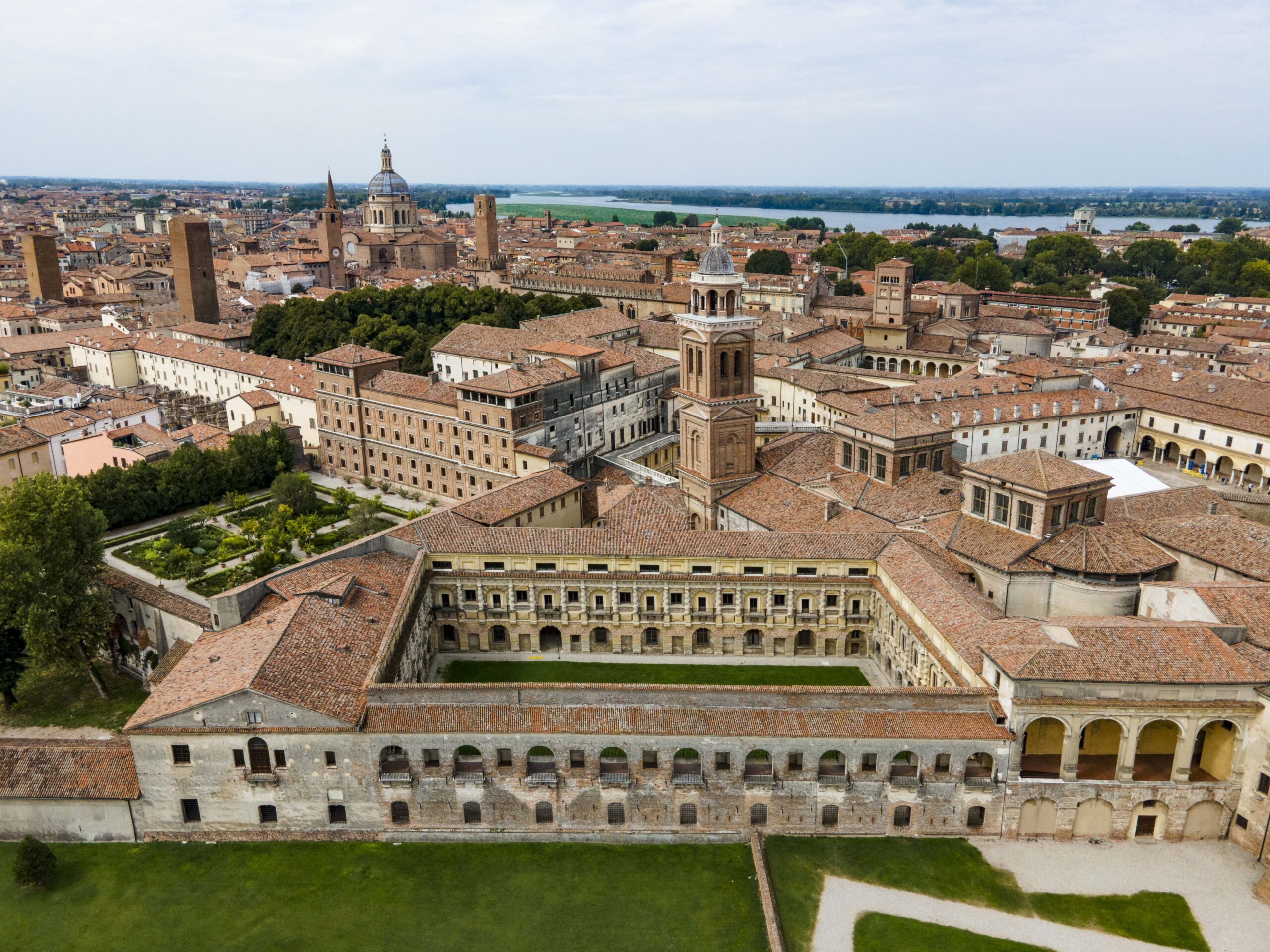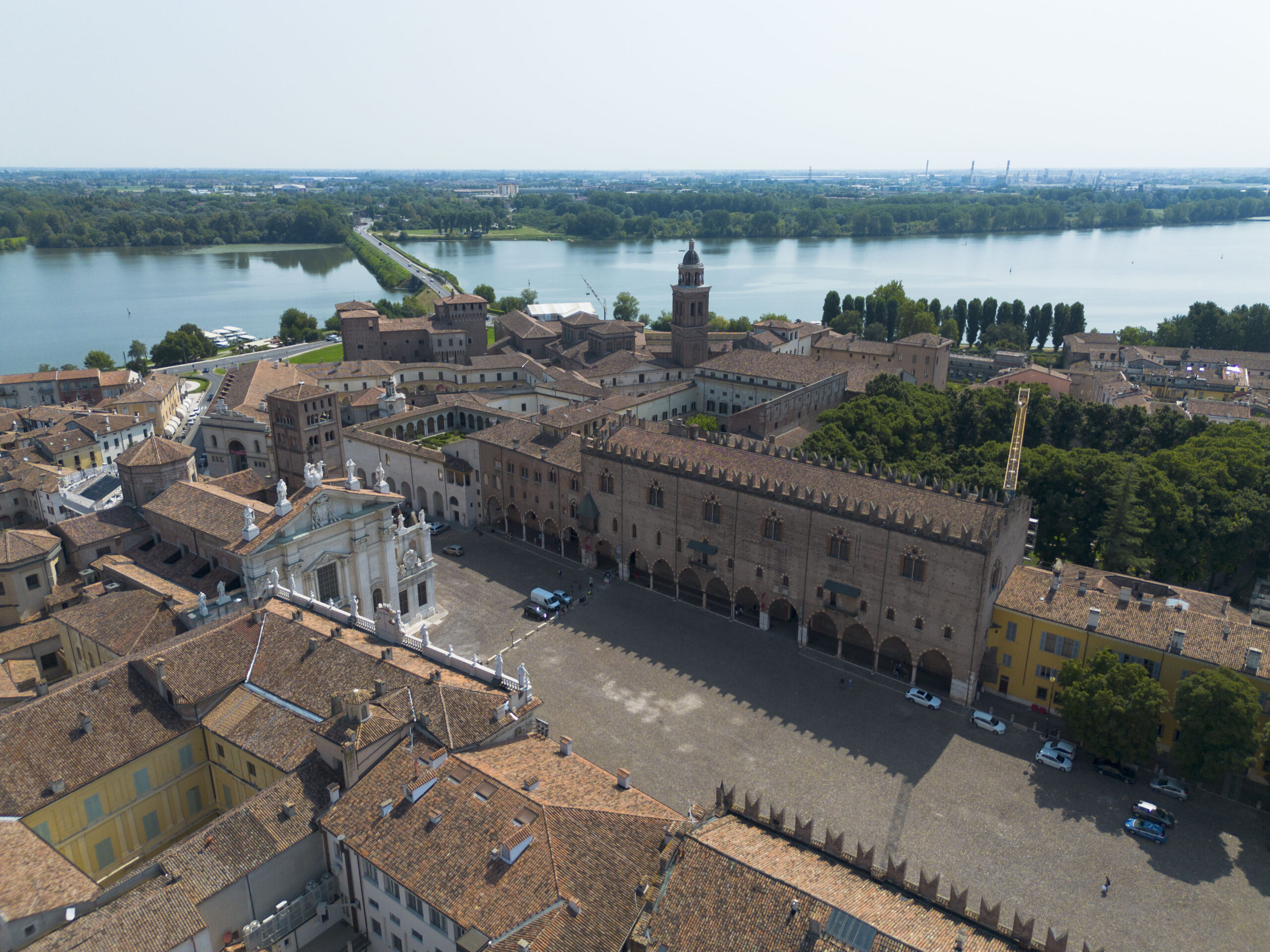
A book carved in stone that recounts 2,000 years of history. Piazza Sordello is the perfect synthesis of the city's urban and architectural stratification.
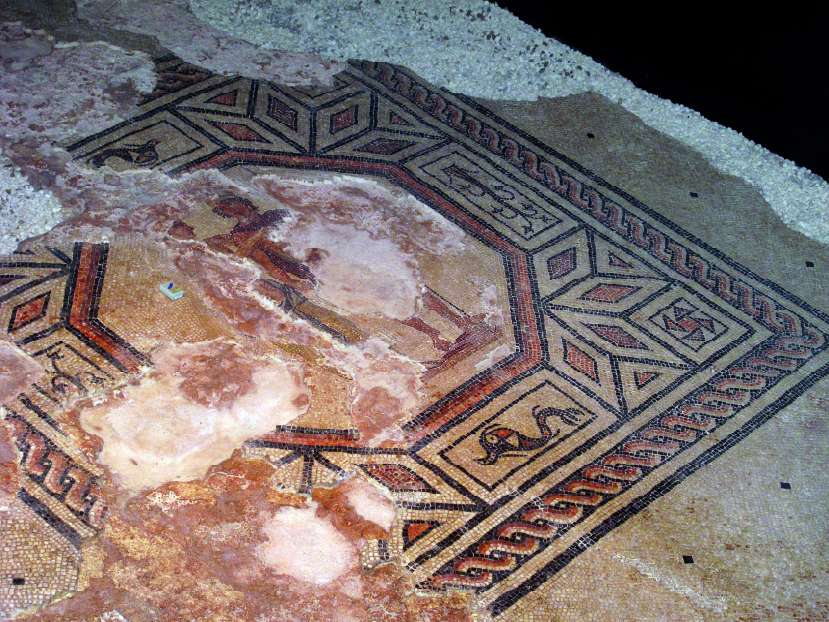
You are in the oldest part of the city, the Civitas Vetus, the place where it all began. The story begins with a small Etruscan settlement in the middle of the marshes, then comes the turn of Roman roads and patrician homes, of which a marvelous mosaic floor still remains today. Even during the Middle Ages, the area was full of houses and surrounded by a wall that opens onto the current vault of St. Peter's. The great transformation of Piazza Sordello took place at the end of the 14th century, when, thanks to land reclamation projects, the city had new space to expand. The Gonzaga family, the new Lords of Mantua, took advantage of this and ordered the demolition of the existing houses and towers to create a triumphal entrance to their City-Palace.
Every historical era has left its mark on this square, and you can still recognize its traces. From the mosaics of the Roman House to the row of buildings built in different eras: Bonacolsi Palace, built in the 13th century; House of the Uberti, built between the 13th and 14th centuries; Bishop's Palace, rebuilt in the mid-18th century on a previous 14th-century palace.
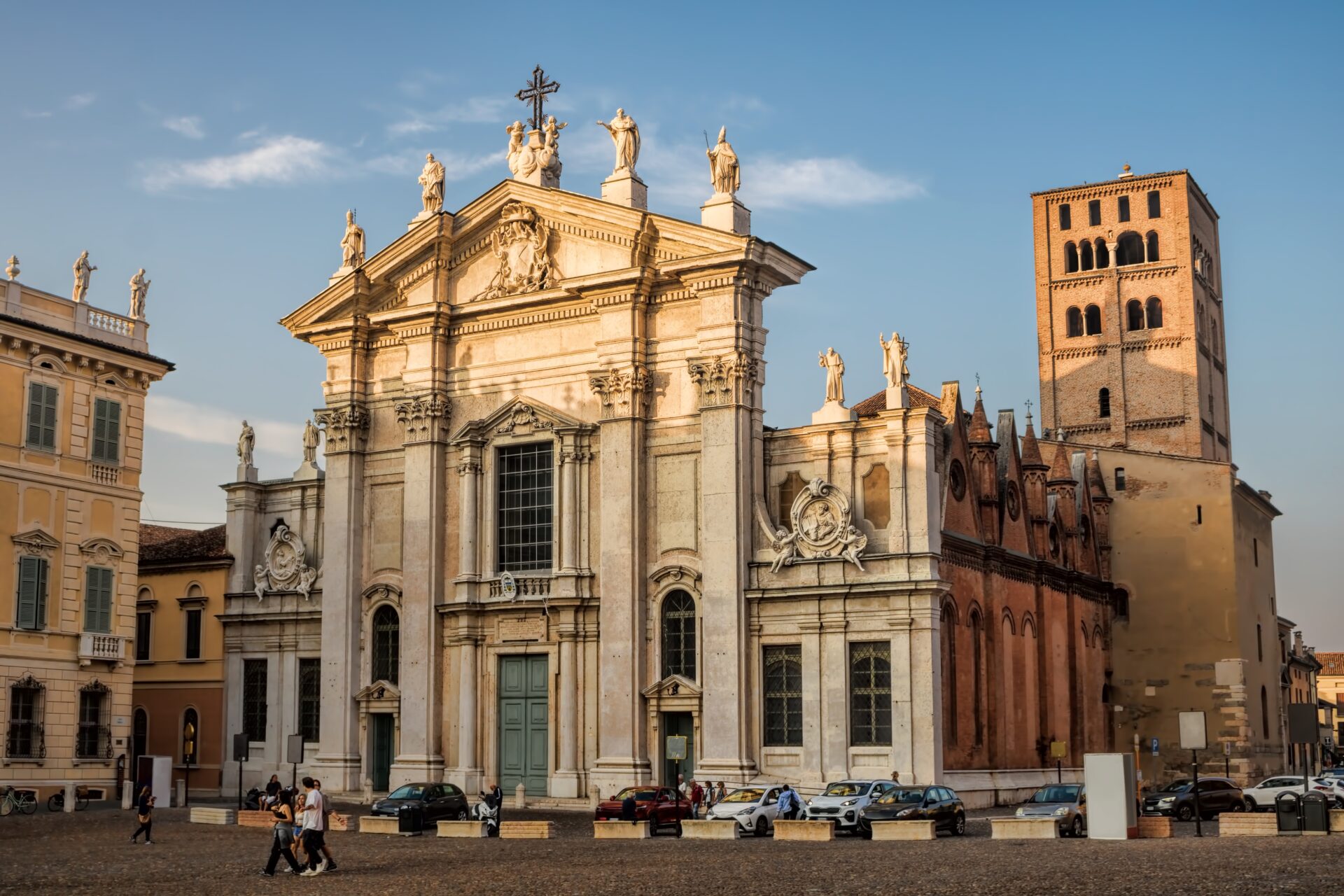
The Cathedral It is the emblem of architectural stratification as it brings together four different styles in a single building: the medieval bell tower built on a Roman tower; the Lombard Gothic side façade from 1395; the interior redesigned by Giulio Romano in the 16th century; and the neoclassical façade from 1755.
Find out more
Who is Sordello?
Civitas Vetus and the stratification of the city
Ducal Palace
St. Peter's Cathedral
Bishop's Palace
Castiglioni Palace
Bonacolsi Tower
Cà deli Uberti
Roman House