
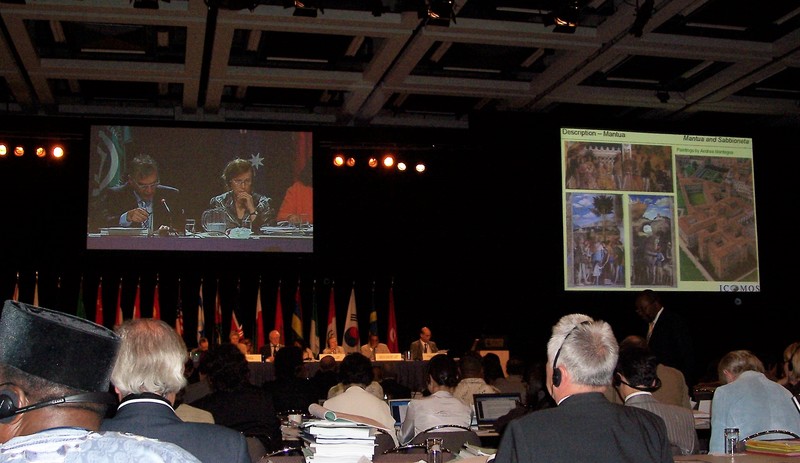
Mantua and Sabbioneta have been a World Heritage Site since July 2008.
TO Quebec City, in Canada, under the 32nd World Committee of the’UNESCO, The Member States signatories of the Convention concerning the Protection of the World Cultural and Natural Heritage they accepted the proposal to insert "“Mantua and Sabbioneta” in the list of sites to be protected such as exceptional urban achievements, the fruit of the highest expression of human genius and, therefore, to be handed down, just as they are, with all their jewels of art and culture.
The site was registered with the following reasons, contained in the Declaration of Outstanding Universal Value: “Mantua and Sabbioneta offer an exceptional testimony to the urban, architectural and artistic achievements of the Renaissance”, linked together through the ideas and ambitions of the ruling family, the Gonzaga. Mantua, a city whose traces date back to Roman times, was renovated in the 15th and 16th centuries through urban planning, architectural and hydraulic engineering works.
The contribution of architects of the fame of Leon Battista Alberti and Giulio Romano and painters such as Andrea Mantegna, made Mantua an eminent capital of the Renaissance. Sabbioneta represents the construction of an entirely new city, according to the modern and functional vision of the Renaissance. The defensive walls, the checkerboard layout of the streets and the role of public spaces and monuments make Sabbioneta one of the best examples of an ideal city built in Europe, capable of exerting an influence on urban planning and architecture inside and outside the Old Continent.
The two cities represent two significant stages in the territorial planning and urban planning interventions undertaken by the Gonzaga in their domains.
Criterion (ii)Mantua and Sabbioneta are exceptional testimonies to the exchange of influences in Renaissance culture. They represent the two main urban forms of the Renaissance: the newly founded city, based on the concept of the ideal city, and the transformation of an existing one. Their importance also stems from their architecture, technology, and monumental art. The two cities played a prominent role in the dissemination of Renaissance culture within and beyond Europe.
Criterion (iii)Mantua and Sabbioneta are exceptional testimonies to a particular civilization in a specific historical period, which has had an impact on urban planning, architecture, and the fine arts. The ideals of the Renaissance, championed by the Gonzaga family, are present in their architecture and urban morphology, in their functional system, and in traditional productive activities, which have largely survived over time.
Both goods meet the required conditions of integrity And authenticity, since their most significant urban and architectural components have been preserved over time, as well as their relationship with the territory.
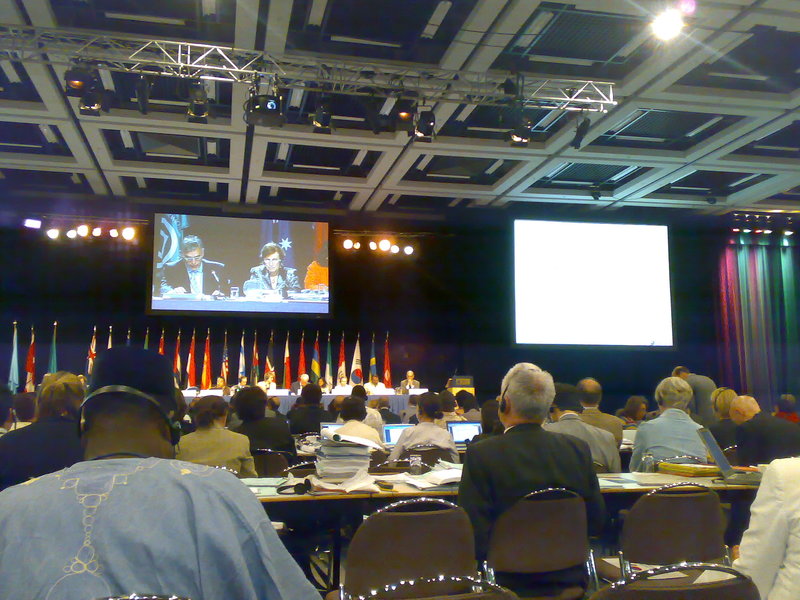
July 7, 2008: Mantua and Sabbioneta are the 42nd Italian site recognized by UNESCO.
On the website of the World Heritage Centre whc.unesco.org you can consult the official information sheet of the’UNESCO relating to the site Mantua and Sabbioneta (in English)