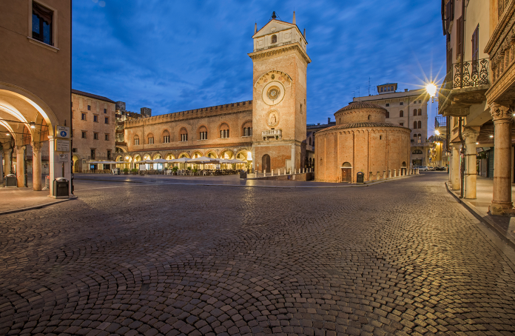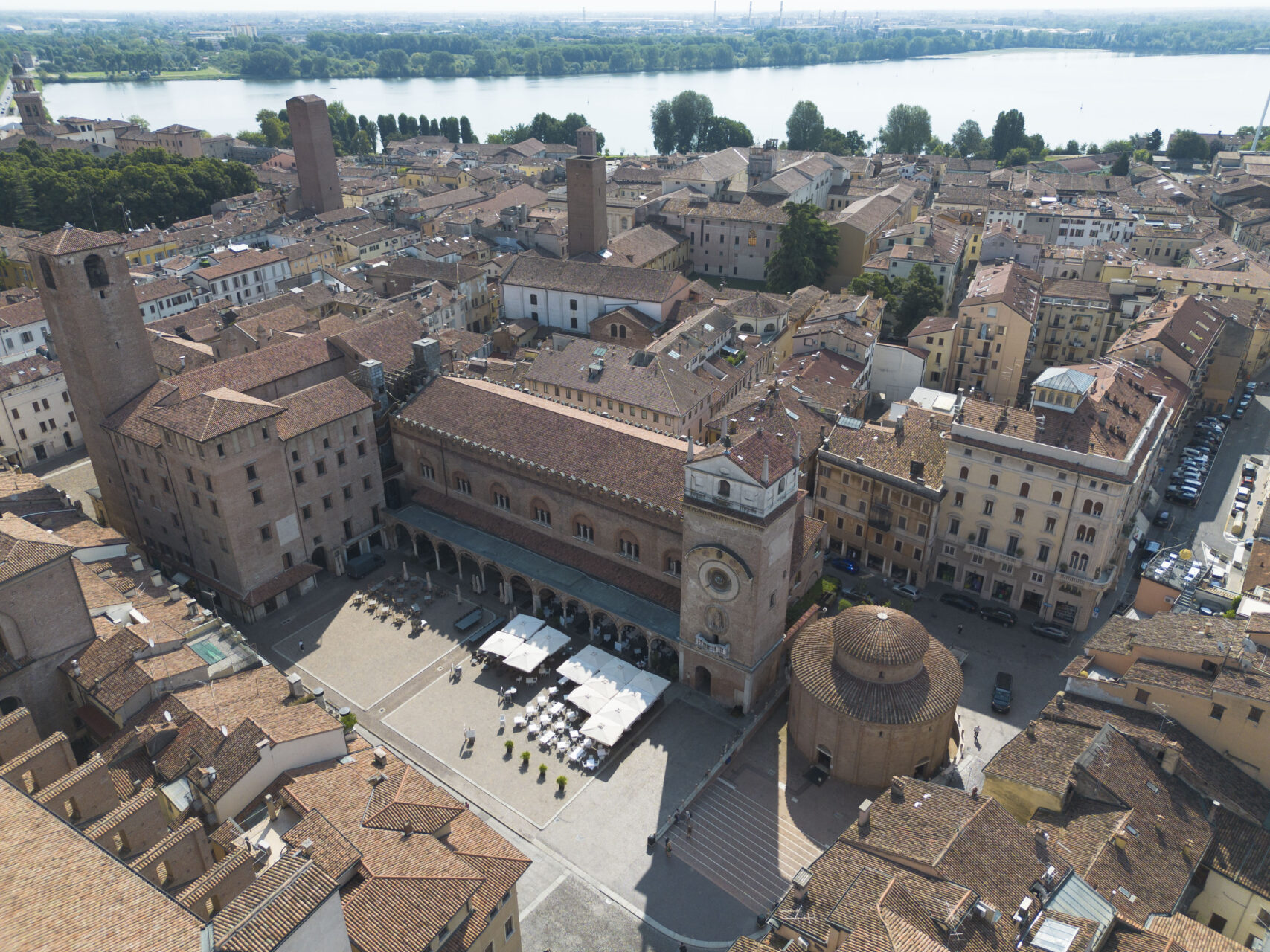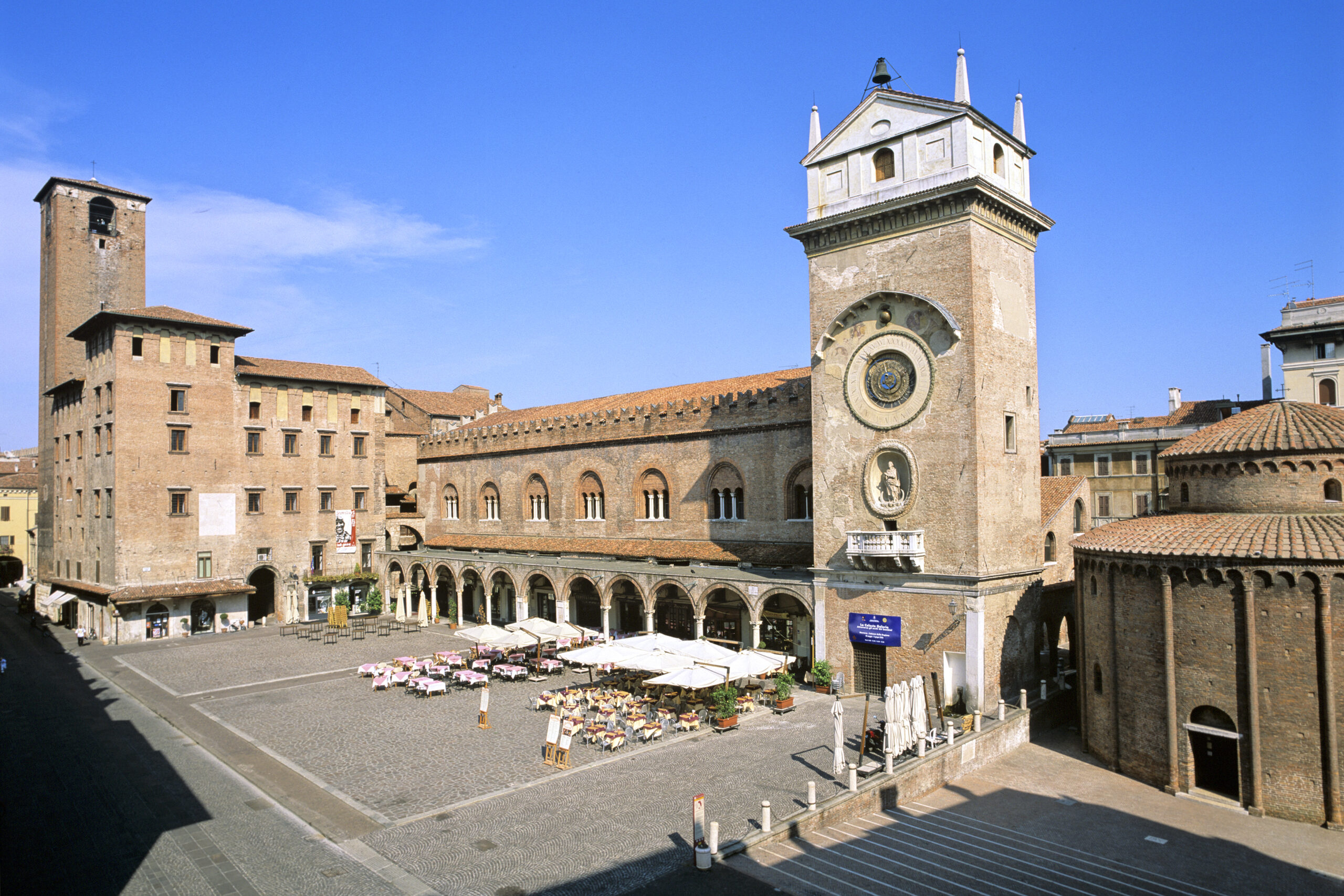
The cries of merchants and a frenetic coming and going of people inhabited Piazza Erbe when, with the expansion of the city beyond the boundaries of the Civitas Vetus (the old city) in the 12th century, it became the commercial centre of Mantua.
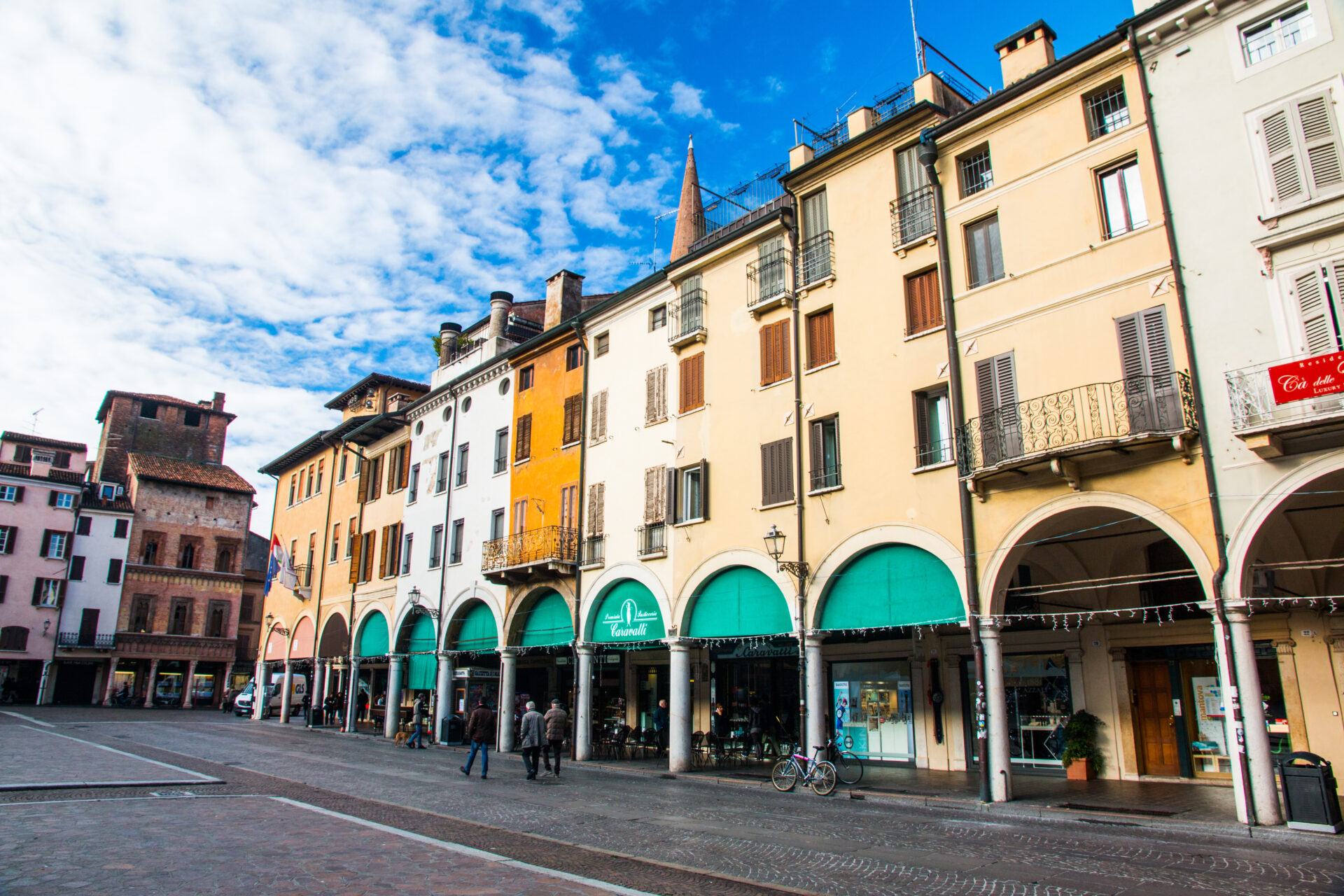
Even today you can notice a long line of Shop Houses which the merchants of the time used as homes, shops and warehouses. Built from the end of the 12th century, they have in common the presence of porticos framed by hundreds of columns, all different from each other, to identify the activities. The only uniform porticos are those commissioned by Ludovico II in Via Broletto; they are part of that city renewal project (renovatio urbis) that the Gonzagas put in place to consolidate their prestige and tie their house to the eternal values of the Renaissance. It is no coincidence that the prodigious astronomical clock by Bartolomeo Manfredi can be found right here. The more important trade becomes in the city, the more the need to measure time with objective criteria is felt. For this reason, Ludovico II gives his Mantua a modern and functional clock, much more sophisticated than the one already present on the Tower of the Hours.
Ensuring trade is so important that, in case of bad weather, the market can move from the square to the large hall of Palace of Reason. A multipurpose palace, built around the 12th century to serve public civil functions, Mantua's first courthouse and seat of city assemblies.
Find out more
Palazzo della Ragione – Sonnabend Collection
Astronomical Clock
Rotunda of San Lorenzo
Palace of the Podestà – Virgil Museum
Shop houses
Merchant's House
House of Messer Viani