Mantua has always been a city linked to water
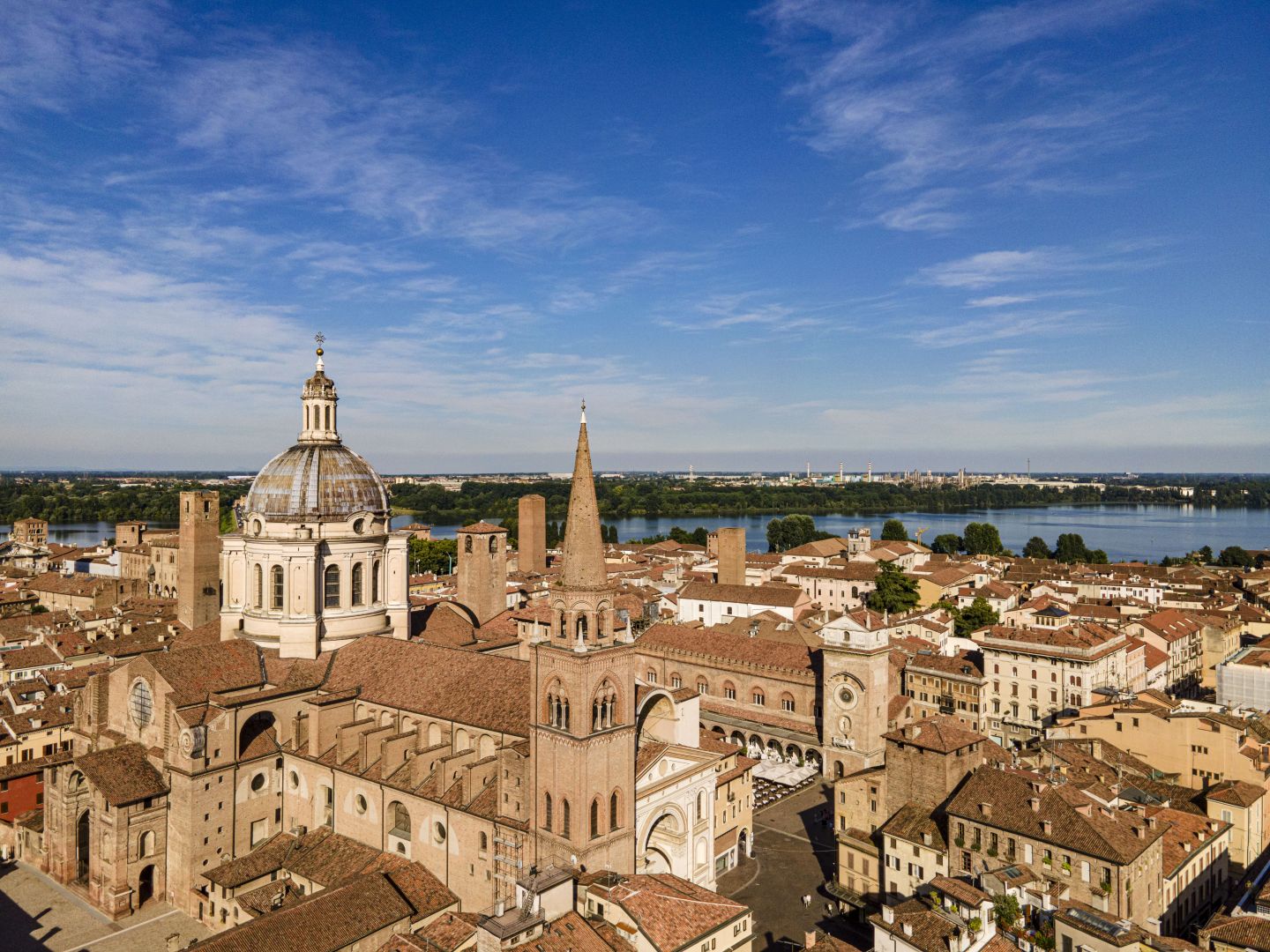
After the long period of barbarian invasions, in the 10th century the city became the dominion of the Canossa and, in the 12th century, it took on the characteristics of a free medieval municipality. The complex and powerful hydraulic planning of this period dates back to this period. Alberto Pitentino (1187) which divides the course of the Mincio into four lakes: Superiore, di Mezzo, Inferiore, Paiolo, the latter drained starting from the 18th century.
In 1274 the Municipality became a Lordship under the dominion of the Bonacolsi, ousted during a bloody clash in 1328 by the family Gonzaga, from that moment and for approximately four centuries undisputed lords of Mantua.
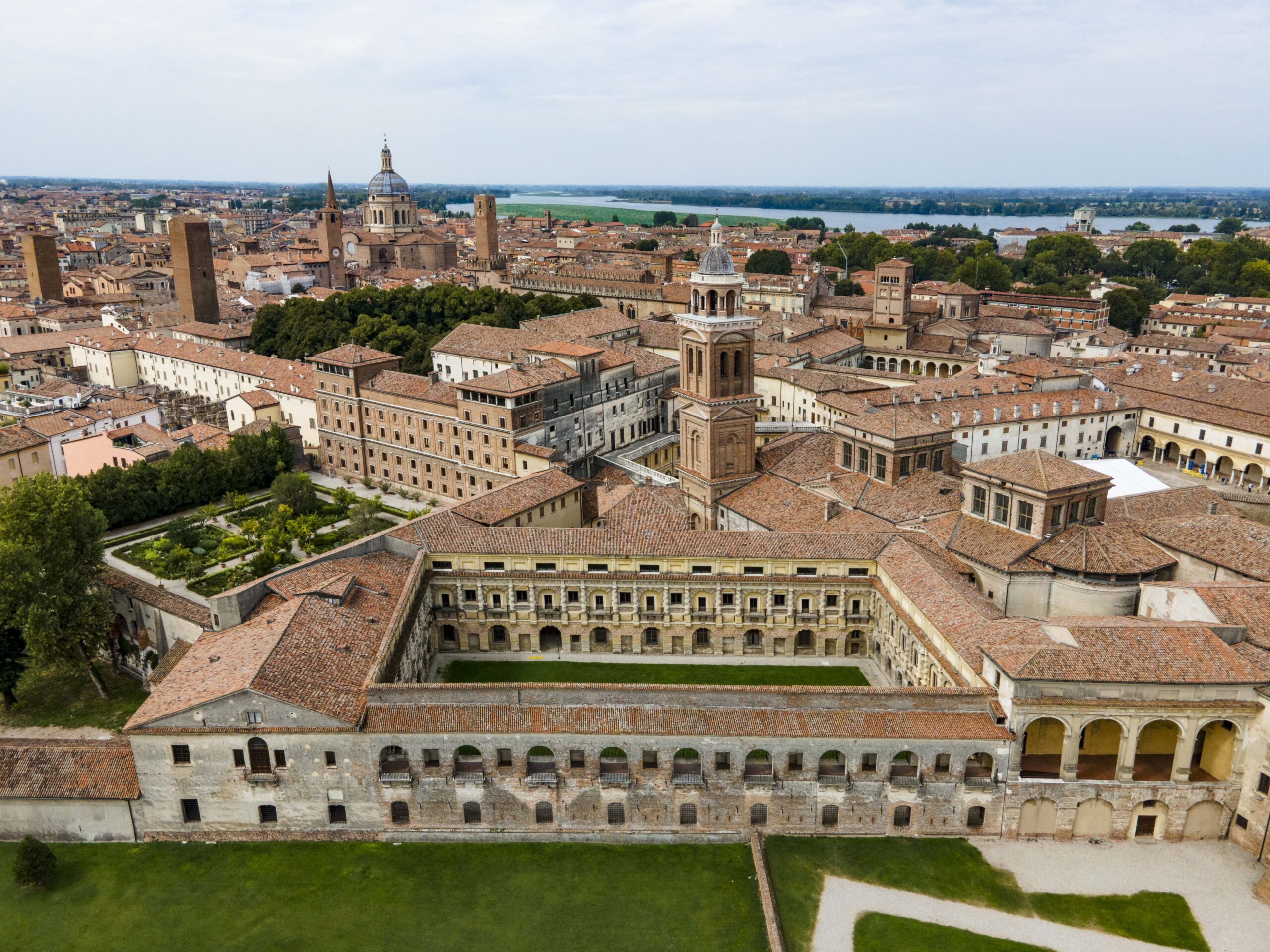
THE Gonzaga intervened on the urban planning of the city itself following the principles of Leon Battista Alberti treated in his great work “De re aedificatoria”, transforming streets and squares in order to build a suitable setting for the representation of his own power, and thus giving a new face to the city which will become one of the most refined courts of the Italian Renaissance. Built according to a unique and absolutely original idea of a city, Mantua was structured on the parallel growth of two separate but interdependent entities: on one side the Prince's city residence, Ducal Palace, a palace destined to become a city in its turn: on the other hand the city of the subjects, a city that had and was to have the dignity of a palace.
In the historic centre, the sequence of squares constitutes the vital nucleus of the city: from Sordello Square we move on to Broletto Square and then in Erbe Square, delimited by the porticoed shop-houses, with the Palace of the Podestà, The Palace of Reason, the Clock Tower, the medieval Rotunda of San Lorenzo; from Piazza Erbe you finally arrive in Mantegna Square, which overlooks the Albertiana Basilica of Sant'Andrea, a supreme example of Italian Renaissance architecture.
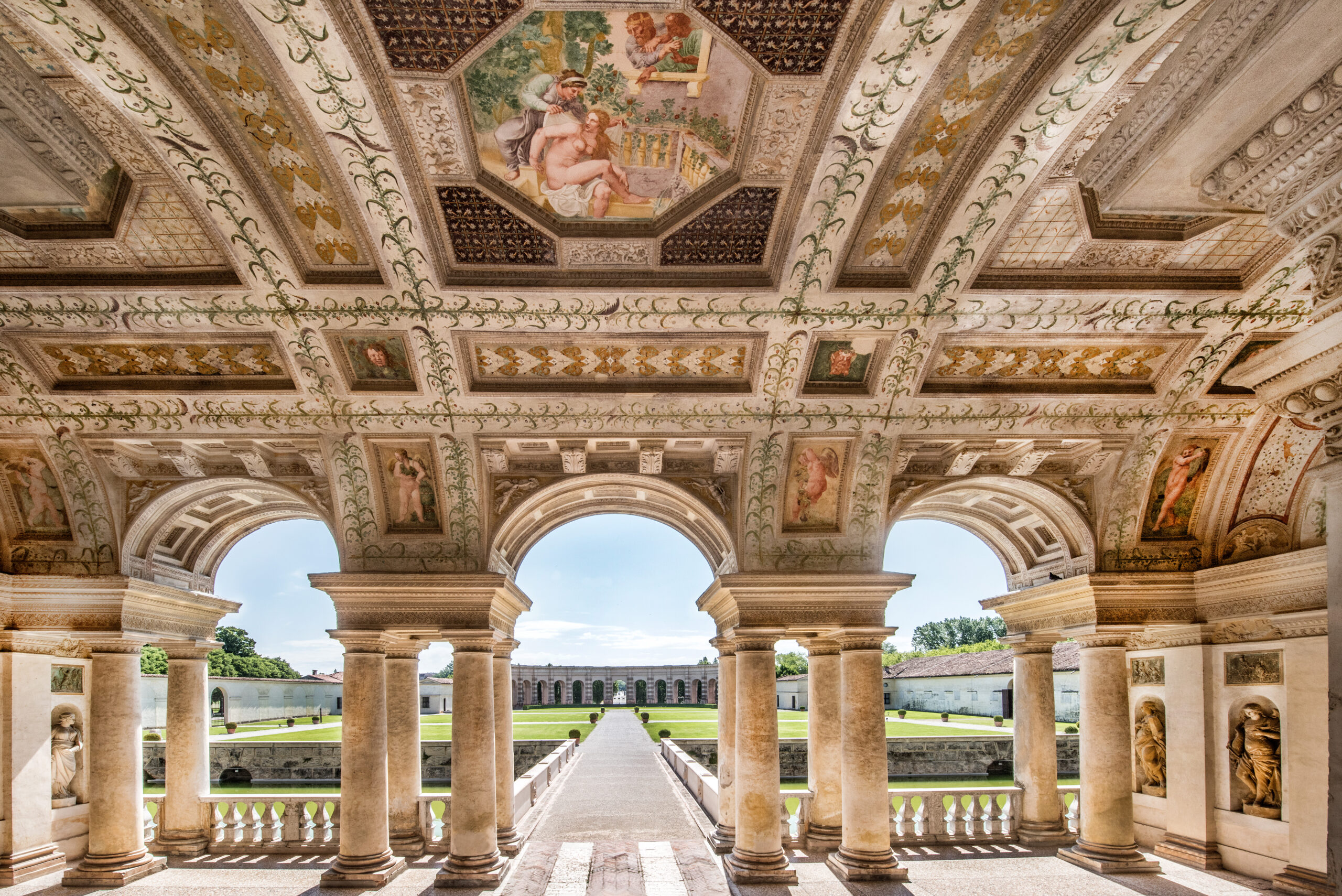
The grandiose Gonzaga residence of the Palazzo Ducale, which overlooks Sordello Square, connects, following the so-called Prince's Path, with the most intimate buildings and spaces of the Gonzaga family, at the opposite end of the city: Te Palace, sixteenth-century suburban villa designed by Julius Romano, San Sebastiano Palace, The Temple of San Sebastiano designed by Leon Battista Alberti, the Andrea Mantegna's House.
A war of succession, a sacking by foreign mercenary armies (1630) and the plague finally caused the decline of Mantua and brought it under the dominion of Austria (1707).
Subsequent transformations have altered the city's appearance, while maintaining its Renaissance structure and the layering of testimonies from different eras, demonstrating the city's ability to evolve and renew itself without losing its character and identity.