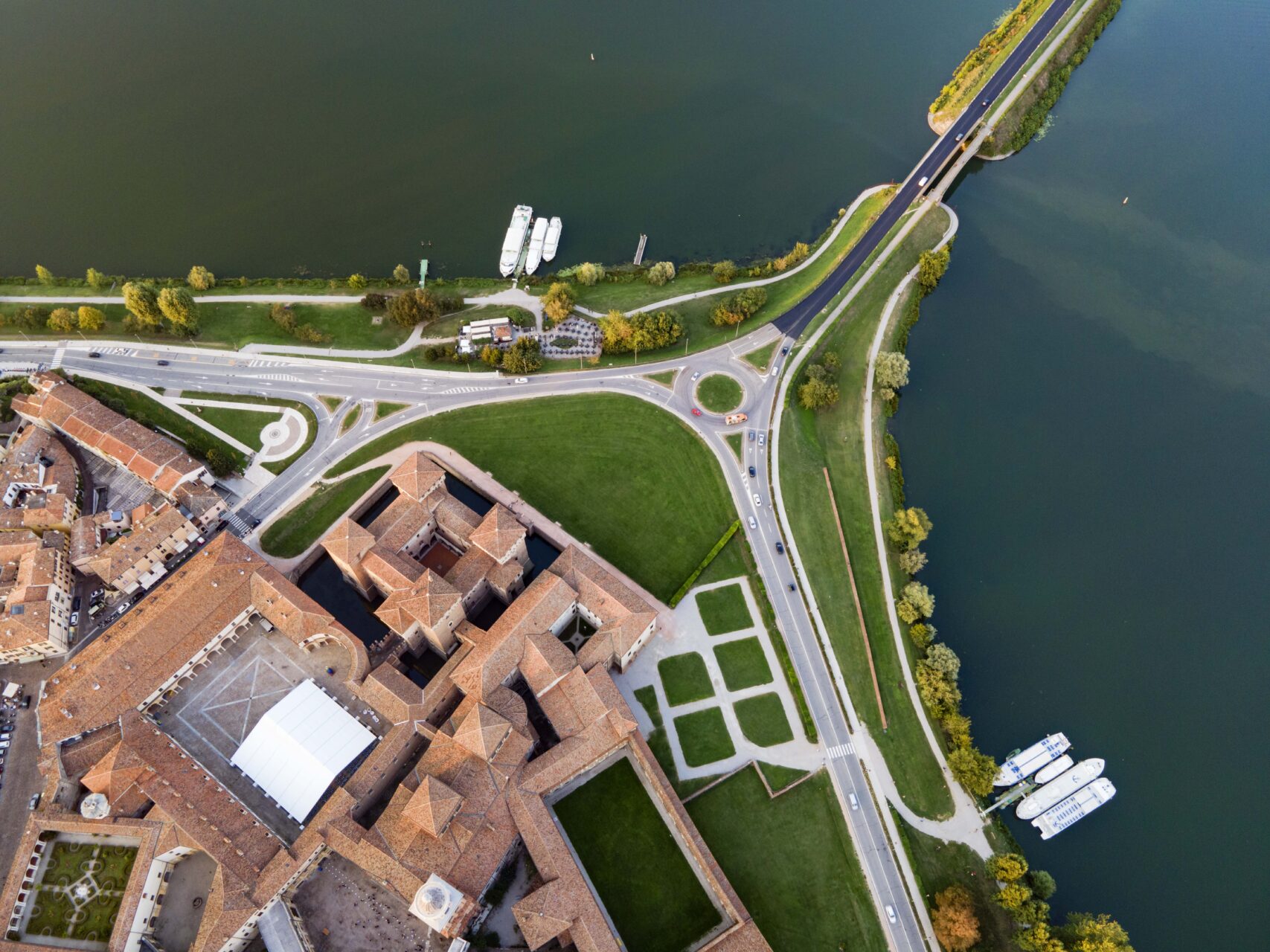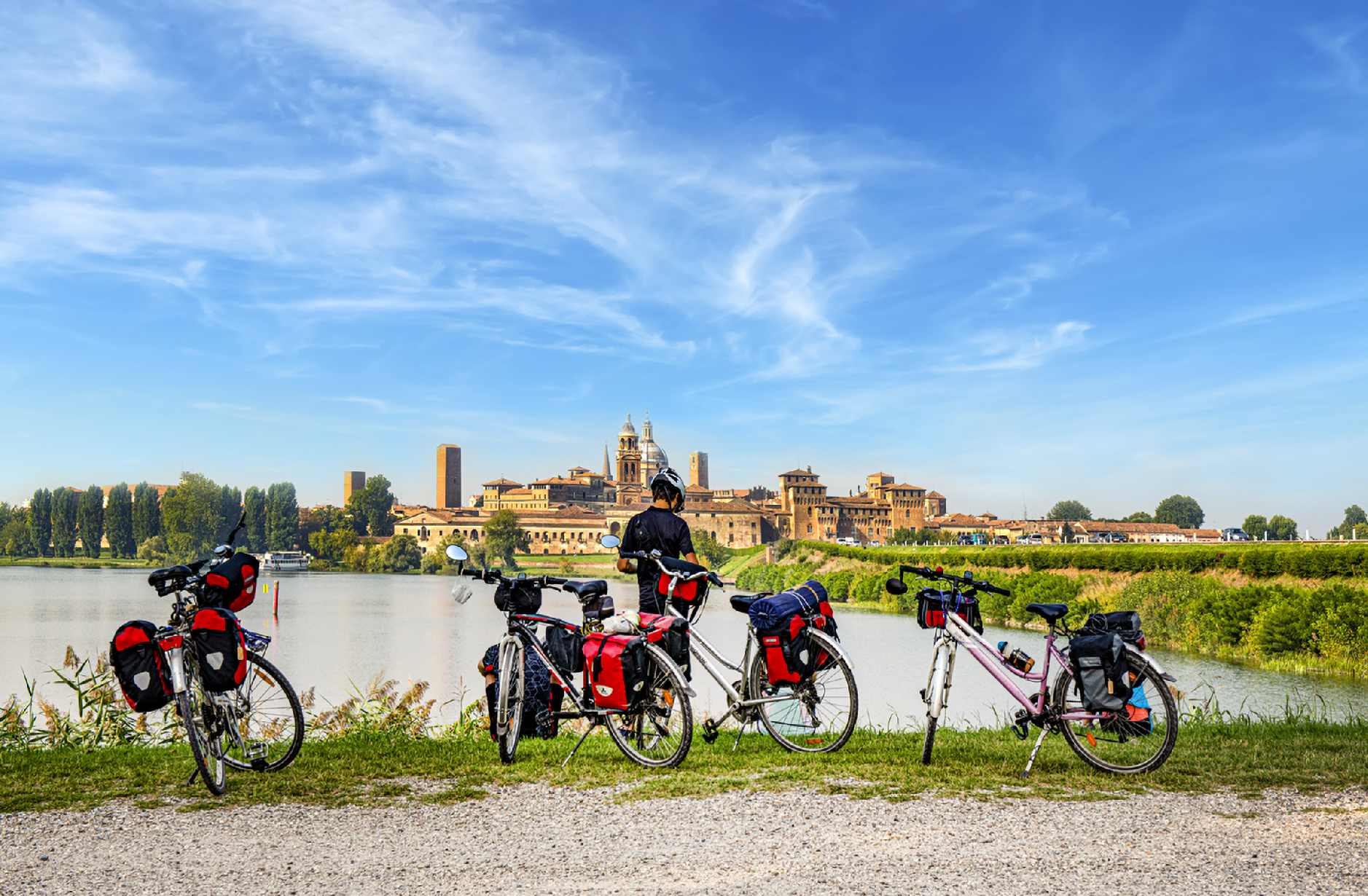
There's nothing better than a stroll along Lake Mezzo to grasp Mantua's identity and understand its shape and close connection to water. Arriving at the "Gardens of the Foibe Victims," you'll come across a sculpture reproducing a 17th-century map of Mantua. This flat area, which also includes Sordello Square, once emerged from the river and was surrounded by extensive marshes. Because of these characteristics, strategically suited to defense and survival, this area was chosen first by the Etruscans, and later by the Romans, as a permanent settlement. Thus was born Mantua, a city of water, whose development could not be separated from the relationship with the Mincio River that surrounds and flows through it.
By the Middle Ages, Mantua was already too large to fit into this strip of land. Therefore, in 1190, the engineer Alberto Pitentino, with an incredible hydraulic engineering project, reclaimed the area, channeling the water into four lakes that transformed the city into an island. Pitentino also connected the Upper and Lower Lakes, creating the Rio, a canal that would serve as a vital resource for the population until the 1950s.
Mantua's appearance remained unchanged until the 18th century, when the reclamation of the port of Sant'Agnese, now Piazza Virgiliana, and of Lake Paiolo, near Palazzo Te, gave it its current appearance.
Find out more
Mill Bridge
San Giorgio Bridge
Sparafucile
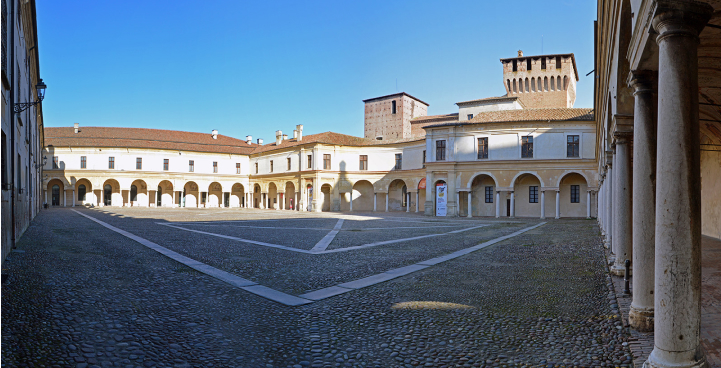
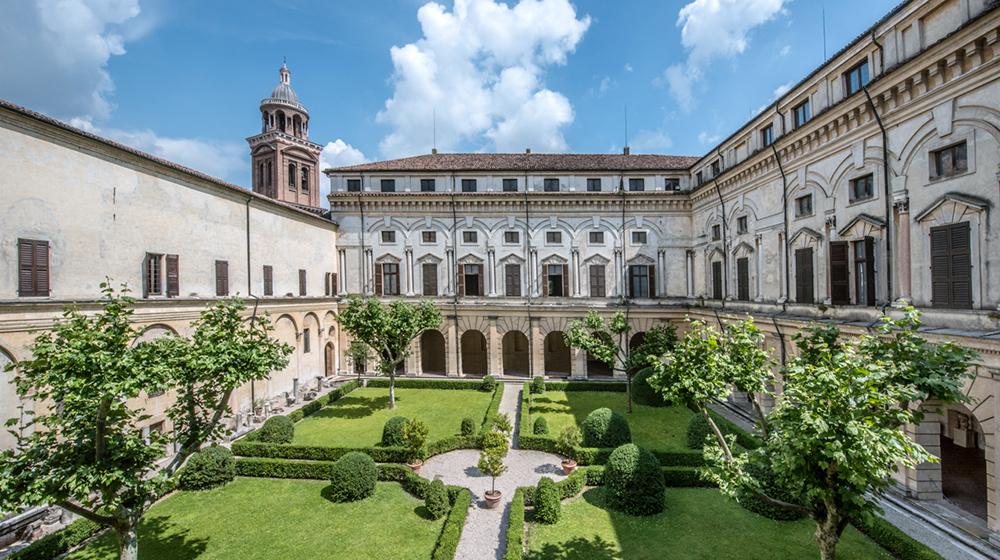
Ducal Palace
Periurban Park
Skyline
Mantua, a city of transformation