To get to know Sabbioneta, it's best to follow a route that allows you to grasp the city's harmonious design.
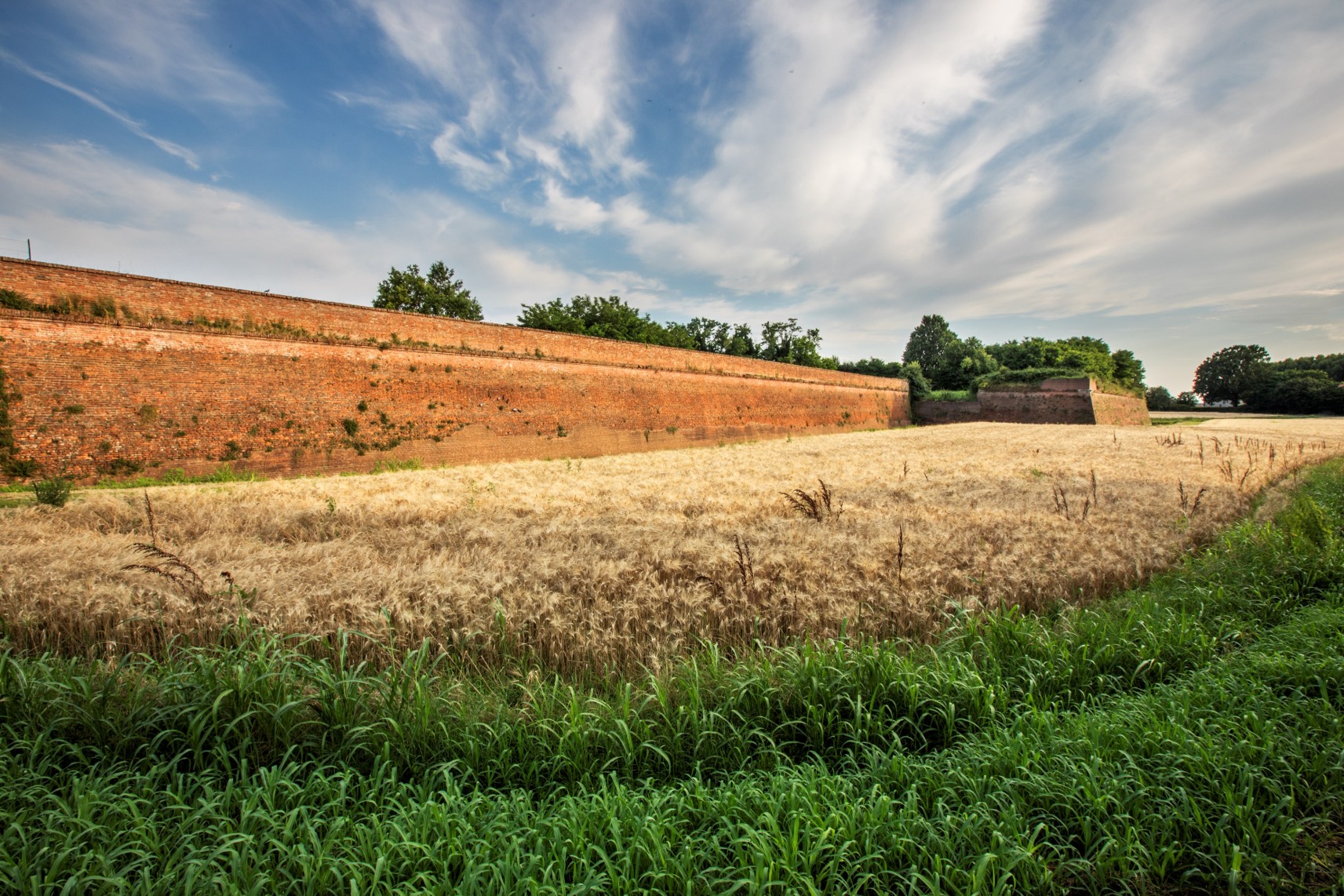
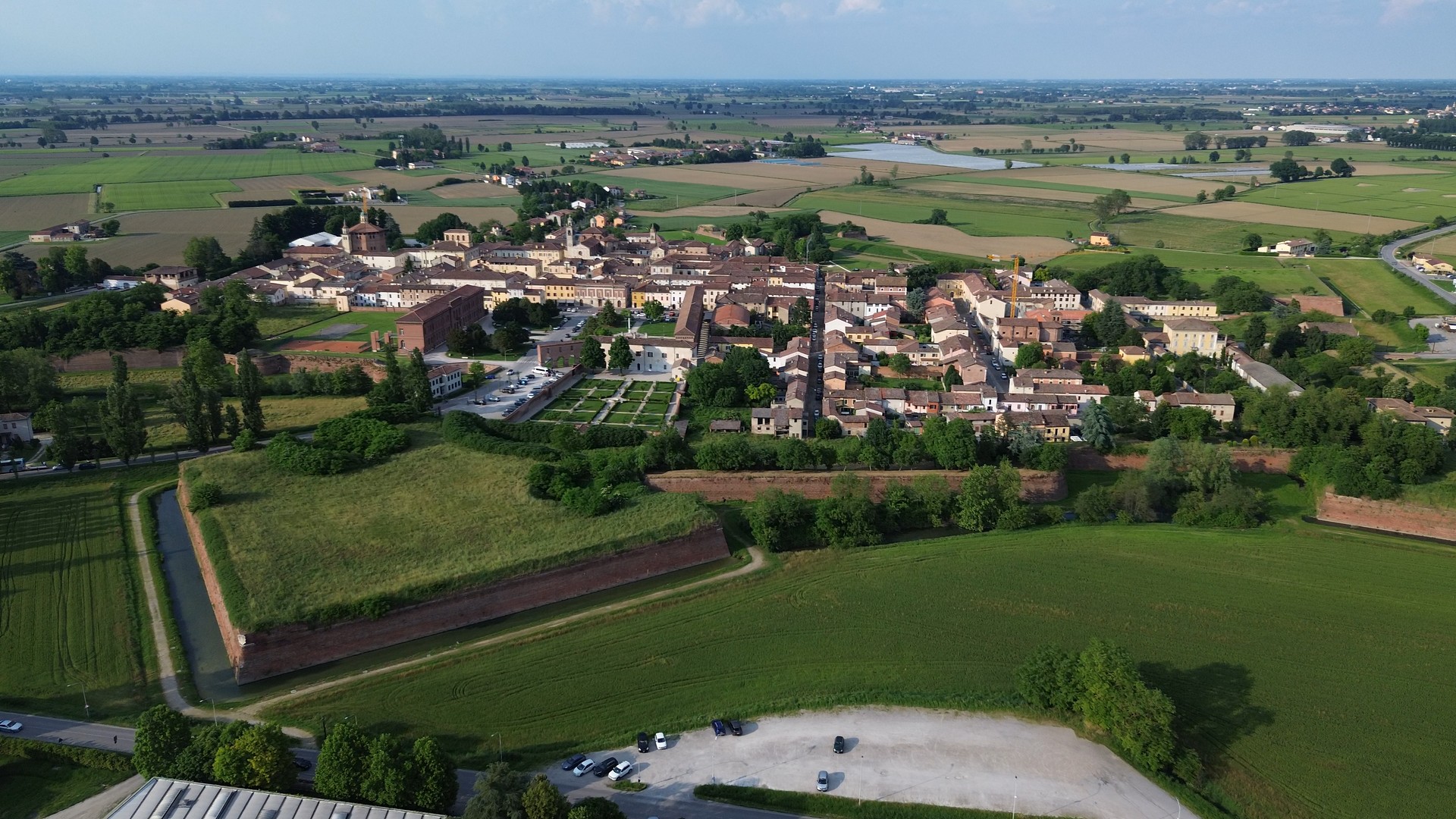
Sabbioneta, a city of foundation (urbs condita), was built between 1556 and 1591 at the behest of Vespasiano Gonzaga. It is worth taking the time to walk, where possible, along the outer edge of the city walls, the boundary between the city and the surrounding territory and a means of defense against external attacks. For centuries, Sabbioneta was considered a perfect model of a military fortress: the Prince's City but also Fortress City. The wall surrounding Sabbioneta, about 6-7 meters higher than the surrounding land, takes the shape of a six-pointed star. Today it is still almost completely intact, surrounded by a moat that underscores its defensive nature.
Built by Vespasian Gonzaga on the Roman model.
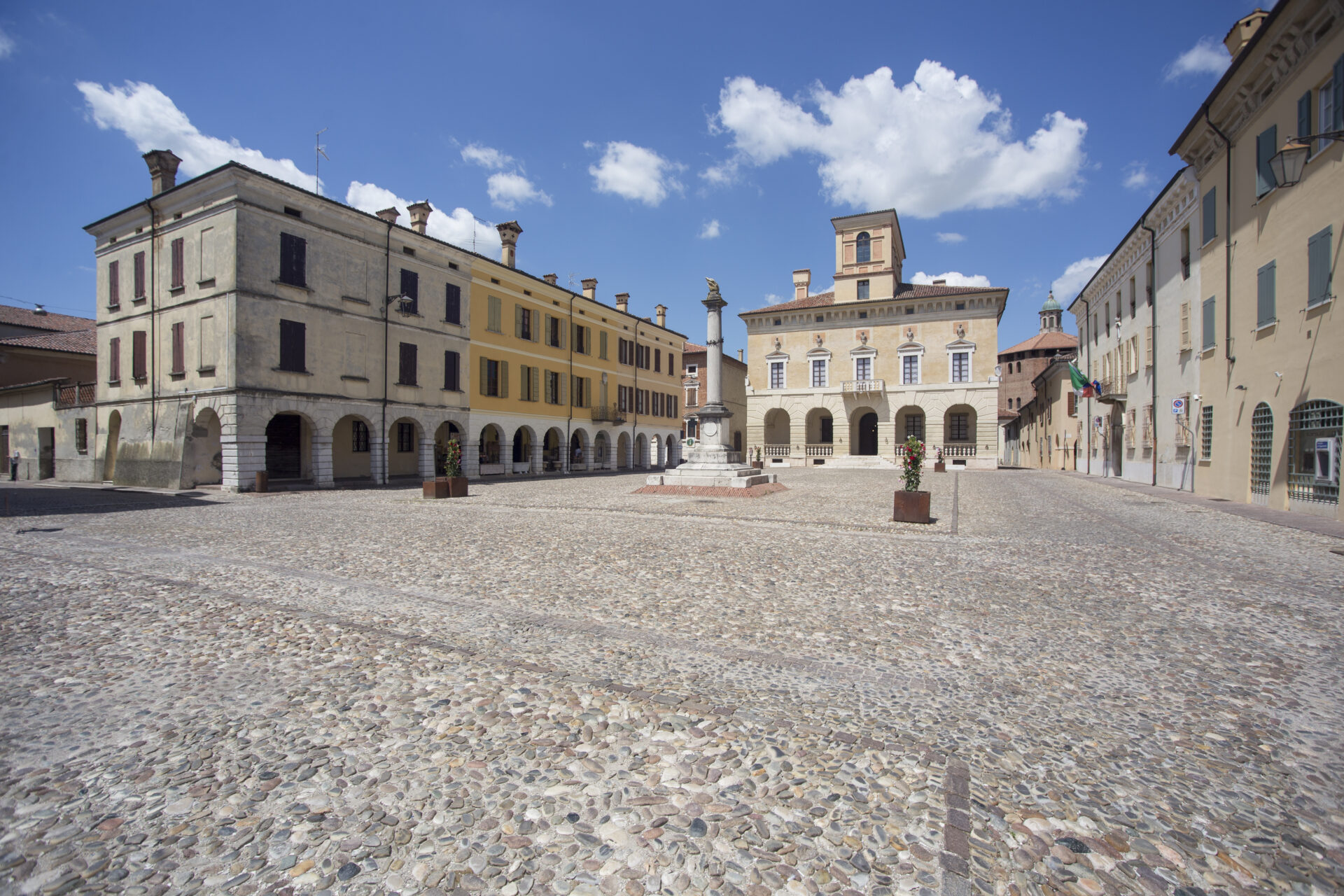
The street plan is laid out according to the ancient Roman camp plan, with orthogonal streets that outline 34 blocks. In the historic center, all the buildings that characterize an aristocratic court are found: the Ducal Palace for the government of the city, Garden Palace with the Gallery of the Ancients for entertainment, the Ancient Theater for court performances.
Vespasian Gonzaga, who designed the urban layout of Sabbioneta, adopted some measures, such as the bayonet layout of the streets, proposed in De re aedificatoria by Leon Battista Alberti, to create a deceptive perspective effect that made the streets appear virtually longer. Sabbioneta thus appears as a complex labyrinth designed to disorient the enemy and make defensive action more effective, but above all to expand the space, making it appear larger than it actually is.
FIND OUT MORE’
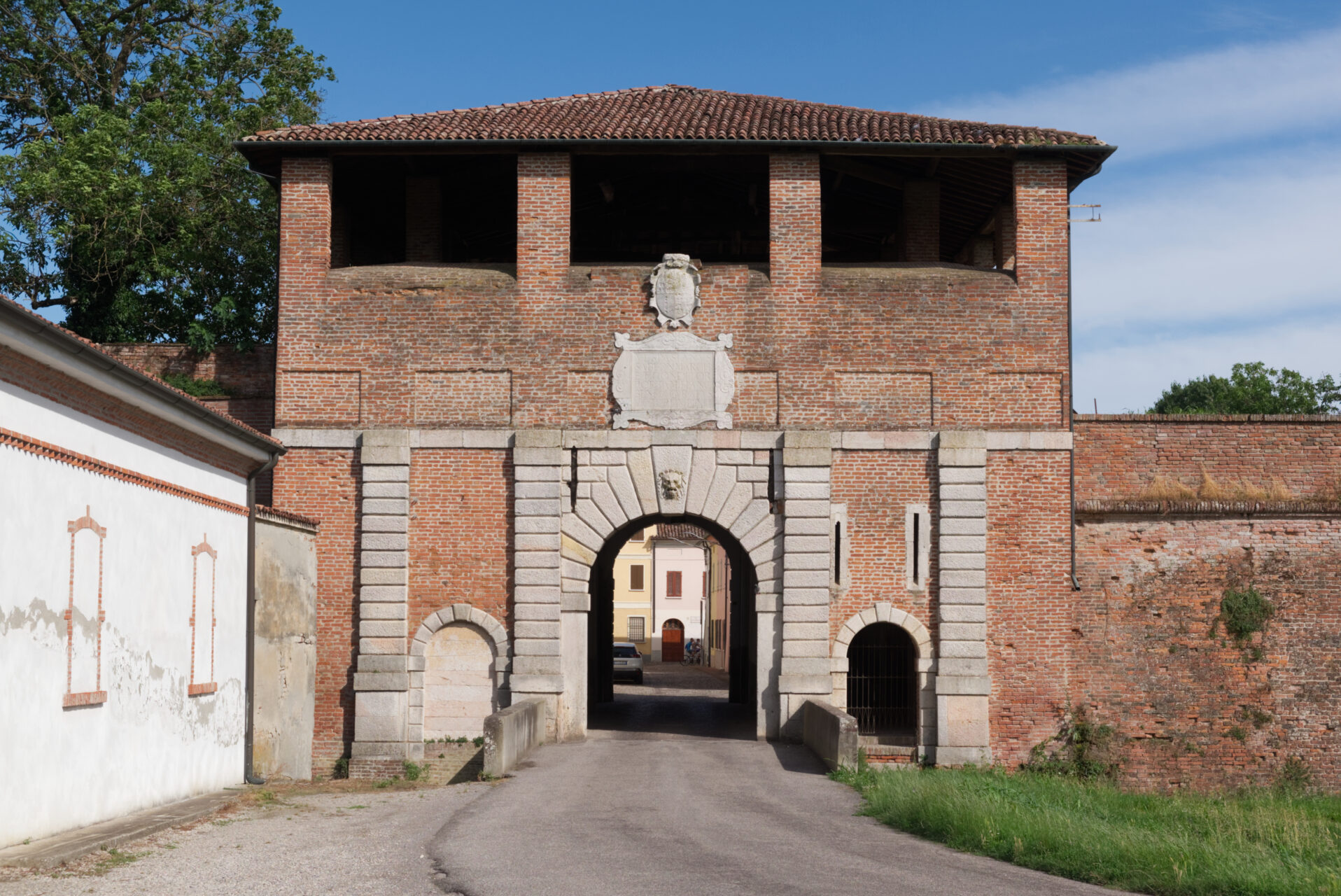
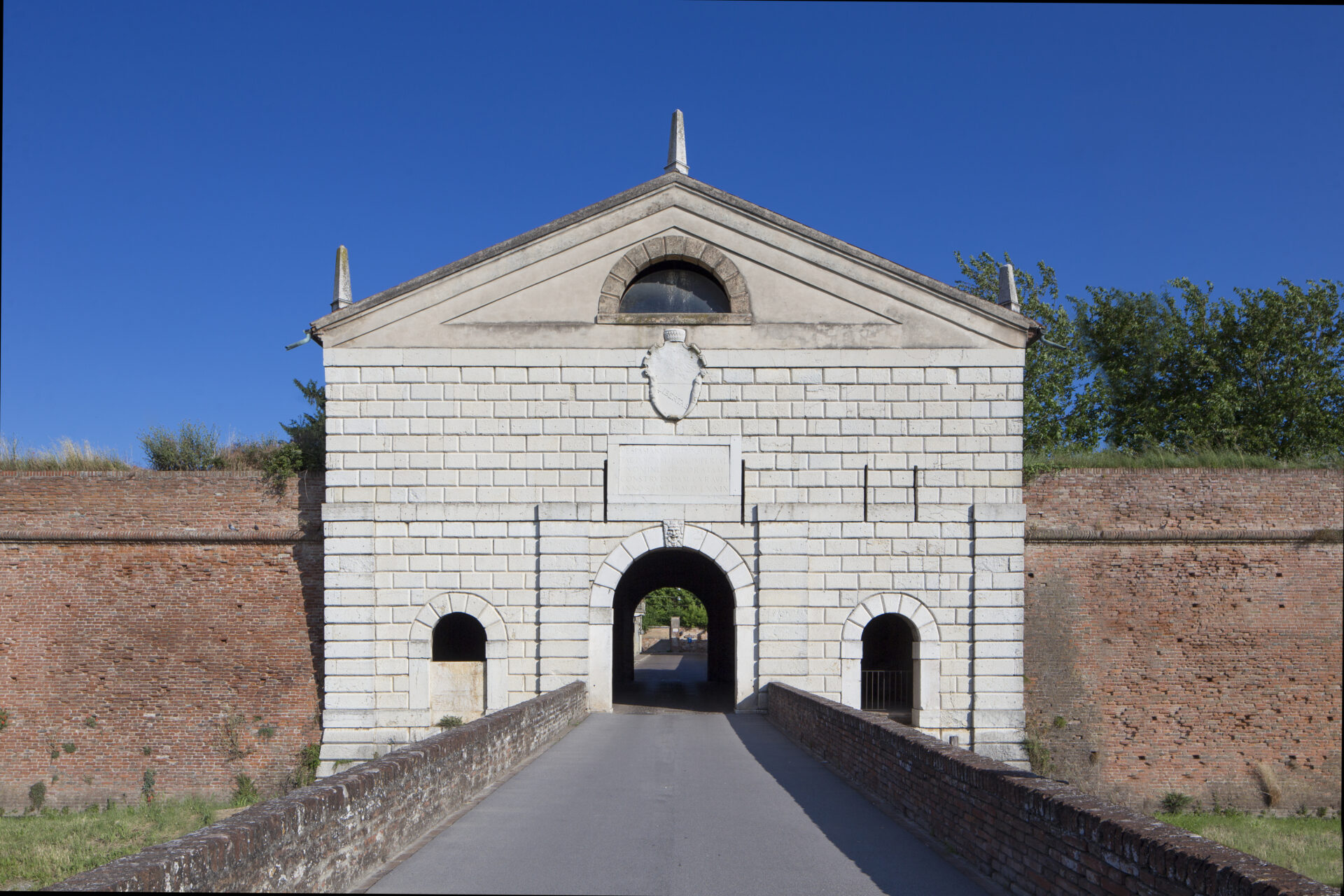
Victory Gate
Imperial Gate
The walls and the fortress
Ducal Square
Parade Ground
Garden Palace
Gallery of the Ancients
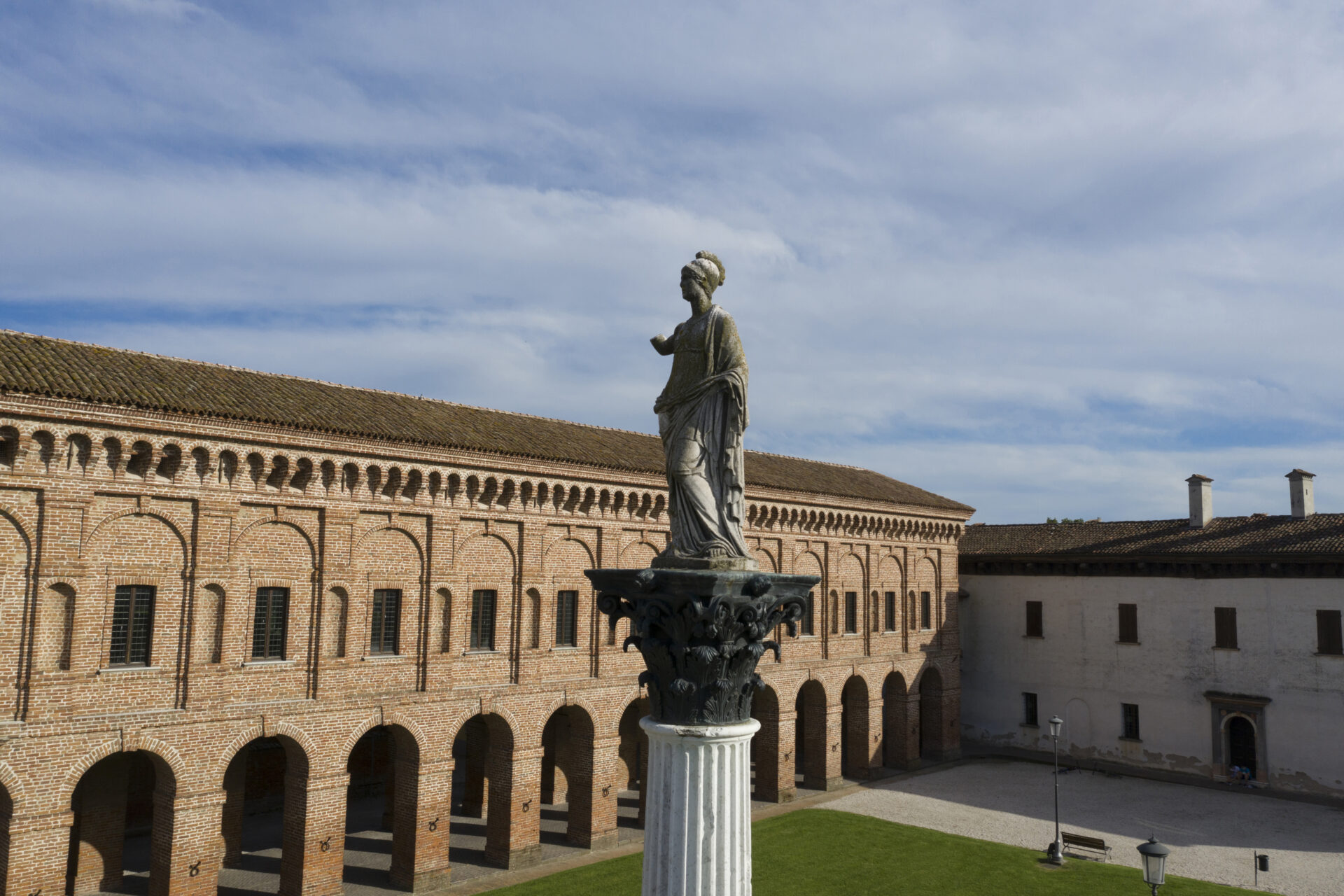
Column with statue of Minerva