
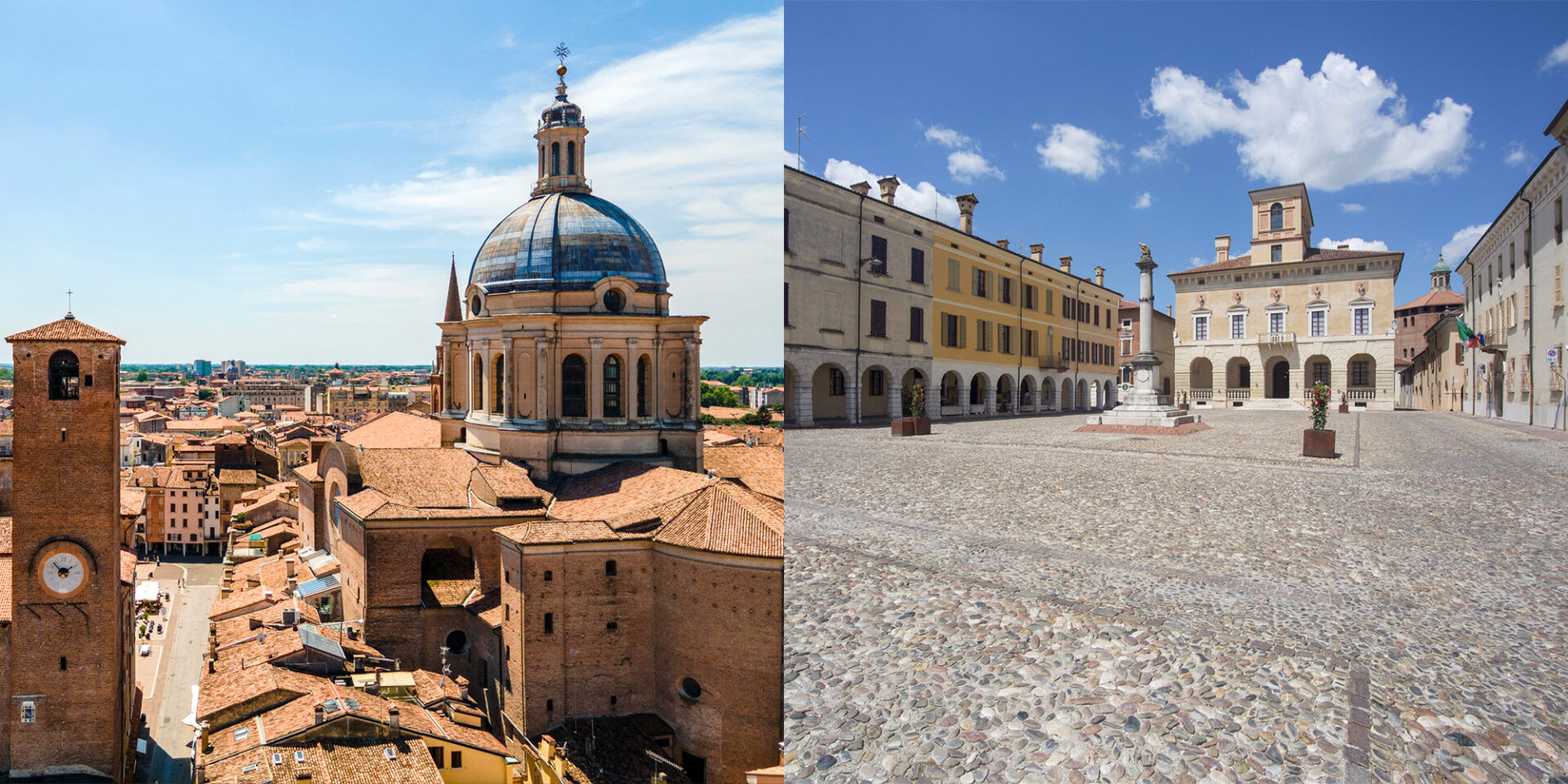
Mantua and Sabbioneta They offer an exceptional testimony to the urban, architectural and artistic achievements of the Renaissance, linked together through the ideas and ambitions of the ruling family, the Gonzagas.
Mantua, a city whose traces date back to Roman times, was renovated in the 15th and 16th centuries through urban, architectural and hydraulic engineering works. The contribution of architects of the fame of Leon Battista Alberti and Giulio Romano and painters such as Andrea Mantegna, made Mantua an eminent capital of the Renaissance.
Sabbioneta represents the construction of an entirely new city, according to the modern and functional vision of the Renaissance. The defensive walls, the checkerboard layout of the streets and the role of public spaces and monuments make Sabbioneta one of the best examples of an ideal city built in Europe, capable of exerting an influence on urban planning and architecture inside and outside the Old Continent.
The two cities represent two significant stages in the territorial planning and urban planning interventions undertaken by the Gonzaga in their domains.
The Outstanding Universal Value identifies the cultural and/or natural elements that make the property of fundamental importance for the present and future generations throughout the world. For this reason, the protection of this heritage is of the utmost importance for the entire international community.
Find out more
Mantua: a city in transformation
Sabbioneta: the city of foundation
If you want to visit the Mantua and Sabbioneta website, go to the section VISIT MANTUA AND SABBIONETA